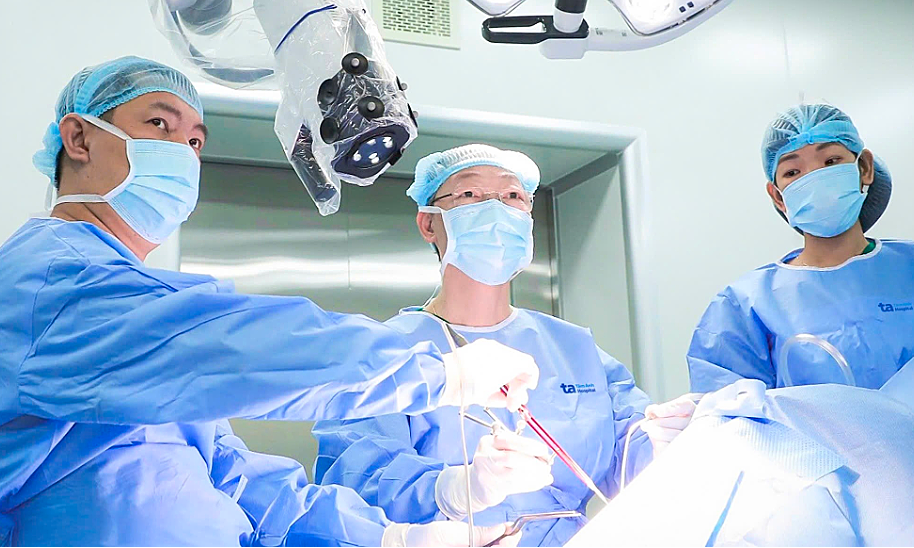
Specialist Doctor Level Two Phan The Thi from the Obstetrics and Gynecology Center at Tam Anh General Hospital TP HCM reported that the patient had a 30x27x25 cm tumor on her left ovary. The left adnexa was twisted three times and showing signs of necrosis, with a high risk of rupture at any moment.
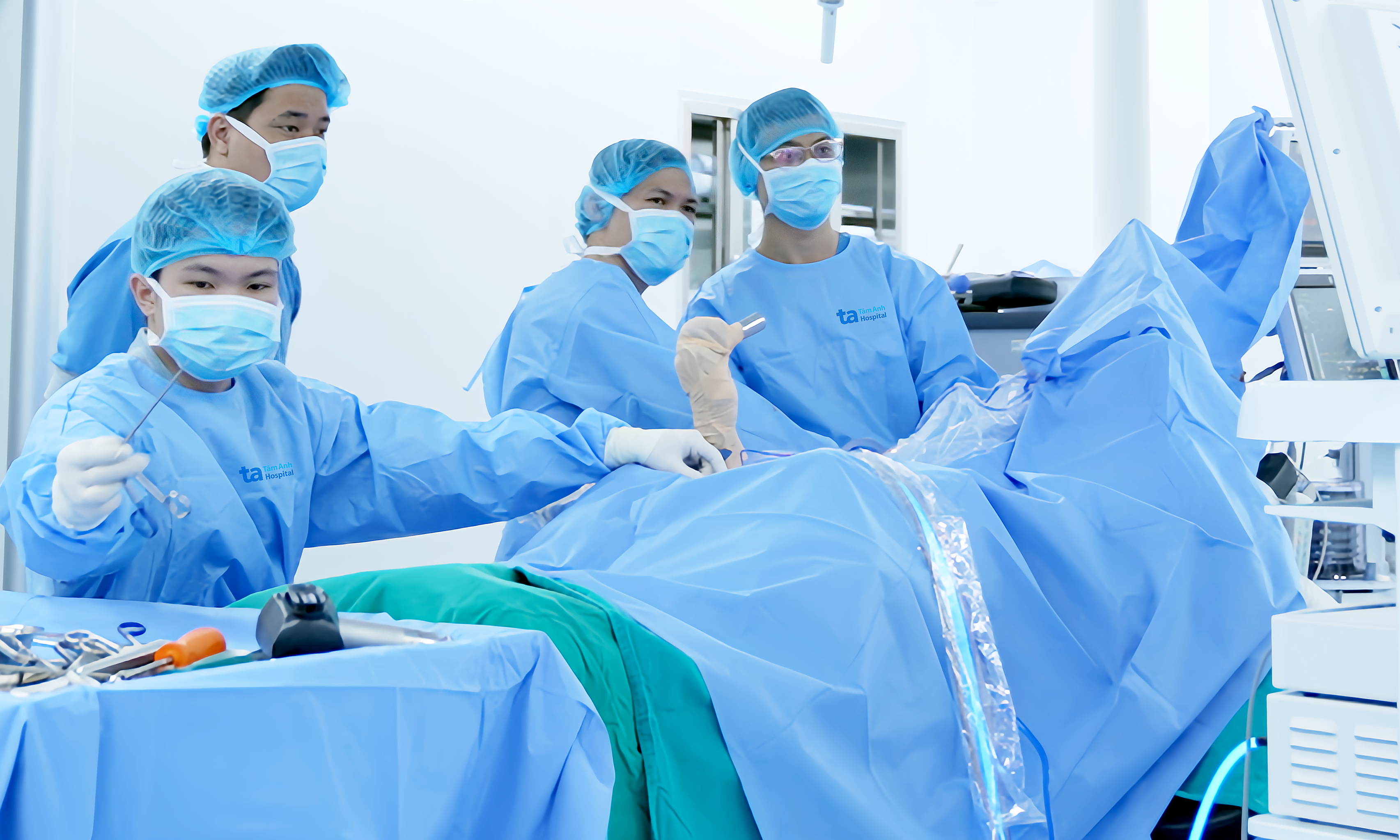
An emergency surgical team was assembled to prevent the tumor from rupturing during the operation, a crucial step to avoid the spread of malignant cells if the tumor proved to be cancerous. Doctors made a wide incision to ensure the entire 4 kg mass was safely removed.
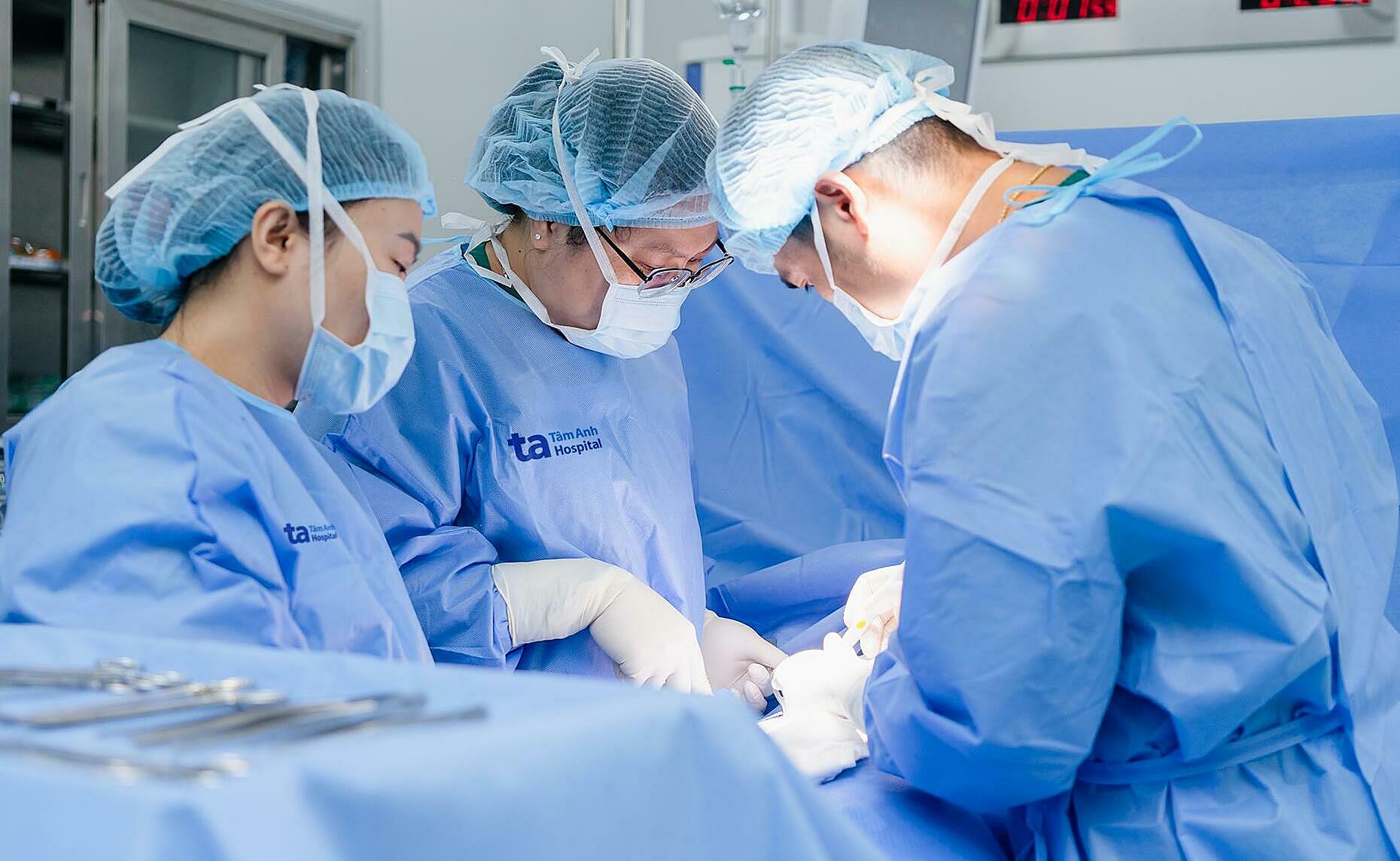 |
Doctor The Thi (far right) and the surgical team operating on the Russian tourist's ovarian tumor. Photo: Tam Anh General Hospital |
Following the surgery, the patient's condition stabilized, and her abdominal pain subsided. Doctors are awaiting pathology results to determine whether the tumor is benign or malignant, which will guide the subsequent monitoring plan for the patient.
The Russian tourist stated she had known about the ovarian tumor previously but experienced no pain or discomfort, leading her to not seek regular check-ups. "This is my first time traveling to Vietnam, and I was surprised by this serious health incident, but fortunately, the hospital provided timely emergency care," the patient said.
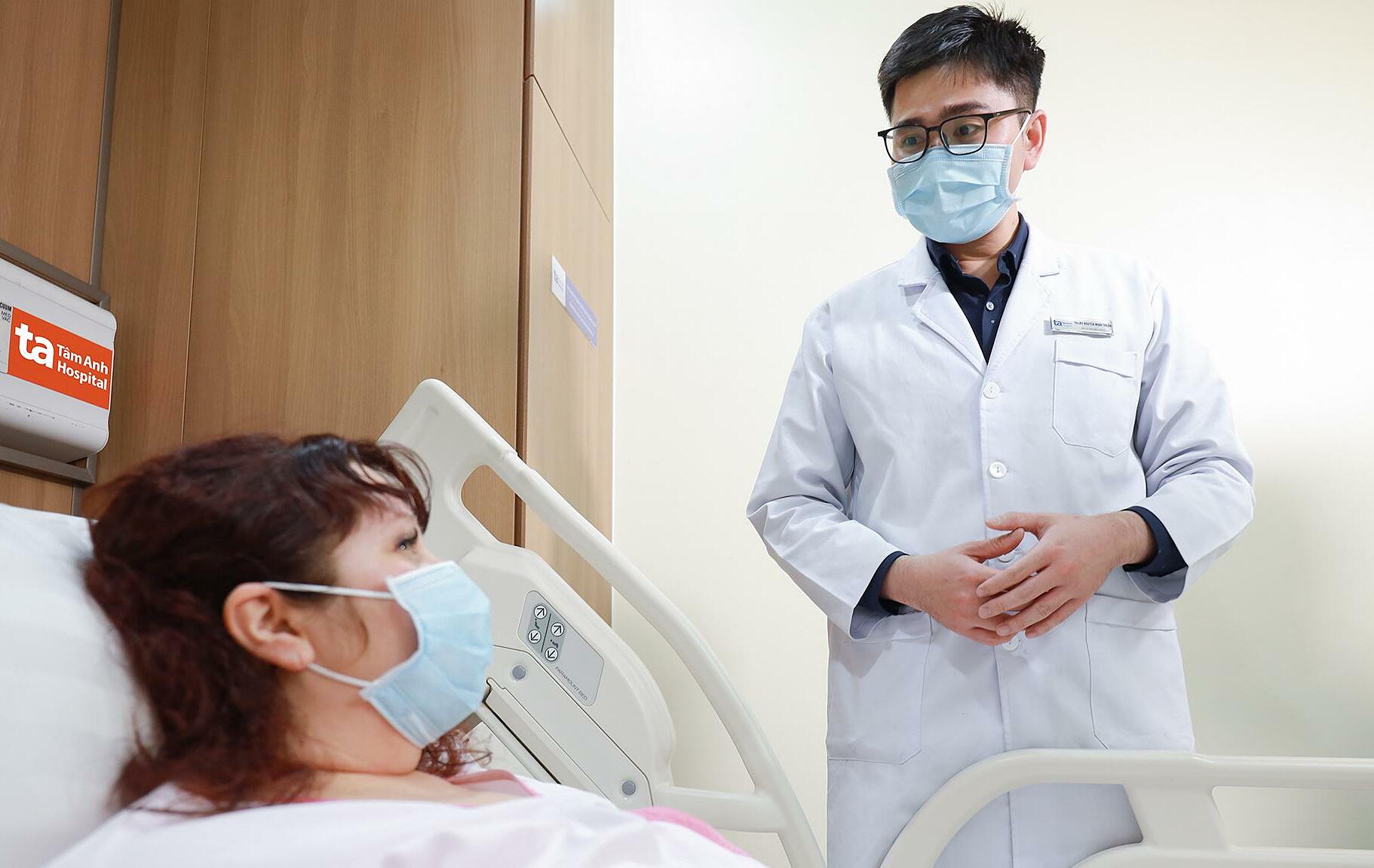 |
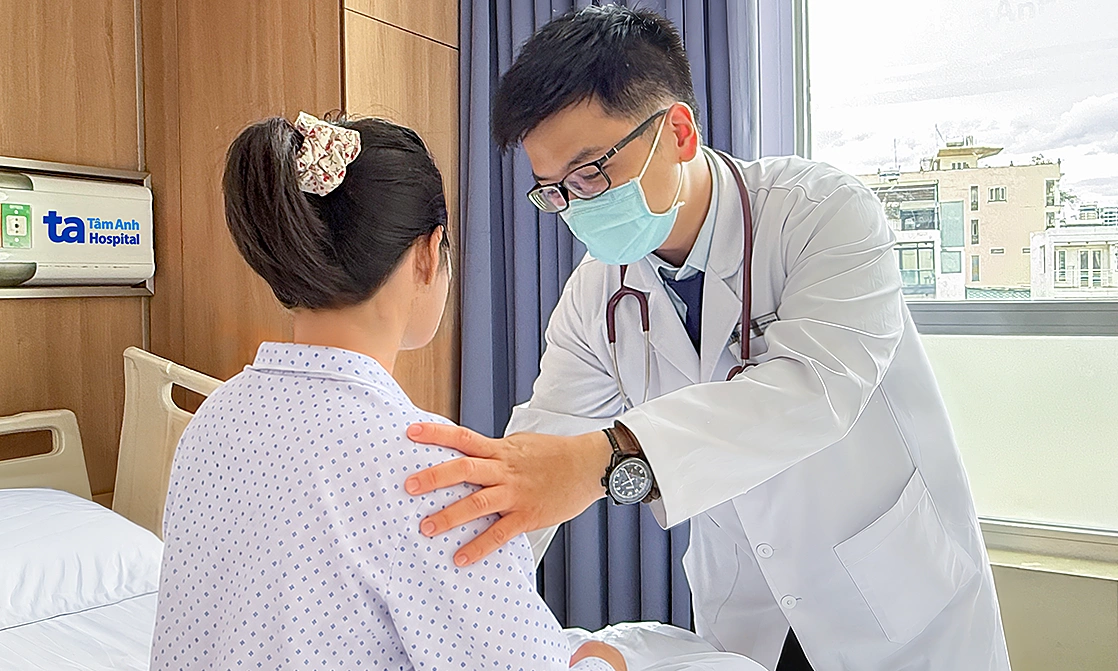
Master, Doctor Nguyen Minh Thuan, Obstetrics and Gynecology Center, consulting the female tourist after surgery. Photo: Tam Anh General Hospital |
Ovarian tumors are common in women aged 20-40. They often develop without symptoms, with many cases only discovered during routine examinations or after complications arise.
Ovarian torsion stands as one of the dangerous complications. It typically occurs when a tumor is large, has a long pedicle, or is highly mobile. Factors such as vigorous physical activity, sudden changes in posture, or long-distance travel can increase the risk of torsion.
According to Doctor The Thi, flying is not a direct cause of ovarian torsion. However, for individuals with existing large tumors, extensive travel, vibrations, and changes in cabin pressure can elevate the risk of torsion, leading to severe abdominal pain, nausea, vomiting, or fever.
Doctors advise women to undergo health checks before long trips to detect any abnormalities early. This proactive measure helps mitigate risks and ensures safety during travel.
Tue Diem
| Readers can submit questions about obstetrics and gynecology here for doctors to answer |