Breast cancer metastasizing to the brain occurs when cancer cells from the primary tumor in the chest spread to the brain via the bloodstream or lymphatic system, forming one or more metastatic lesions. Patients may experience persistent headaches, nausea, vomiting, seizures, limb weakness or paralysis, speech disorders, blurred vision, or changes in memory and personality.
Radiation therapy uses high-energy radiation beams to destroy the DNA of cancer cells, preventing them from dividing and growing. This treatment can completely eliminate or shrink metastatic brain tumors, alleviate neurological symptoms, and allow breast cancer patients to continue other systemic therapies.
For patients with few, small or medium-sized brain metastases in suitable locations, doctors prioritize stereotactic radiosurgery (SRS). This method precisely focuses high-dose radiation beams onto individual tumors, minimizing radiation exposure to the surrounding healthy brain tissue. SRS has minimal impact on memory if the irradiated area does not overlap with the hippocampus, the brain's center for forming and retaining memories.
For patients with many metastatic lesions (over 5) or scattered damage where SRS is not suitable, doctors often use whole-brain radiation therapy (WBRT). This method delivers a lower dose but covers a wider area, destroying visible metastatic lesions and preventing the growth of small, microscopic metastases not yet detected on scans.
However, because the entire brain tissue receives some radiation dose, whole-brain radiation therapy can cause side effects such as hair loss, fatigue, memory impairment, reduced concentration, or slow information processing in some patients.
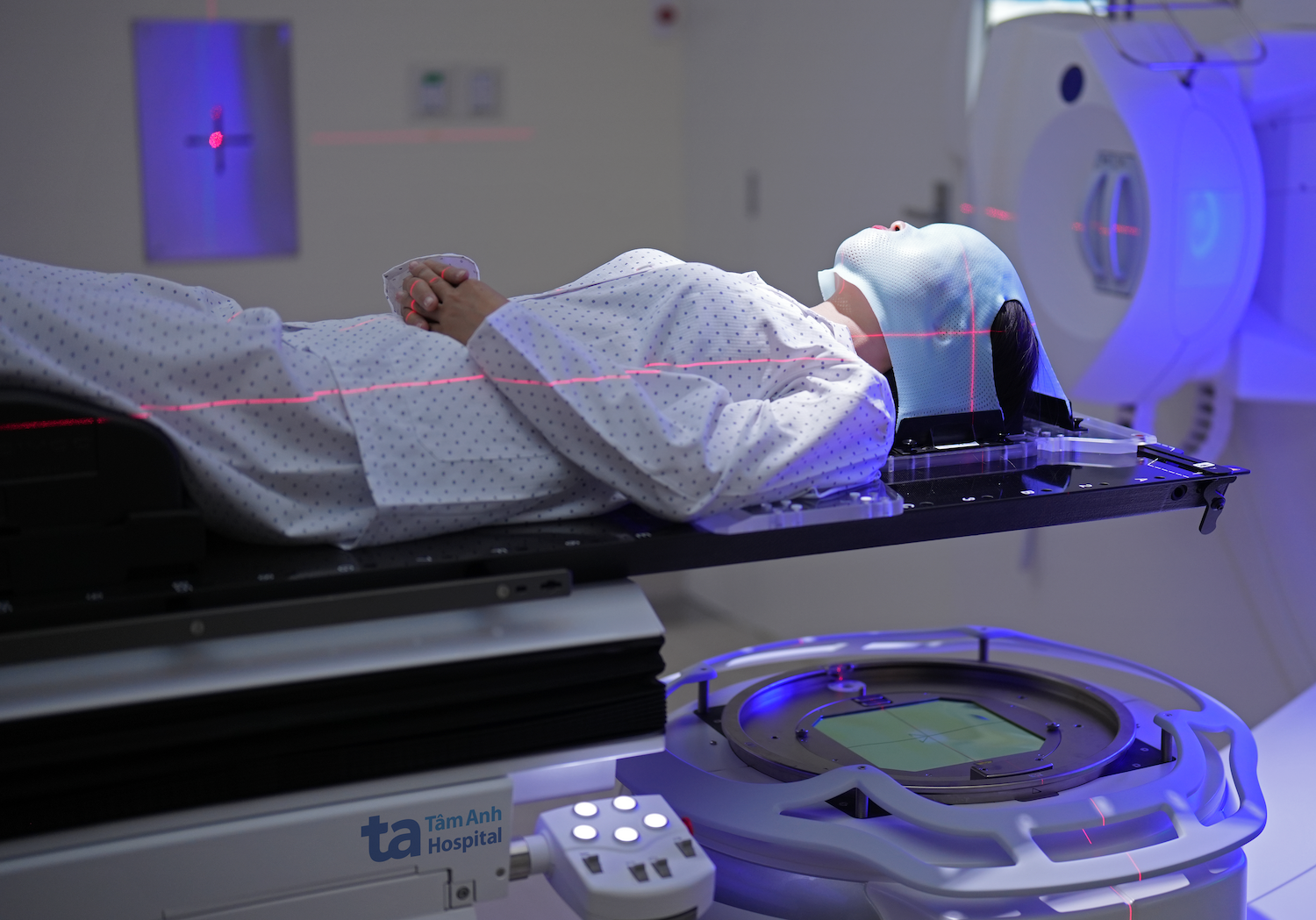 |
Radiation therapy for breast cancer patients with brain metastases. Illustration: Tam Anh General Hospital |
Currently, with the development of modern radiation therapy techniques such as intensity-modulated radiation therapy (IMRT) and volumetric modulated arc therapy (VMAT), many patients can receive hippocampus-avoidance whole-brain radiation therapy (HA-WBRT).
This technique uses planning software and modern linear accelerator systems to minimize the radiation dose to the hippocampus while ensuring the therapeutic dose for all other brain regions. Hippocampus-avoidance whole-brain radiation therapy helps reduce the risk of memory impairment and cognitive dysfunction compared to conventional whole-brain radiation therapy, ensuring effective control of brain metastases for patients.
Since your mother has been advised to undergo radiation therapy, she should visit a multi-specialty hospital with an advanced radiation therapy unit and specialized oncology department. There, doctors can examine her, assess her condition, and select the most suitable technique.
In addition to radiation therapy techniques, doctors may combine cognitive protective medications in some cases as prescribed. Regular follow-ups, including neurological exams, cognitive assessments, or MRI scans, are also crucial for timely intervention if memory is affected, ensuring patients' quality of life.
Master of Science, Doctor Vuong Ngoc Duong
Deputy Head of Radiation Therapy Department
Tam Anh General Hospital Hanoi
| Readers can send questions about cancer here for doctors to answer. |