A 55-year-old fisherman from Gia Lai (formerly Binh Dinh), working on fishing vessel BD 97884, suddenly experienced dizziness, limb weakness, and collapsed on the deck on the morning of 31/12/2025. He quickly developed severe symptoms including difficulty speaking, choking while swallowing, and urinary incontinence. He was admitted to the Nam Yet island infirmary.
Military Hospital 175 coordinated with the island infirmary, conducting three remote consultations and guiding intensive monitoring and treatment. However, during the night of 31/12/2025 and early morning of 1/1/2026, the patient's condition rapidly worsened. His consciousness declined, with a Glasgow score of 9/15, complete right-sided paralysis, and cardiac arrhythmia, necessitating vasopressor medication.
Doctors diagnosed progressive cerebral edema due to a large left hemispheric cerebral infarction, with large cerebral hemorrhage not excluded. He also had underlying conditions such as hypertension, type 2 diabetes, cardiac arrhythmia, and pneumonia. Given the critical prognosis and high risk of mortality, doctors secured his airway, managed cerebral edema, and closely monitored his cardiovascular and neurological vital signs.
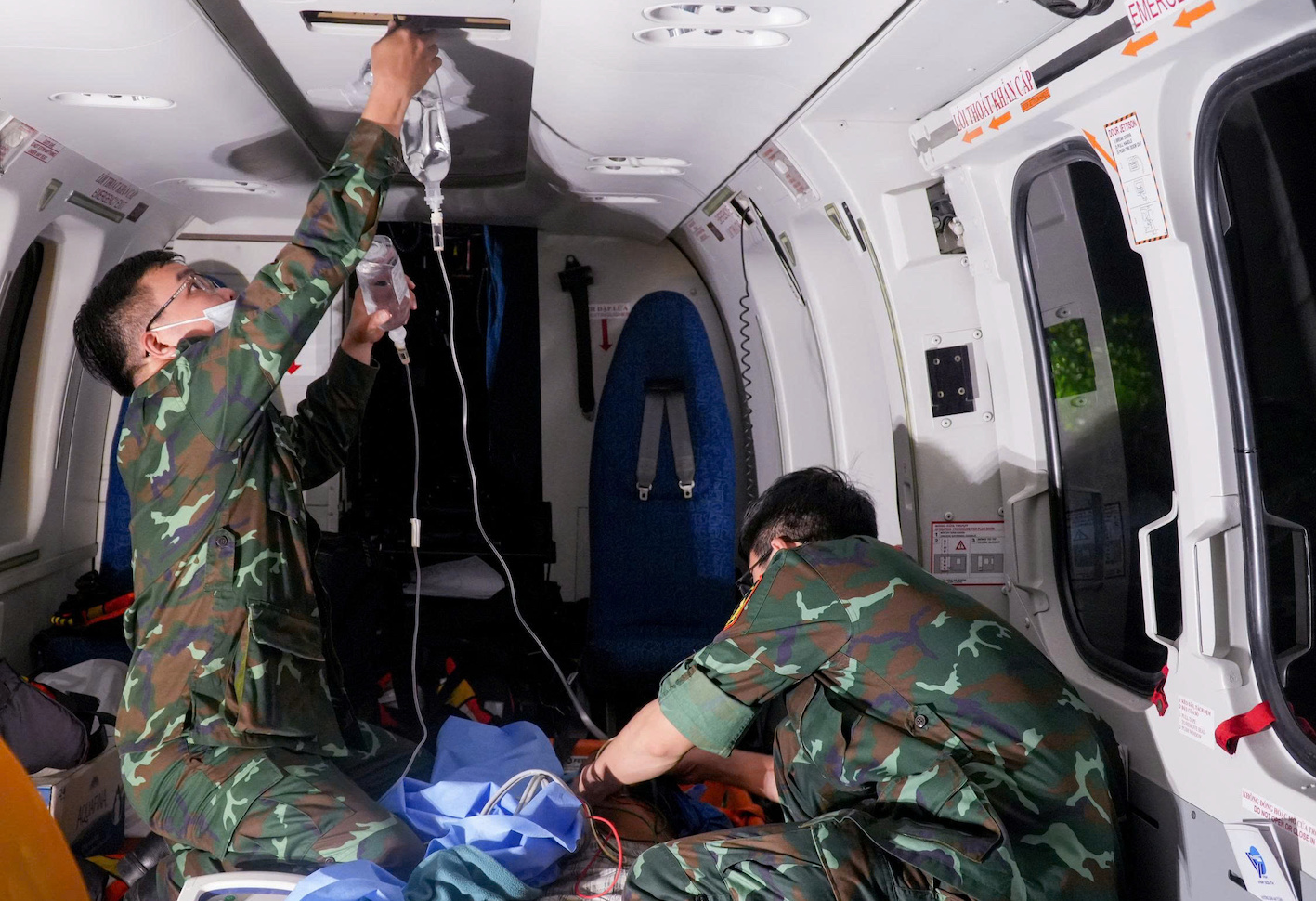 |
The patient was monitored on the helicopter. Photo: Hospital provided |
Faced with this critical situation, Military Hospital 175 requested the Ministry of National Defense to approve air transport for the patient, despite the inherent risks. In the late afternoon of 1/1/2026, a helicopter from Air Force Corps 18 and the Air Ambulance Team from Military Hospital 175 flew to Nam Yet island to bring the patient to the mainland.
Captain, Doctor Nguyen Van Nghia, head of the air ambulance team, stated that the transport process on the helicopter faced numerous challenges due to confined space, strong vibrations, loud noise, and a long flight over the sea. The team had prepared external pacemakers and respiratory control equipment. They coordinated with the flight crew to maintain an appropriate altitude to minimize impact on the patient's condition, while closely monitoring vital signs throughout the flight.
Early this morning, the helicopter safely landed at the helipad of the Orthopedic Trauma Institute, Military Hospital 175. The patient was immediately transferred to the emergency department for continued intensive treatment.
 |
The patient was moved from the hospital rooftop helipad to the emergency department. Photo: Hospital provided |
According to leaders of Military Hospital 175, this emergency flight on New Year's Day demonstrated the professional competence and responsibility of the medical team and flight crew. This operation underscores the critical role of the air ambulance system in providing healthcare for citizens and personnel serving in remote island areas.
Le Phuong