On 22/3, Thu Cuc TCI Healthcare System announced it is the first unit in Vietnam to deploy Endocyto 520x cellular-level super magnification endoscopy technology, enhancing the quality of early diagnosis for digestive diseases.
The announcement took place during the scientific workshop "Application of advanced techniques in digestive endoscopy," organized by Thu Cuc TCI in collaboration with Olympus Vietnam Medical Equipment Company Limited, under the patronage of the Center for Support and Continuous Education (CSCE) of the Vietnam General Medical Association.
The workshop chairs included Meritorious Doctor, Associate Professor, Doctor Vu Van Khien, Vice President and General Secretary of the Vietnam Association of Gastroenterology and a digestive expert at TCI, along with Associate Professor, Doctor Duong Quang Huy, Head of the Department of Gastroenterology, Military Hospital 103. The event also featured domestic and international speakers.
More than 100 doctors from various institutions, including Central Military Hospital 108, Bach Mai Hospital, Hanoi Medical University Hospital, Saint Paul Hospital, Military Hospital 103, Hospital 198, and other hospitals, attended the workshop. This gathering fostered a forum for exchanging ideas on trends in artificial intelligence (AI) applications and advanced techniques in digestive endoscopy.
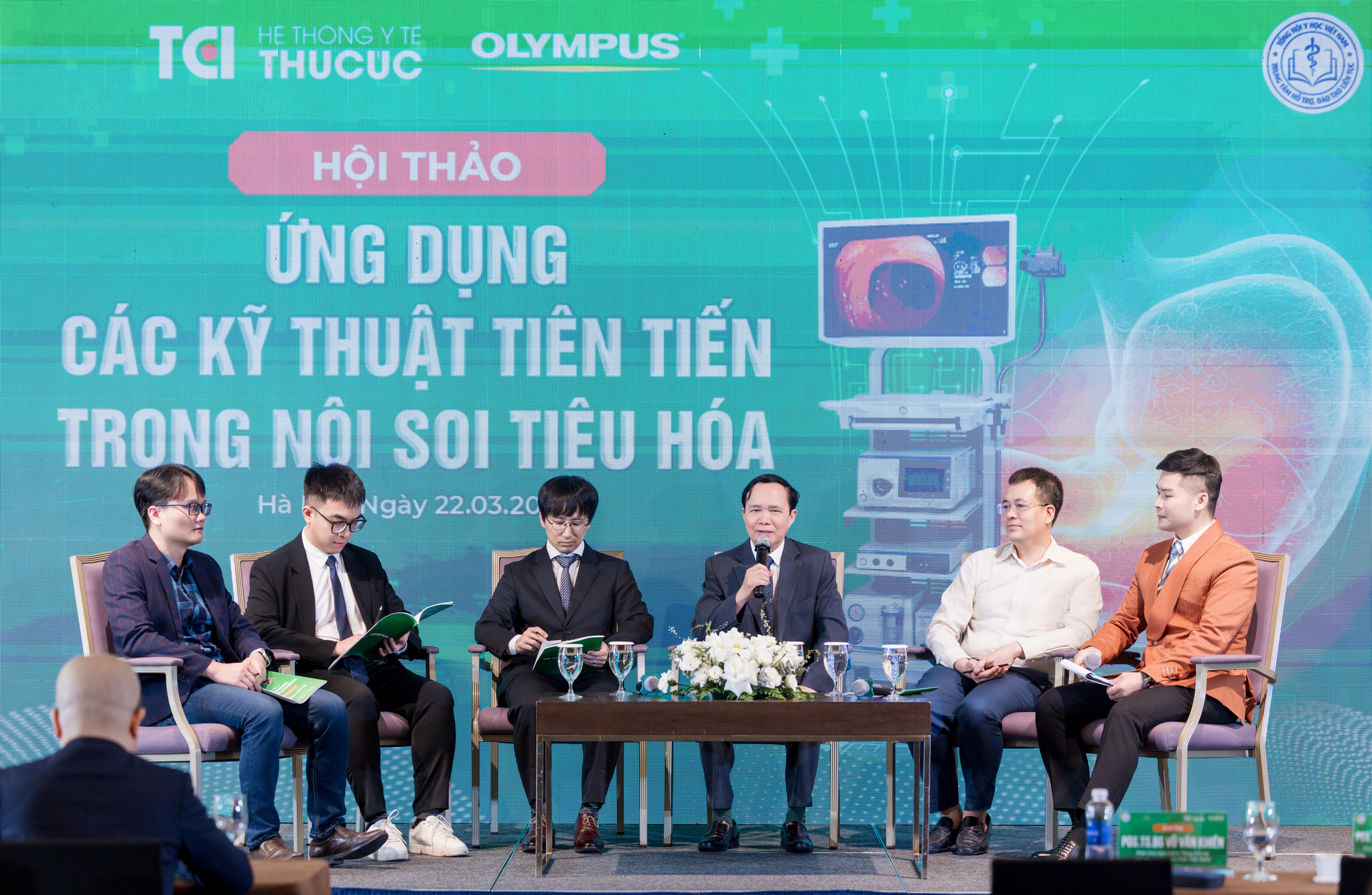 |
Delegates discuss modern technology trends in digestive endoscopy at the workshop. Photo: Thu Cuc TCI |
According to a Thu Cuc TCI representative, Endocyto 520x is a new-generation endoscopy technology developed by Olympus. It magnifies images up to 520 times, allowing doctors to directly observe cellular structures and mucosal microvessels during the endoscopy procedure.
Unlike conventional endoscopy, cellular-level endoscopy extends observational capabilities to the microscopic level. This allows for the identification of the smallest mucosal changes from their earliest stages.
The burden of digestive diseases in Vietnam is significant. Globocan 2022 data indicates that colorectal cancer and gastric cancer rank fourth and fifth, respectively, in new cases for both genders. Many precancerous or early-stage cancer lesions often progress silently, with almost no clear symptoms. According to NIDDK, most colon polyps are asymptomatic. NCI notes that early-stage gastric cancer causes only vague symptoms like bloating and indigestion, which are easily overlooked.
In this context, early detection is increasingly seen as the "key" to effective treatment. The WHO emphasizes that early-stage diagnosis provides patients with better access to treatment, improving prognosis and reducing healthcare burdens.
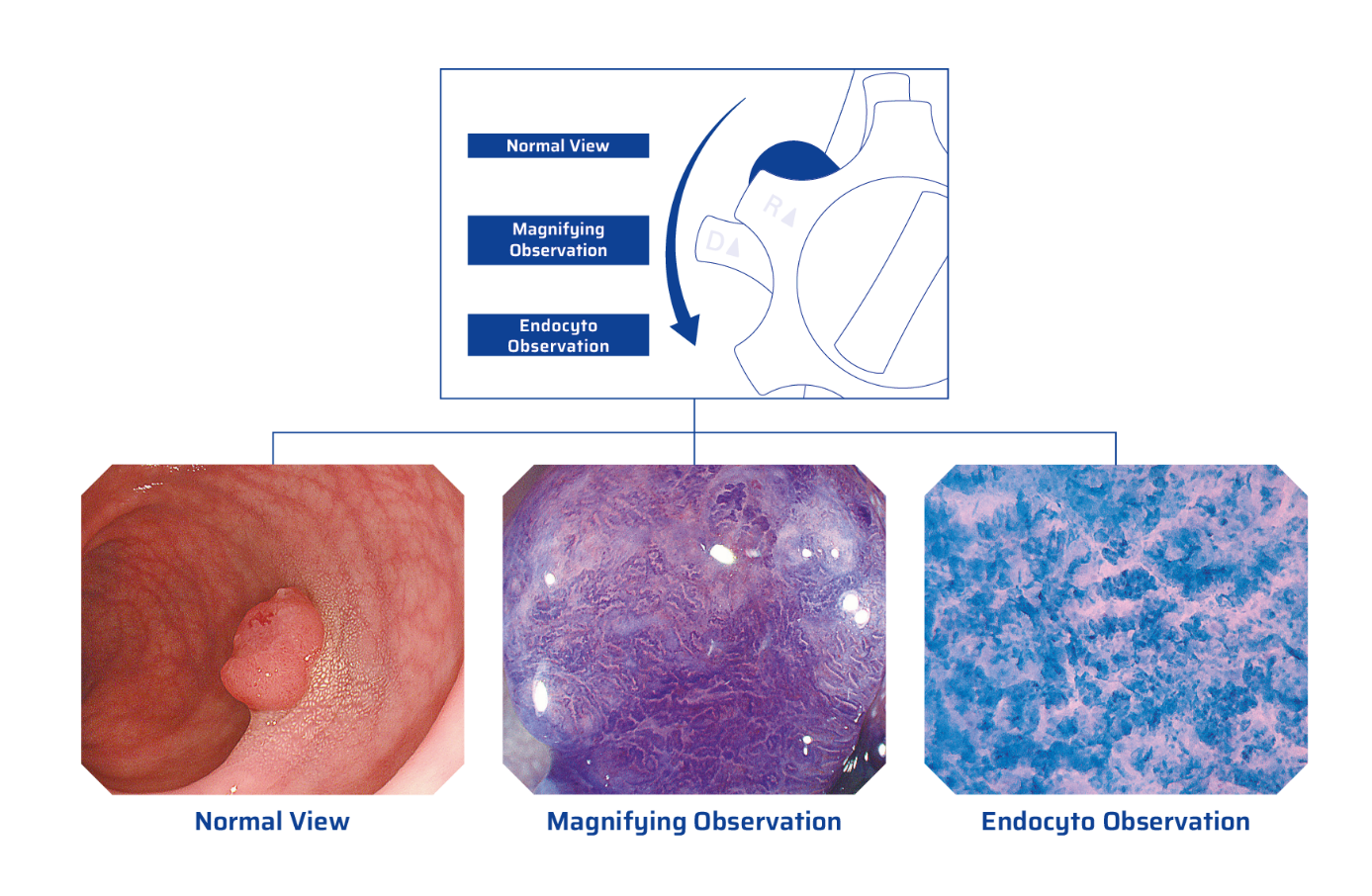 |
Endocyto 520x extends observational capabilities from conventional endoscopy to magnified and cellular-level endoscopy. Photo: Thu Cuc TCI |
At Thu Cuc TCI, Endocyto 520x is not a standalone technology but an integral part of a modern endoscopy ecosystem undergoing deep investment. This cellular-level endoscopy technology is integrated with imaging platforms such as TXI, NBI, RDI, EDOF, and real-time artificial intelligence (AI), creating a multi-layered endoscopy system. Each technology plays a specific role: clarifying mucosal structures, identifying microvessels, enhancing image quality, and suggesting suspicious areas, thereby assisting doctors in more accurate lesion assessment during endoscopy.
From a clinical perspective, this approach aims to enhance early detection capabilities, particularly for small, flat, or conventionally difficult-to-identify lesions, rather than merely increasing magnification.
From the patient's perspective, cellular-level endoscopy is expected to facilitate earlier detection of easily overlooked abnormalities. This assists doctors in proactive monitoring, guiding biopsies, or timely intervention. However, experts also emphasize that Endocyto 520x does not replace histopathological examination; instead, it supplements imaging data to improve accuracy in lesion assessment.
Given that many colon polyps can be asymptomatic yet carry a risk of progression, early detection and treatment through endoscopy are crucial for cancer prevention. Therefore, the value of Endocyto 520x lies not only in its technological novelty but also in its ability to expand early diagnostic opportunities—a key factor in improving treatment efficacy for patients.
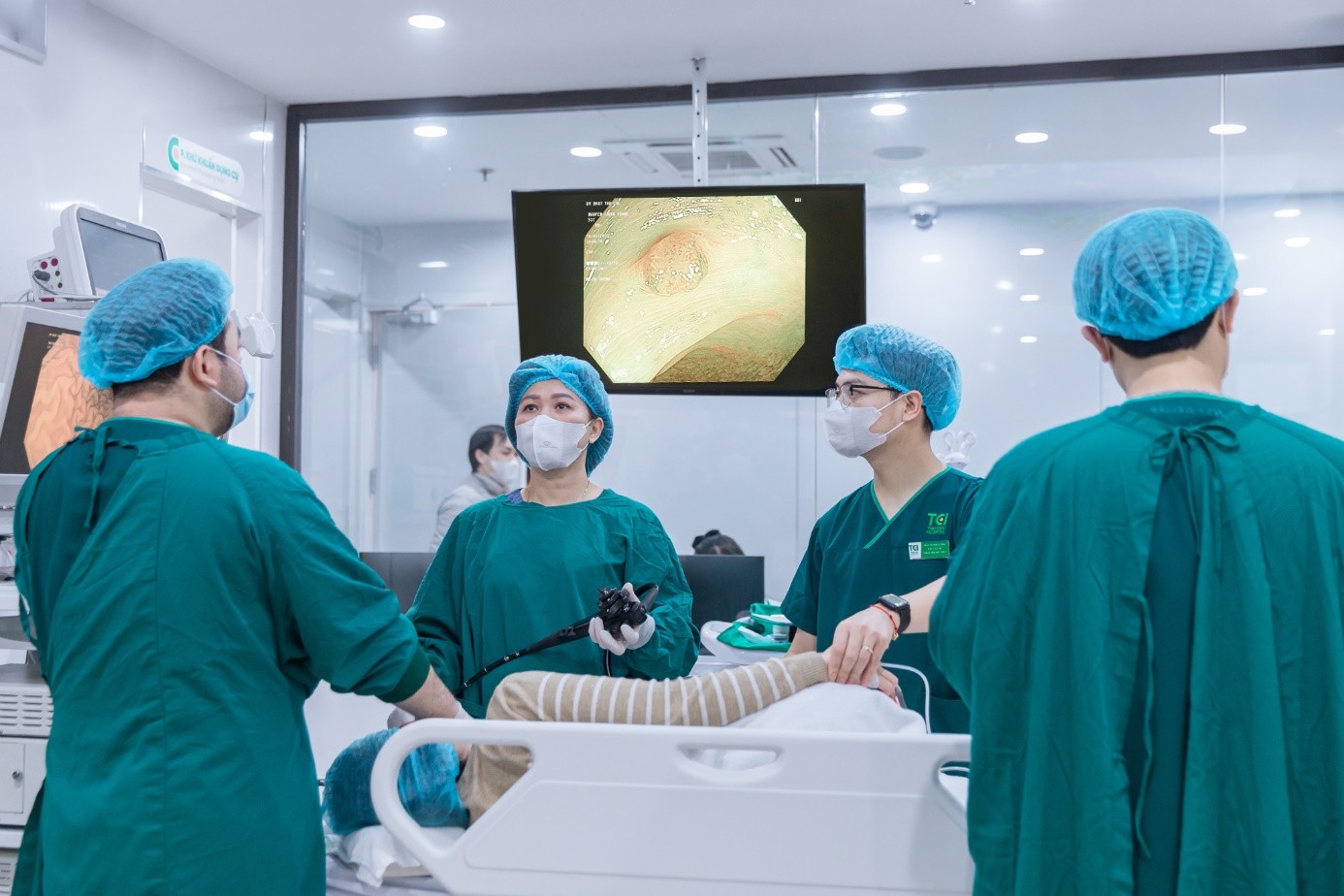 |
Experienced medical team and modern equipment at Thu Cuc TCI. Photo: Thu Cuc TCI |
According to experts, digestive endoscopy, despite being a fundamental method, still carries a risk of missing lesions, especially small abnormalities or those in hard-to-observe locations. Early detection is critical for treatment effectiveness, potentially increasing survival rates up to 90% if detected at an early stage.
The Endocyto 520x system allows for observation and assessment of lesions at the cellular level, providing additional data to support early detection of precancerous lesions. This technology helps guide biopsies more accurately and reduces the risk of missing small, flat, or subtle lesions. When combined with artificial intelligence (AI), the system can assist in identifying lesions smaller than 5 mm, standardize endoscopy procedures, and enhance diagnostic reliability.
The Dan