Tonsils are large lymphatic tissues located on both sides of the oropharynx. They play an immune role, fighting pathogens that enter the body through the nose and mouth. As the first point of contact for bacteria and viruses, tonsils are prone to weakening, swelling, and inflammation. Symptoms of tonsillitis include a sore throat, red and swollen tonsils, swollen neck lymph nodes, painful swallowing, ear pain, fever, bad breath, and voice changes.
Tonsils perform their immune function effectively only when healthy. Frequent tonsil infections compromise this function. Doctors typically recommend tonsillectomy if acute tonsillitis recurs multiple times, such as at least 7 times in one year; at least 5 times per year for two consecutive years; or at least three times per year for three consecutive years.
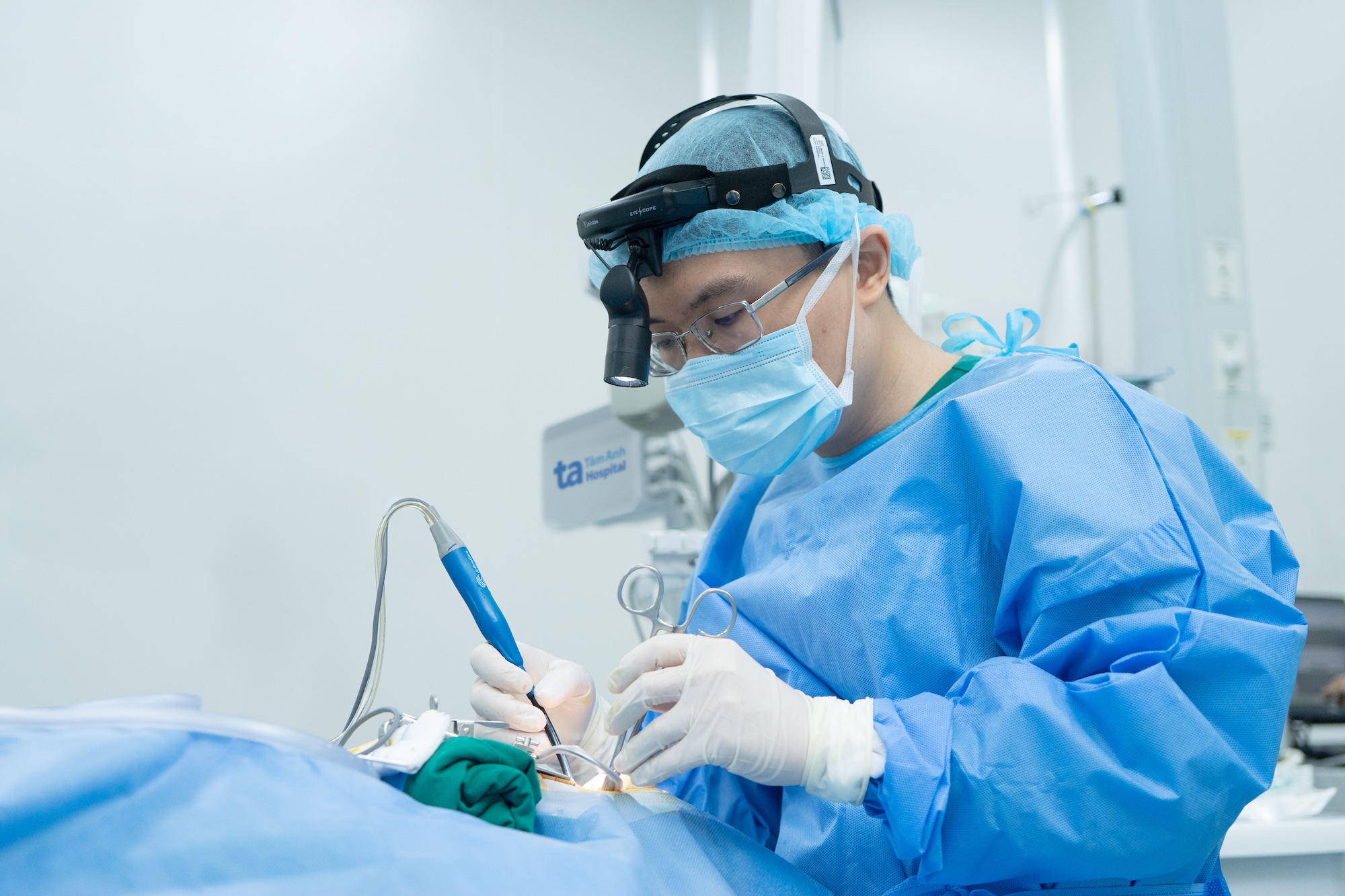 |
Doctor Tuong performing a tonsillectomy. *Photo: Tam Anh General Hospital*.
Tonsillectomy is also indicated for individuals with grade 3 or 4 tonsil hypertrophy, which restricts the airway, leading to snoring and obstructive sleep apnea. It is also considered for those with a history of tonsillitis causing complications like peritonsillar abscess. For children, however, surgical indications also depend on their physical condition, weighing the benefits and drawbacks of removing or retaining the tonsils to ensure optimal development.
There is no specific age requirement for children undergoing tonsillectomy. Children from three years old can have a tonsillectomy if the inflammation is severe and they meet the necessary conditions regarding weight, health, and consciousness. Conversely, a 9-10 year old child with unstable health or co-existing medical conditions that could affect surgery would not be recommended for the procedure. You should take your child for a medical examination so a doctor can assess the condition, provide a diagnosis, and determine the appropriate course of action.
After a tonsillectomy, patients typically do not experience recurrent tonsillitis, but they can still develop pharyngitis or adenoiditis (in children). Therefore, post-procedure care for your child is crucial, including daily gargling with physiological saline, keeping the throat warm, avoiding dusty environments, and wearing a mask when outdoors.
Currently, advanced Plasma technology and new-generation Coblator blades, operating at low temperatures of 60-70 degrees C, allow tonsillectomies to be performed gently and quickly in 30 minutes. These methods thoroughly remove inflammatory foci, provide local hemostasis, and do not damage surrounding tissues. Patients can speak and eat three hours after the procedure. They should drink plenty of water, avoid spicy and hot foods, and refrain from shouting or speaking loudly.
Master of Science, Doctor, Level 1 Specialist Truong Tri Tuong
Ear, Nose, Throat Center
Tam Anh General Hospital Ho Chi Minh City
| Readers can submit questions about ear, nose, and throat conditions here for a doctor's response. |