Dr. Nguyen Thanh Sang, head of the Clinical Psychology - Rehabilitation - Traditional Medicine Department at Children's Hospital 2, explained that when children watch short videos, their brains are continuously stimulated by dopamine, a chemical creating feelings of pleasure and reward. Short, fast-paced, and engaging content can draw children into a state of continuous excitement.
When viewing is suddenly stopped, children may experience a sense of emptiness, discomfort, and restlessness. This phenomenon is also known as a "dopamine crash", a state of reduced excitement after the brain becomes accustomed to high levels of stimulation.
"Due to their limited ability to regulate emotions, children often react strongly, such as crying, throwing tantrums, screaming, or having emotional outbursts when disconnected from the screen," the doctor explained.
Dr. Sang noted that if this situation persists, children may exhibit reduced patience, difficulty concentrating, increased irritability, and less adaptability to real-life activities that demand waiting and effort. Over time, this negatively impacts emotional development and relationships with parents and others.
Short videos, however, are not entirely harmful if used correctly. Instead of allowing algorithms to dictate the content children access, parents can proactively transform short videos into supportive learning tools.
Parents should prioritize educational videos lasting one to three minutes, which provide knowledge, life skills, or simple scientific content appropriate for their age.
Parents should also watch with their children and ask open-ended questions like, "What do you see?" or, "What did you learn?" to encourage children to think, remember, and interact rather than passively receiving information.
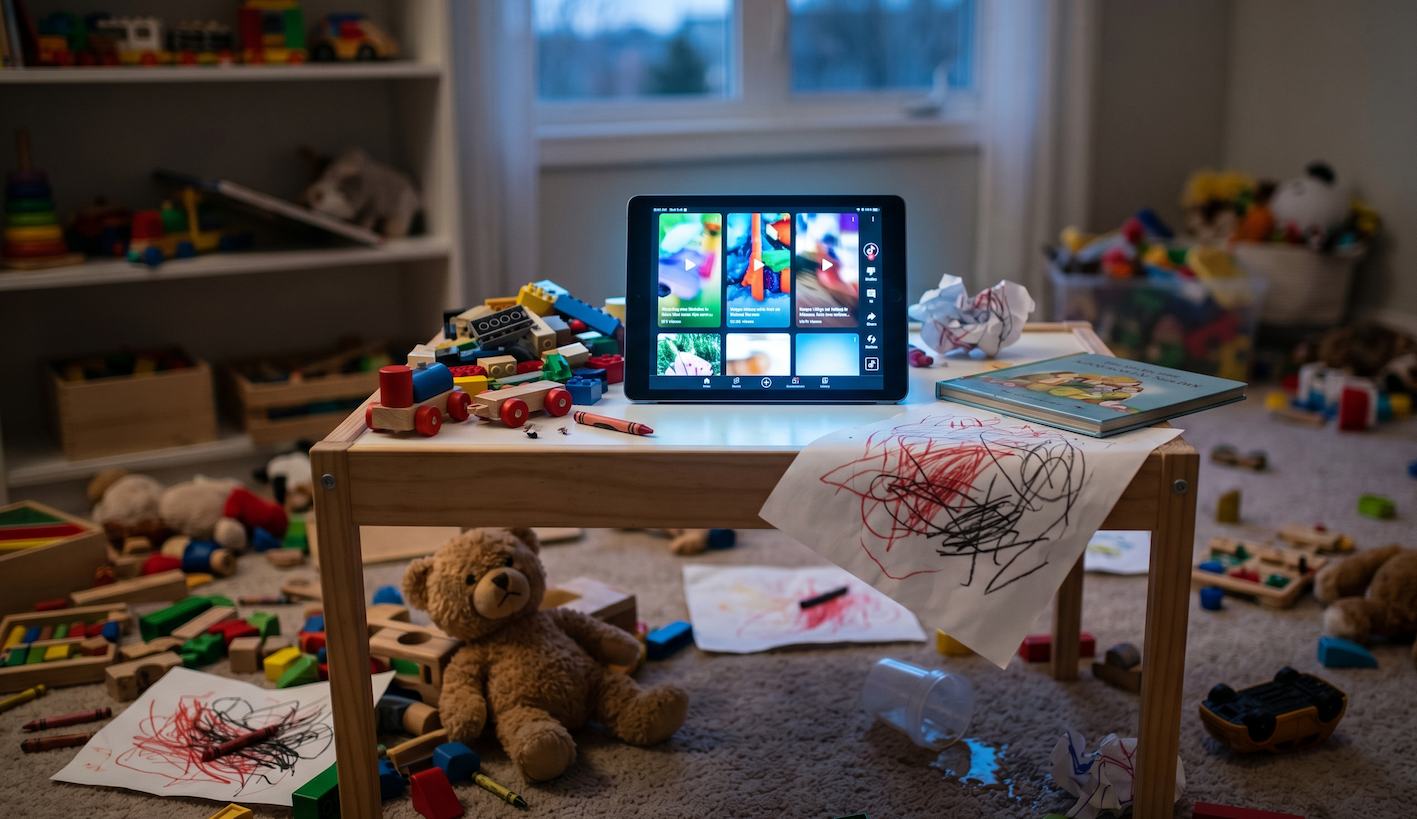 |
AI illustration |
Additionally, parents should establish clear time limits for viewing and balance screen time with real-world activities such as drawing, outdoor play, reading, or storytelling. Slower-paced content with clear goals should also be prioritized over rapid, highly stimulating entertainment videos.
"Parents should transform screens into a child's learning companion, rather than a 'babysitter'," Dr. Sang advised, emphasizing that adults also need to set an example by limiting unnecessary phone scrolling in front of their children.
Le Phuong