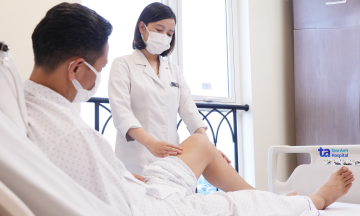
Mr. Truong endured dull pain across the left side of his face for two weeks. An MRI at Tam Anh General Hospital Hanoi showed no abnormalities in his nervous system. However, it revealed a lesion in his left maxillary sinus, extending through the superior maxillary sinus opening into the left middle nasal meatus. An ear, nose, and throat endoscopy confirmed a discharge of pus from the left nasal cleft, swollen mucous membranes, and a deviated nasal septum.
Dr. Tran Thi Hoa, from the Department of Ear, Nose, and Throat, diagnosed Mr. Truong with acute left rhinosinusitis, suspected to be fungal, and recommended surgery.
 |
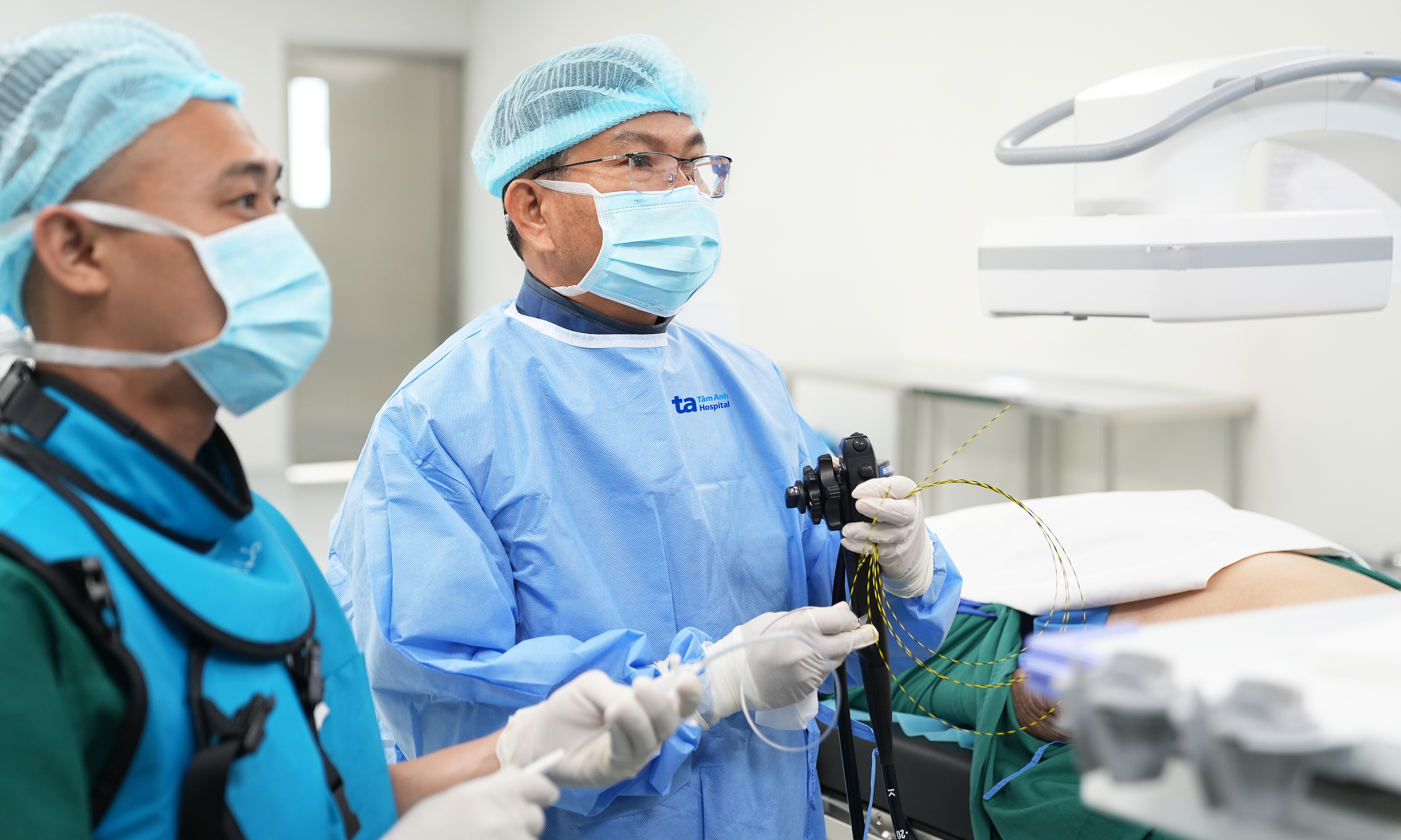
Dr. Hoa (center) performs endoscopic sinus surgery on a patient. Photo: Tam Anh General Hospital
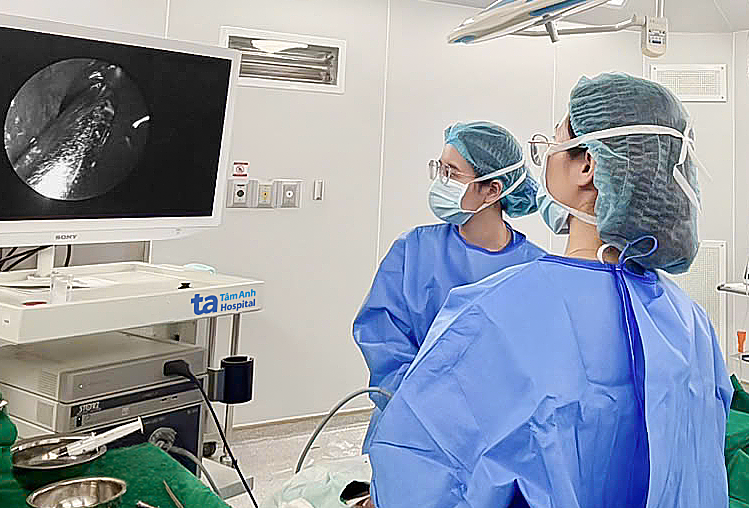
During the surgery, doctors observed that the left nasal cavity was narrowed due to the deviated septum, and the middle meatus contained thick white pus. After cleaning the inflamed area, the doctors removed all fungal tissue and inflamed lesions from the sinus.
The patient also underwent septoplasty to improve nasal airflow. Subsequent histopathology results confirmed the presence of Aspergillus fungus. This common mold is typically harmless to healthy individuals but can colonize and thrive in the sinuses of those with compromised immune systems.
Mr. Truong had experienced sinusitis symptoms for several years but had not sought complete examination or treatment. Dr. Hoa explained that continuous recurrent inflammation, combined with his deviated nasal septum, narrowed one side of his nasal cavity, obstructing fluid drainage. The prolonged accumulation of mucus created a favorable environment for Aspergillus to grow, leading to sinus blockage, increased pressure within the sinus cavity, and persistent dull pain on one side of his face.
If not detected and treated promptly, sinus fungus can invade the eye socket, causing vision impairment or blindness, meningitis, or a brain abscess.
Following surgery, Mr. Truong received medical treatment including antibiotics and anti-edema medication, along with nasal and sinus hygiene care. The patient recovered well, his facial pain subsided, and he was discharged for outpatient monitoring.
Dr. Hoa advises individuals experiencing persistent facial pain without a clear neurological cause to seek examination at an ear, nose, and throat specialist to rule out sinus conditions, including sinus fungus. Ear, nose, and throat endoscopy is a simple, minimally uncomfortable procedure that can be performed in the clinic and helps detect abnormalities at an early stage.
Tran Duong
*Patient's name has been changed
| Readers can submit questions about ear, nose, and throat conditions here for a doctor's response. |