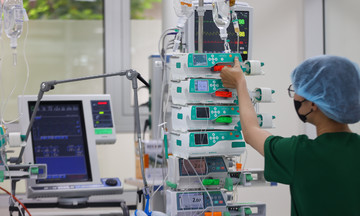
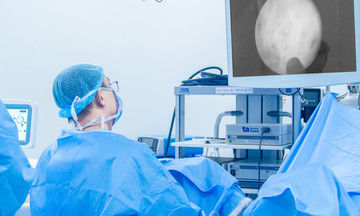
On 16/11, Doctor Phung Manh Thang, Head of the Infection Control Department, announced that two new ultraviolet (UV) disinfection robots have been activated. This makes Cho Ray the first public hospital in Vietnam to implement such a system. The robots are programmed with a spatial map, allowing them to move independently and emit UV-C rays to eliminate microorganisms on surfaces, particularly in areas difficult to reach manually. They also automatically deactivate their UV emissions upon detecting human presence, ensuring safety.
 |
Equipment used to program and control the robot. Photo: Hospital provided |
As a special-grade specialized general hospital under the Ministry of Health in the South, Cho Ray hospital treats millions of patients annually and conducts thousands of complex surgeries, including liver, kidney, heart, and lung transplants. The rising number of organ donations and transplants necessitates continuous operation of operating rooms. This also means multiple operating rooms, transplant rooms, and post-operative rooms require simultaneous preparation within short timeframes.
According to Doctor Thang, each organ donation can save three to six patients, placing significant pressure on achieving pre-transplant sterility. For organ transplant recipients on immunosuppressive drugs, even a minor error in preparing a sterile environment can lead to severe complications and impact long-term transplant success. Therefore, any solution that reduces preparation time while maintaining sterile safety is crucial.
In previous years, chemical fogging was a common disinfection method in many hospitals. However, it presented several limitations, such as extended waiting times, chemical residue that could damage equipment, and the need for manual operation. These drawbacks were particularly evident in organ transplant operating rooms, where every minute is crucial.
"A chemically fogged operating room requires at least two hours before it can be reused, whereas a UV disinfection robot completes its cycle in just 10-15 minutes", the doctor stated.
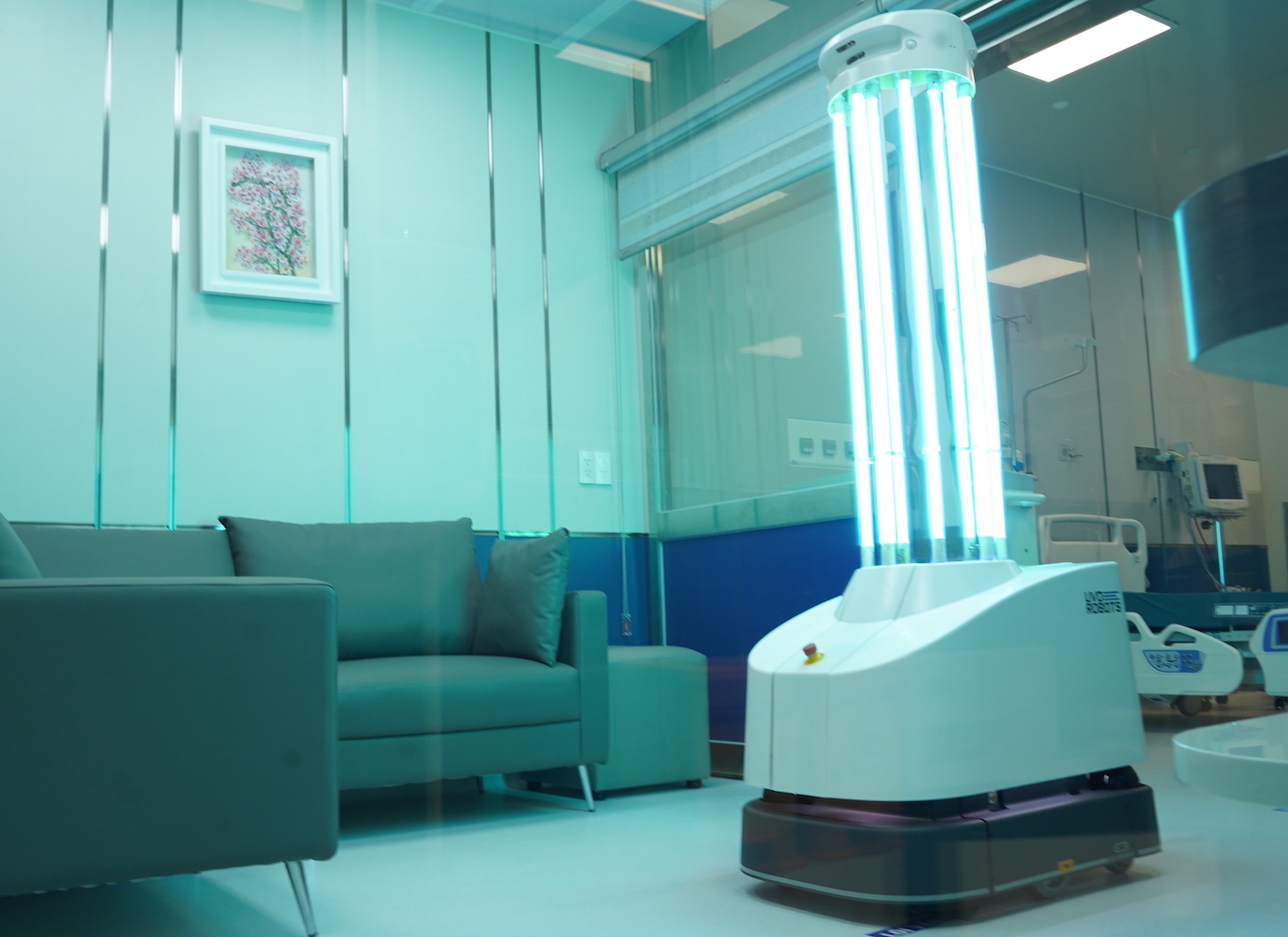 |
Robot performing disinfection. Photo: Hospital provided |
Beyond its speed, the UV robot provides more consistent disinfection effectiveness. It produces no vapor or chemical residue, prevents metal corrosion, and does not affect electronic equipment. This is a particularly important factor in modern operating rooms, which house many high-value machines.
According to hospital leadership, the deployment of disinfection robots is part of the hospital's smart hospital development roadmap. This initiative aligns with the implementation of electronic medical records, integrated hospital information system-electronic medical record (HIS-EMR) systems, and other advanced equipment. The application of UV robots helps reduce infection risks, optimize costs, enhance treatment quality, and showcases Cho Ray hospital's leading role in digital healthcare transformation.
Hospital-acquired infections (HAIs) represent a global health threat. The World Health Organization (WHO) warns that by 2050, nearly 3,5 million people could die annually due to HAIs, a figure more than four times higher than deaths from HIV/AIDS. Statistics from 2022 indicate that among 100 acute patients, seven in high-income countries and 15 in low-to-middle-income countries contract at least one infection during their hospital stay. On average, one in 10 patients dies from these complications.
In Vietnam, over 70 patients at Quang Tri General Hospital experienced infections in operating room 2, resulting in surgical wounds that remained unhealed for months. While it has been confirmed that the infections occurred in the operating room, the hospital has not yet disclosed the specific stage or cause of these infections.
Le Phuong