Mr. Phi’s case highlights the critical importance of consistent medical follow-up for chronic conditions. Initially, he received antiviral medication for hepatitis B virus (HBV). After a period of treatment, his HBV DNA load decreased, and his hepatitis stabilized. He discontinued medication but needed regular follow-up to monitor progression. However, he skipped check-ups for many years, overlooking the ongoing risk despite his stable condition.
Recently, he experienced fatigue, loss of appetite, and a persistent dull pain in his right hypochondrium. He sought examination at Benh vien Da khoa Tam Anh TP HCM. A computed tomography (CT) scan revealed a low-density lesion, approximately 22x24 mm, with distinct arterial enhancement in segment 4 of his liver. Several small nodules, about 5 mm in size, were also noted in subsegments 6 and 7. An ultrasound-guided liver biopsy confirmed early-stage hepatocellular carcinoma (HCC).
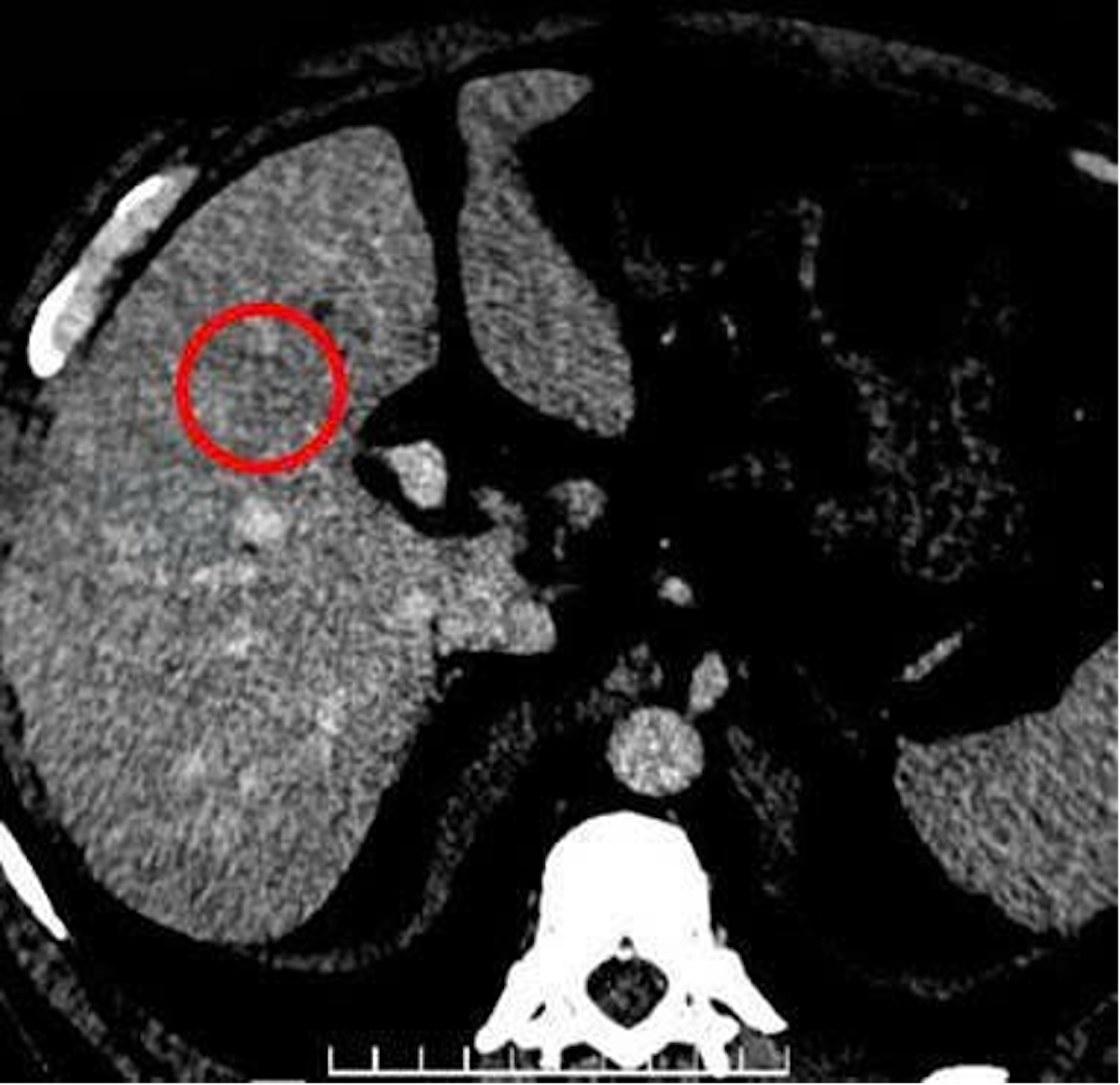 |
CT results showing the liver lesion (red circle). Photo: Benh vien Da khoa Tam Anh |
Following a consultation, doctors decided on radiofrequency ablation (RFA) to treat the liver tumor. Specialist Doctor Grade I Hoang Dinh Thanh, from the Department of Gastroenterology, Center for Endoscopy and Gastrointestinal Endoscopic Surgery, explained it is a minimally invasive treatment technique. It uses heat from radio waves to destroy cancer cells and is often used for small liver tumors and early-stage cancer.
After the intervention, the patient had minimal pain, his health stabilized, and he was discharged after one day. Mr. Phi was scheduled for regular follow-up appointments to monitor treatment effectiveness and screen for recurrence.
 |
Mr. Phi receiving consultation from Doctor Thanh during a follow-up visit. Photo: Benh vien Da khoa Tam Anh |
Chronic hepatitis B is a primary cause of cirrhosis and liver cancer. The risk increases when the virus persists and replicates over time, leading to chronic hepatitis and progressive liver damage.
According to Doctor Thanh, current antiviral medications effectively inhibit hepatitis B virus replication, reducing the risk of cirrhosis and liver cancer. However, these drugs cannot completely eliminate the virus from the body. When the virus has been consistently suppressed for a long time, liver enzymes remain normal, and there are no signs of cirrhosis, a specialist doctor might consider stopping antiviral medication. Nevertheless, after stopping treatment, patients still need close monitoring because the virus can still reactivate.
Liver cancer is common in Vietnam. Globocan reported approximately 26,500 new cases and over 23,000 deaths from the disease in the country in 2022. Doctor Thanh noted that hepatitis B and C virus infections are primary risk factors, accounting for about 80-90% of liver cancer cases.
Doctors advise high-risk individuals to undergo regular health check-ups every six months. They may order liver function tests, HBV DNA load assessment, liver ultrasound, and other necessary tests to screen for liver cancer. Early detection of liver lesions improves treatment outcomes and the prognosis for patients.
Quyen Phan
*Patient's name has been changed