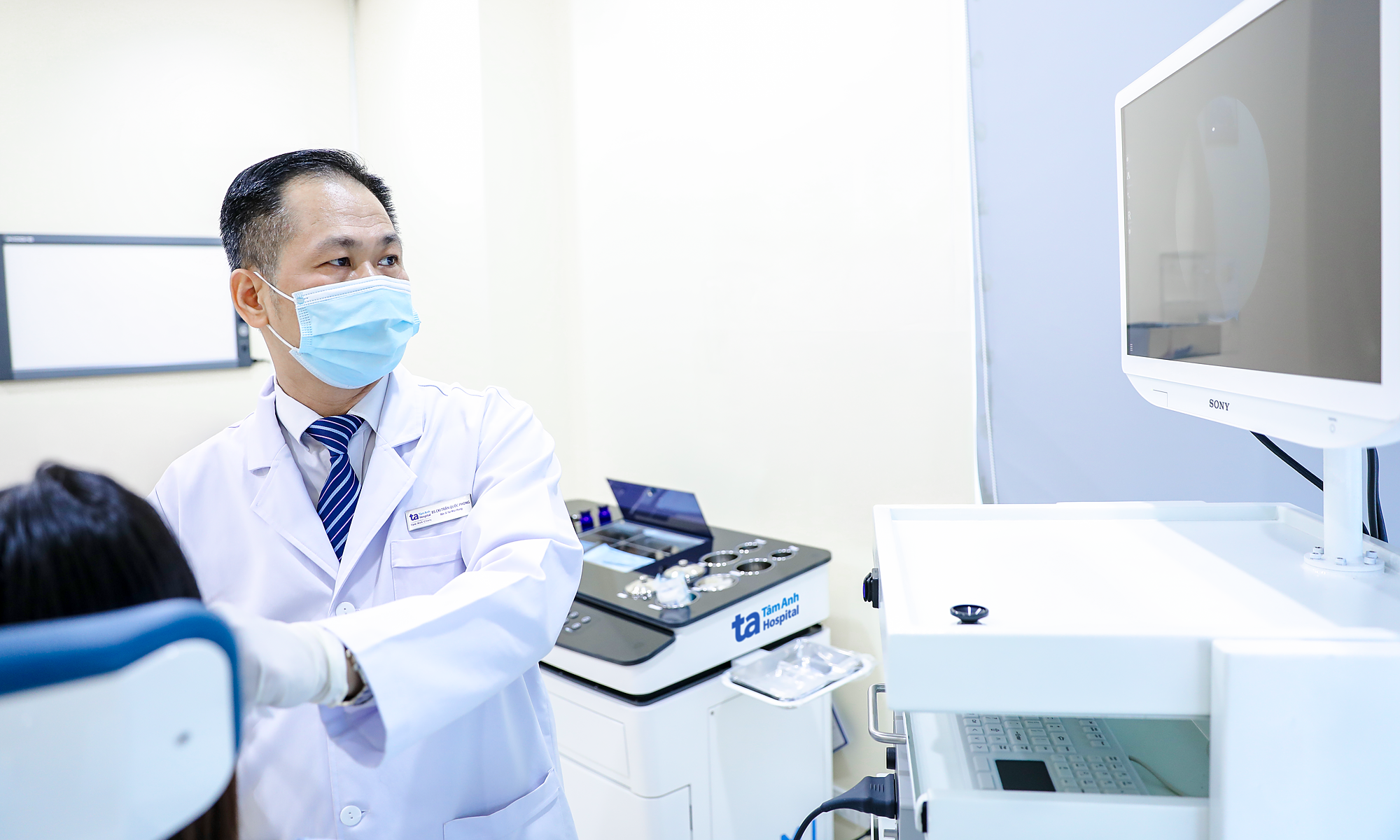
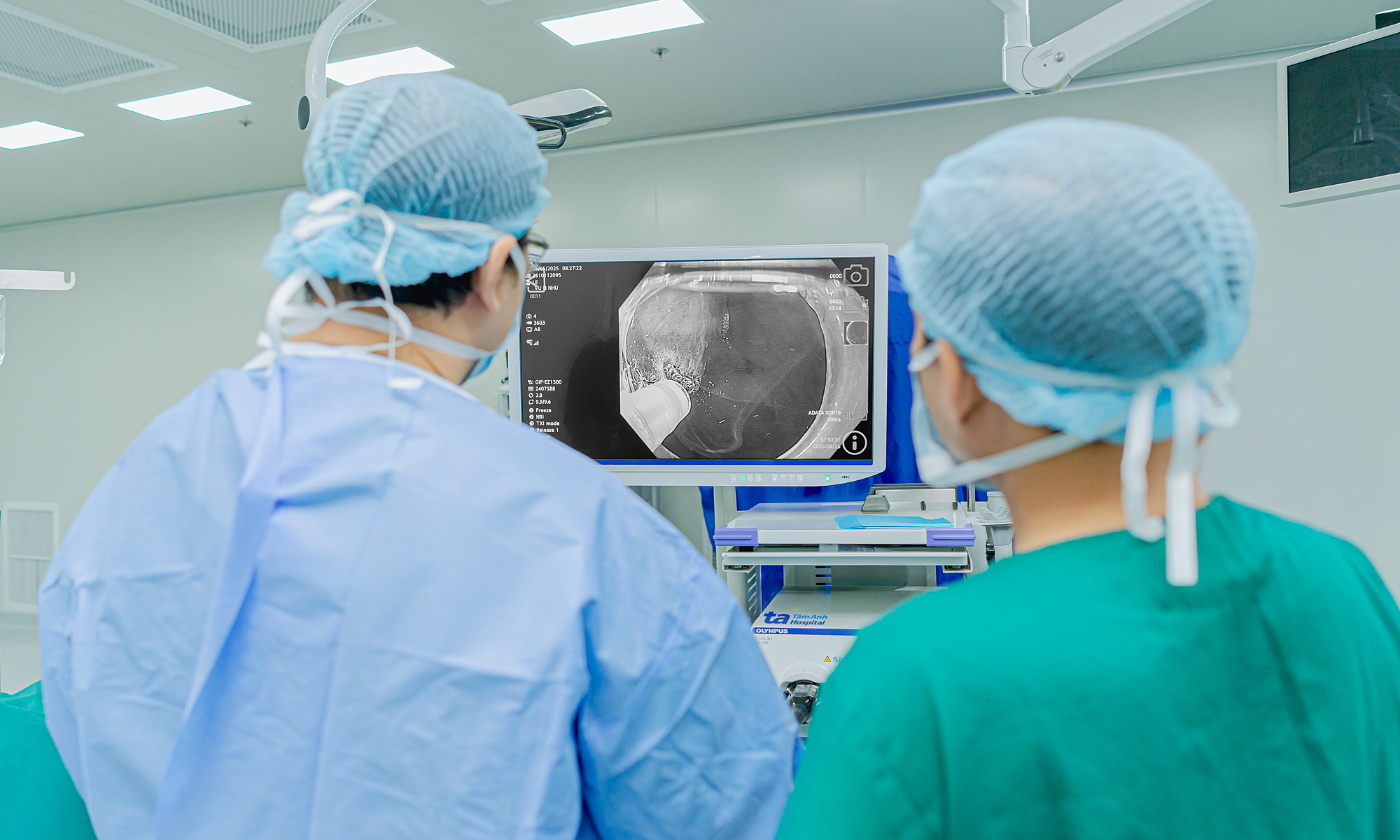
Dr. Nguyen Tan Cuong, Deputy Head of the Urology Department at Tam Anh General Hospital Ho Chi Minh City's Urology - Nephrology - Andrology Center, reported that Ngan had three large tumors measuring 2-3 cm and six smaller ones measuring about 5-10 mm. These tumors caused painless gross hematuria, characterized by red, pink, or dark-colored urine. This condition is often mistaken for benign issues like urinary tract infections or kidney stones, which can delay diagnosis and treatment.
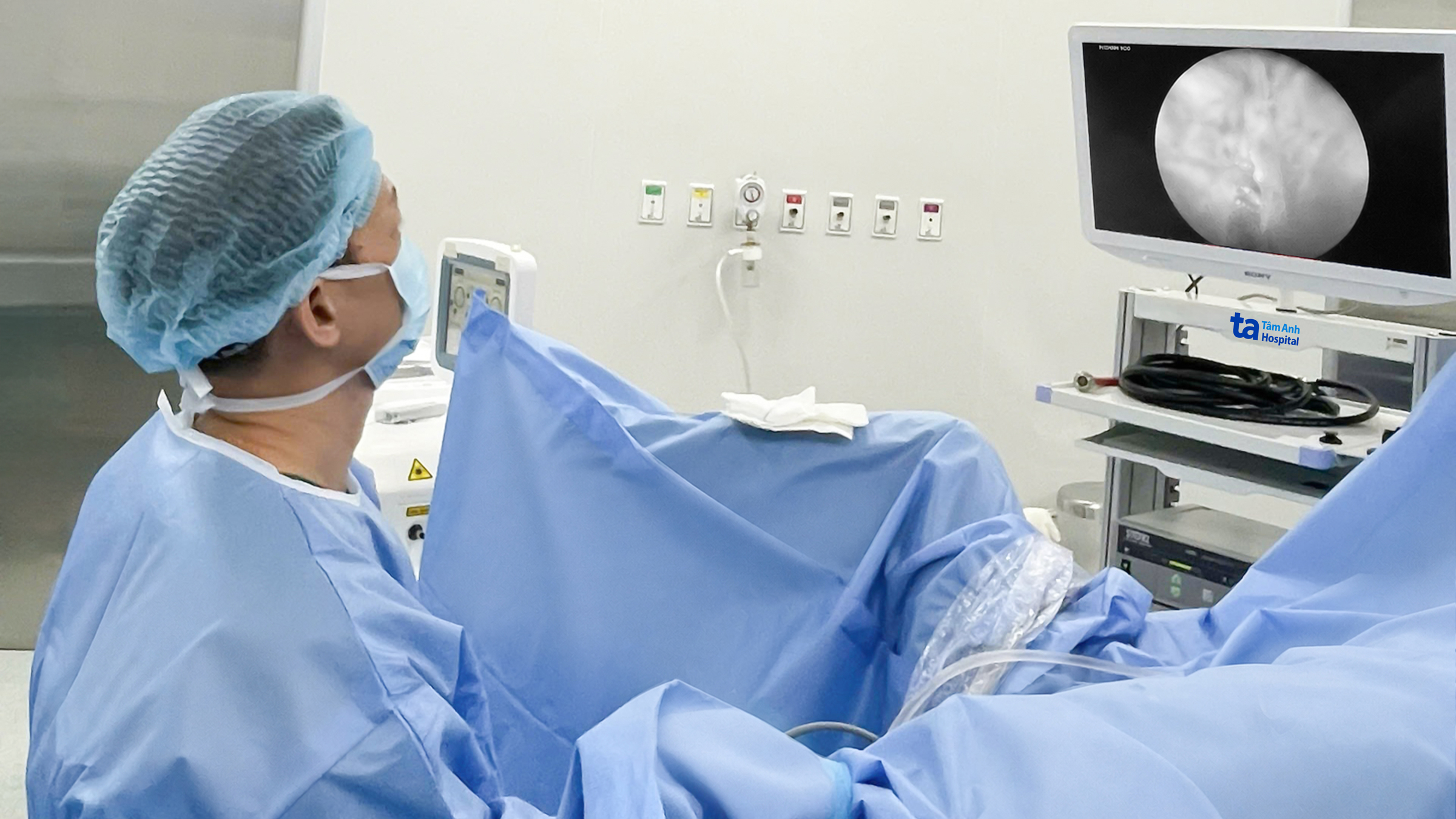 |
Dr. Cuong performs transurethral endoscopic resection of bladder tumors for Ngan. Photo: Tam Anh General Hospital |
Dr. Cuong performed a transurethral endoscopic resection of the bladder tumors for Ngan, eliminating the need for an abdominal incision. The medical team continuously irrigated the bladder to distend it, allowing for a clear view of all lesions and precise localization of each tumor. The doctor used an electrosurgical device to completely remove the tumors down to the bladder muscle layer. After removal, the tumor tissue fragments were suctioned out and sent for histopathological examination to determine the nature of the lesions and their invasion depth, which will guide further treatment protocols.
The transurethral endoscopic resection of bladder tumors is a minimally invasive procedure with a short operating time and anesthesia tailored to the patient's condition, reducing complications for elderly patients. It results in less pain and faster recovery. Following the surgery, Ngan no longer experienced blood in her urine, her health stabilized, and she was discharged after 24 hours.
According to Dr. Cuong, most bladder tumor cases are detected early, before the tumors invade the muscle layer, allowing for conservative treatment. However, the recurrence rate is significant. Therefore, patients require regular follow-up appointments and bladder endoscopy, even if symptoms are absent, to detect any signs of recurrence early and intervene promptly.
Doctors advise individuals over 60, especially those with a history of smoking or industrial chemical exposure, to seek medical attention immediately if they notice blood in their urine, even if it is painless. Urinary tract ultrasound and bladder endoscopy are two fundamental screening techniques that help detect the disease in its early stages, preserving the bladder and maintaining quality of life.
Ha Thanh
*Patient's name has been changed
| Readers can submit questions about urinary tract diseases here for doctors to answer. |