Cataracts occur when the eye's lens becomes cloudy due to altered and aggregated proteins, causing blurred vision like a misty screen or increased glare sensitivity. Glaucoma is a disease that damages the optic nerve, often associated with increased intraocular pressure when aqueous humor does not drain normally.
According to Dr. Doan Thi Phuong Nhi from the High-Tech Eye Center at Tam Anh General Clinic District 7, as cataracts advance, the lens can thicken or swell. This condition narrows the anterior chamber angle, where aqueous humor drains from the eye. If the drainage pathway is blocked, aqueous humor accumulates, leading to increased intraocular pressure, which in turn damages the optic nerve and results in secondary angle-closure glaucoma.
This risk is particularly notable when cataracts have progressed severely, and the lens nucleus becomes hard and swollen. In such cases, patients may experience an acute glaucoma attack with symptoms such as eye pain, redness, blurred vision, seeing colored halos around light sources, accompanied by headaches or nausea.
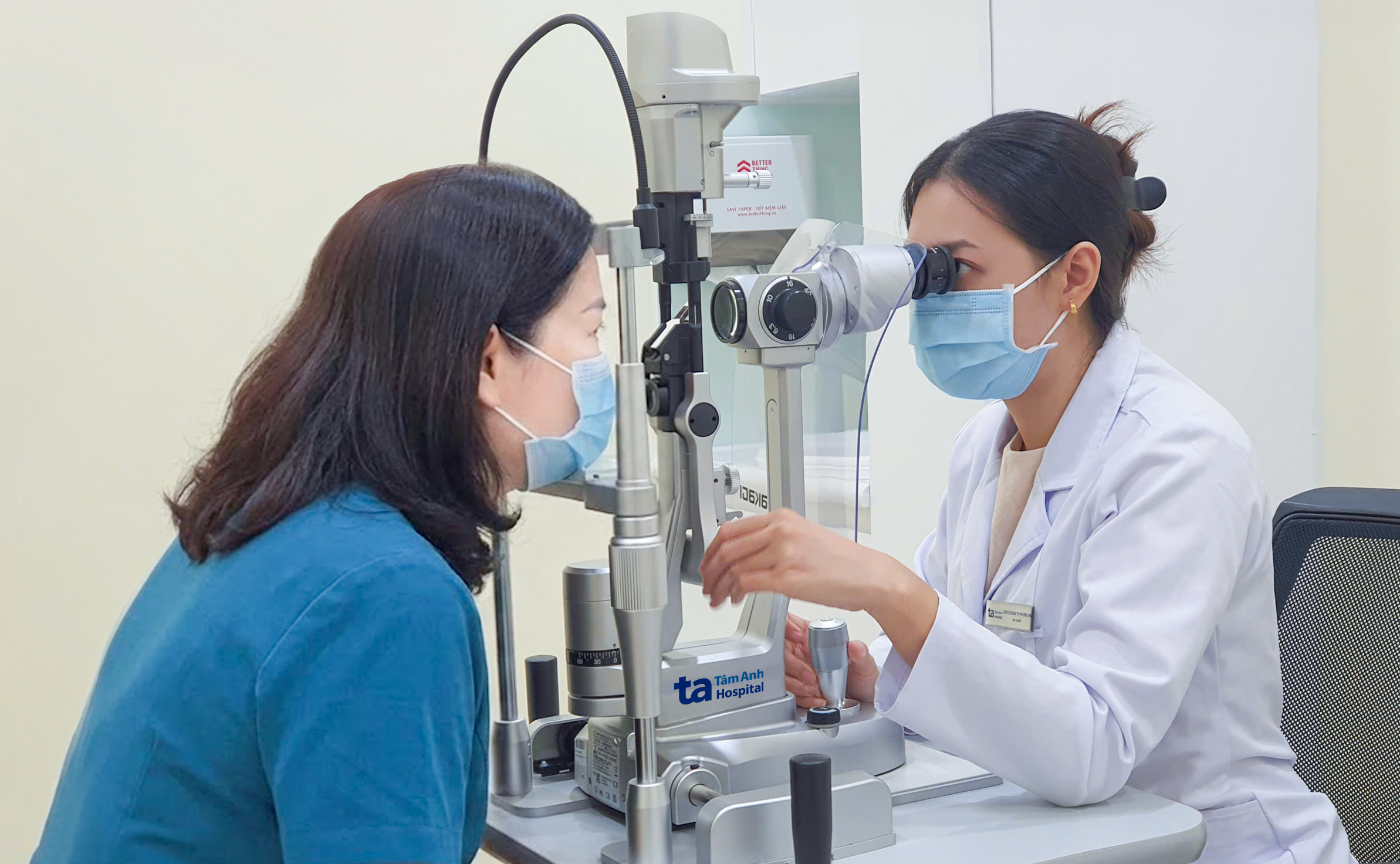 |
Dr. Nhi examines a woman's eye. Illustration: Tam Anh General Hospital.
The damage caused by glaucoma is irreversible. When combined with cataracts, it increases the risk of blindness if not detected and treated promptly. Both cataracts and glaucoma are common in older adults and often appear concurrently, affecting vision.
According to Dr. Nhi, treatment depends on the level of intraocular pressure, optic nerve damage, and the cataract's severity. The goal is to lower intraocular pressure as soon as possible to limit further damage to the optic nerve. Patients may receive medication or surgery, depending on their condition. Doctors may recommend YAG laser intervention—a procedure that uses a high-energy focused laser beam to cut or create openings in eye tissues without an incision, helping to widen the aqueous humor drainage pathway and control eye pressure.
When cataracts obstruct aqueous humor flow, cataract surgery can help free the drainage angle and support intraocular pressure control. In some cases, doctors may combine cataract surgery with glaucoma surgical procedures to achieve optimal treatment effectiveness.
Dr. Nhi advises that not all individuals with cataracts will develop glaucoma. Those with advanced cataracts need regular eye exams to monitor vision, intraocular pressure, and the anterior chamber angle structure. Individuals over 40 years old with risk factors such as underlying diabetes, a history of eye disease, eye trauma, or prolonged corticosteroid use should have eye exams every 6 months. If sudden eye pain, redness, or blurred vision occurs, immediate medical attention is necessary, as these could be signs of an acute glaucoma attack.
Ngoc Kim Tham
| Readers can submit ophthalmology questions here for doctors to answer |