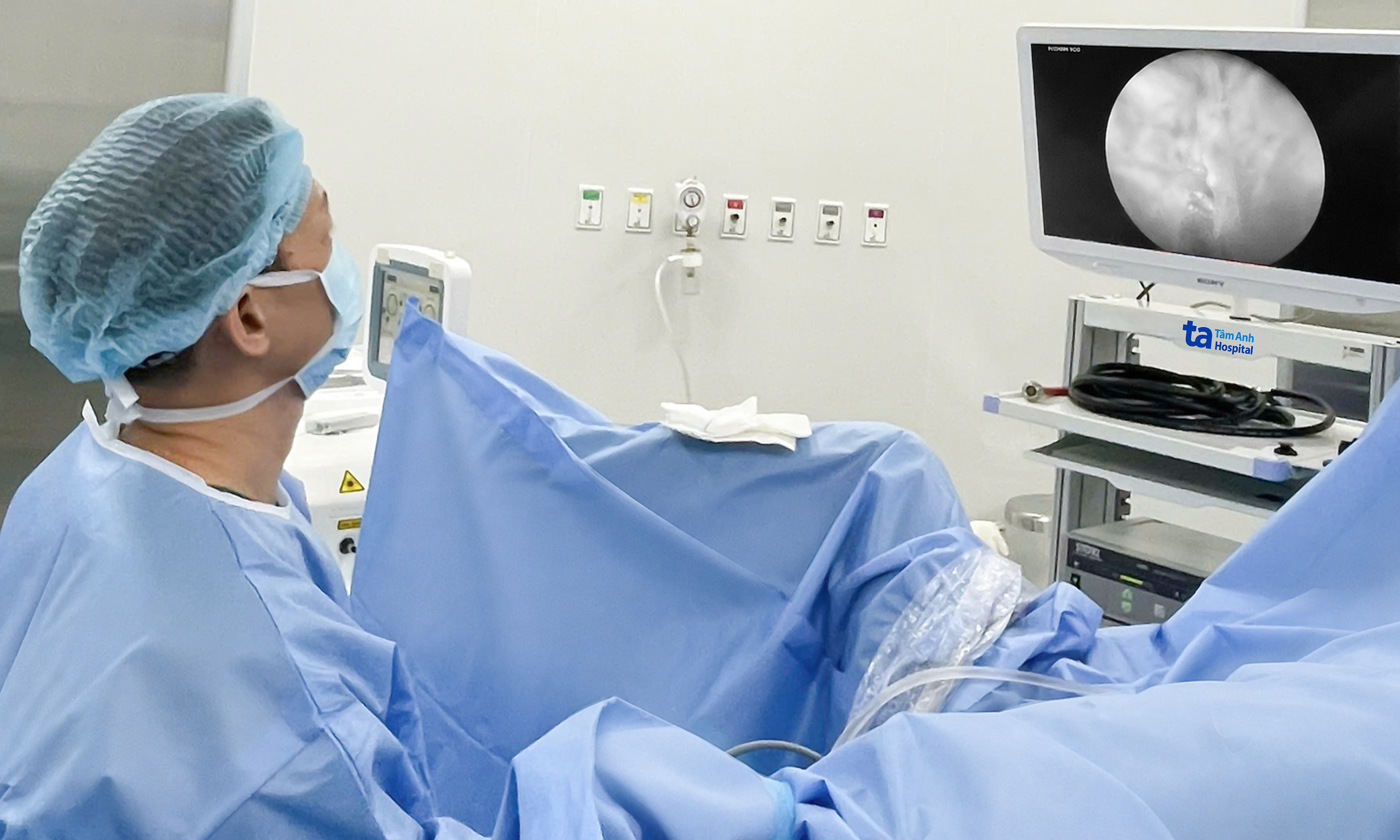
Dr. Nguyen Ngoc Tiep, from the Department of Orthopedic Trauma at Tam Anh General Hospital Hanoi, reported Mr. May's wound measured 2 cm, extended deep into the muscle layer of his right foot, and discharged pus. Mr. May was diagnosed with chronic osteomyelitis. Pus culture revealed two highly antibiotic-resistant bacterial strains. His fasting blood sugar test showed levels above 20 mmol/L, significantly higher than the normal range of below 5,6 mmol/L.
Mr. May had no prior diabetes diagnosis. Dr. Tiep explained this underlying condition prevented the wound on Mr. May's sole from healing, leading to a severe bone infection.
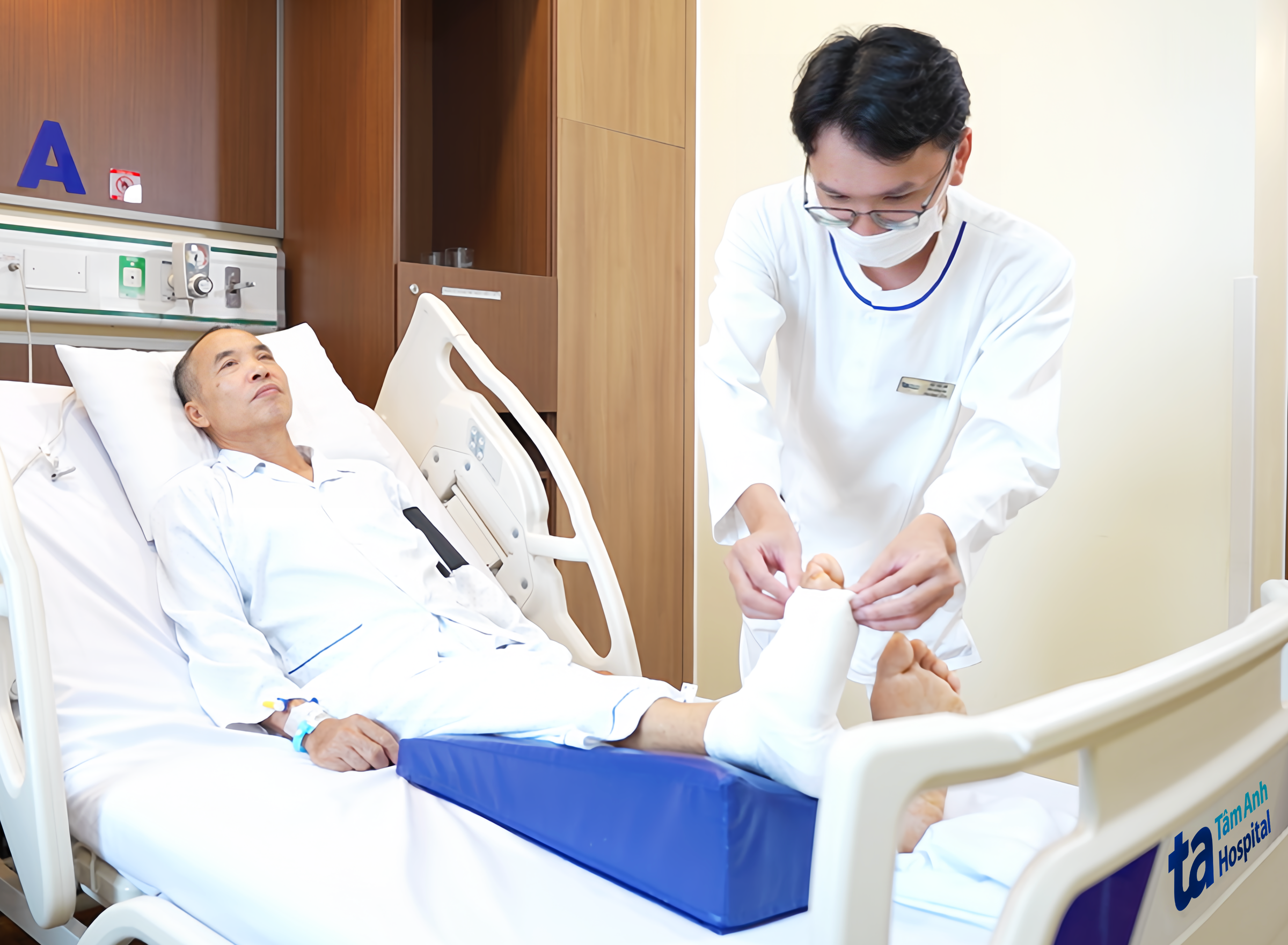 |
Medical staff caring for Mr. May's wound. *Photo: Tam Anh General Hospital* |
Mr. May was hospitalized for 5 days, receiving intensive treatment. This included a specialized regimen of broad-spectrum intravenous antibiotics. He also received intravenous insulin and continuous blood sugar monitoring. Once his blood sugar levels stabilized within a safe range, surgery proceeded to address the bone infection.
Dr. Tiep widened the wound on Mr. May's sole. He debrided necrotic soft tissue and removed the infected portion of the little toe metatarsal bone. The wound was then irrigated and loosely closed to promote healing, preserving the shape of Mr. May's little toe and foot, as requested.
Post-surgery, Mr. May continued to manage his blood sugar with diabetes medication. He received infection treatment based on an antibiogram, using specific drugs for the identified bacterial strains. He was discharged after 8 days, with his wound dry and showing good signs of healing.
The doctor prescribed medication and provided dietary advice to help Mr. May control his diabetes. He completed the full antibiotic course, limited movement and pressure on his foot, kept it dry, and elevated it while lying down to reduce swelling and promote healing.
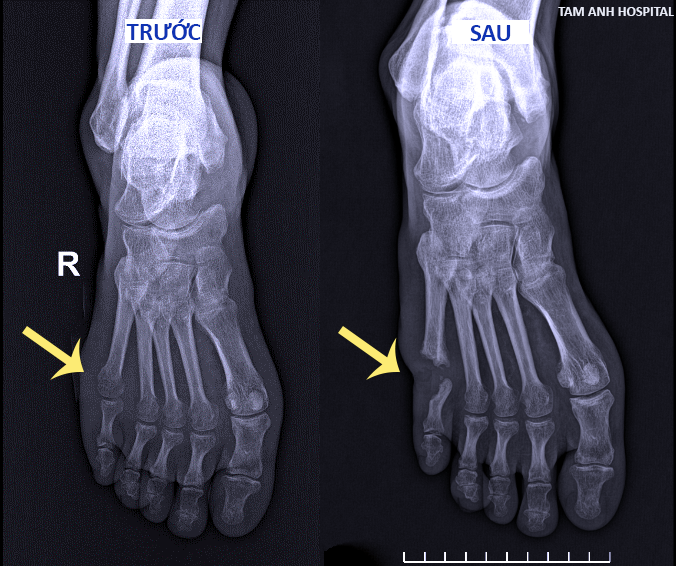 |
Mr. May's bone infection before (right) and after surgery. *Photo: Tam Anh General Hospital* |
Dr. Tiep explained that diabetes can progress silently for years. However, early detection is possible through routine health check-ups or by recognizing symptoms such as increased thirst, frequent urination, rapid hunger, and slow-healing wounds. Patients must adhere to treatment and effectively manage their blood sugar to prevent diabetic foot syndrome, which can lead to ulcers and persistent infections due caused by nerve and blood vessel damage.
Patients should not ignore even minor wounds, such as thorn punctures, scratches, cracked skin, burns, or paronychia. Reduced pain sensation can cause them to continue walking or applying pressure, exacerbating the wound and potentially resulting in bone infection, limb amputation, or sepsis.
If a foot wound has not healed after 3 weeks, patients should seek prompt medical attention. Early detection simplifies treatment, promotes faster wound healing, and helps restore mobility sooner.
Thanh Long
| Readers can submit questions about musculoskeletal diseases here for doctors to answer |