Before this, Thuan experienced only fleeting headaches, occasional blurred vision, and continued her daily life and work as usual. She brought all her medical records and scans to a top-tier hospital in Ho Chi Minh City. After additional specialized tests, doctors there confirmed a pituitary tumor and maintained the surgical recommendation. Still uneasy, she proceeded to a private hospital. After one week of traveling between three medical facilities, incurring over 10 million dong in costs for transportation, consultations, and lost wages for the couple, she received three identical results. Only then did the patient agree to surgery in Ho Chi Minh City.
"I was living normally, so when I heard about the tumor and needing brain surgery, I didn't believe it and wanted to double-check to be sure", Thuan said, recalling her days of confusion, torn between advice from acquaintances and conflicting information read online.
The phenomenon of patients frequently transferring hospitals to seek a "milder" diagnosis is common in specialized clinics. Doctor Lam Duc Hoang, from Ho Chi Minh City Oncology Hospital, explained that the psychology of denial commonly emerges when patients receive a diagnosis of a tumor or a terminal illness while their body still feels robust. Many harbor the hope that the previous facility made an error, prompting them to seek another opinion to negate that result. Simultaneously, social media and word-of-mouth experiences from acquaintances further reinforce skepticism towards medical conclusions.
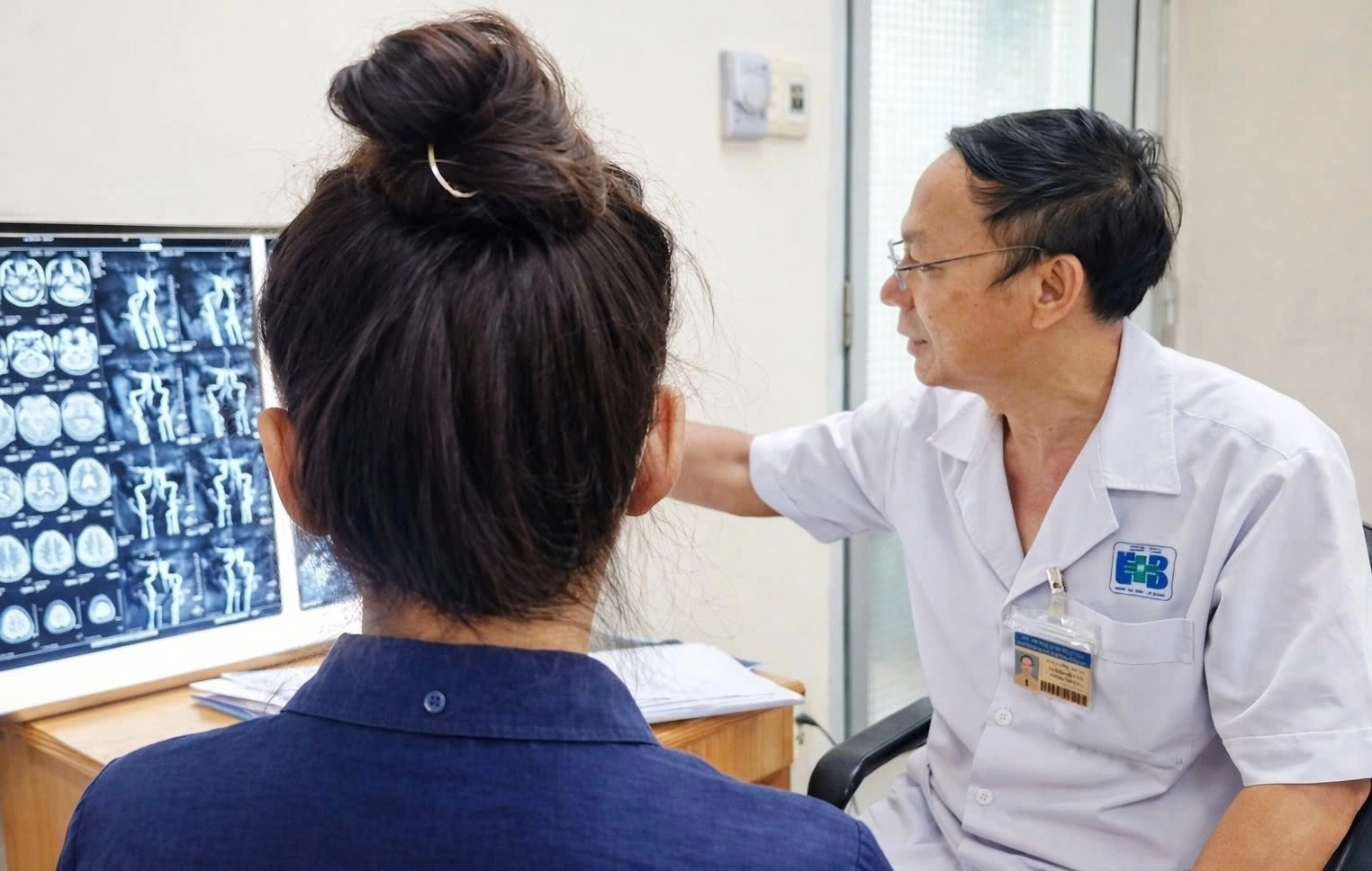 |
Doctor Hoang consults a patient at Ho Chi Minh City Oncology Hospital. *Photo: Le Phuong* |
From a neurological perspective, Doctor Hoang Tien Trong Nghia, head of the Neurology Department at Military Hospital 175, analyzed fear as the biggest psychological barrier. Patients fear both suffering from a severe illness and receiving an inaccurate diagnosis.
For chronic conditions, the overuse of medical examinations often stems from vague symptoms such as headaches, insomnia, dizziness, or limb numbness. Doctor Nghia has encountered many patients carrying two or three stacks of repeated medical records within just a few weeks. They underwent continuous magnetic resonance imaging (MRI) scans despite unchanged results. When doctors reported normal scans, patients interpreted it as "the illness has not been found" and continued to gather money to seek another facility for a specific disease name.
Overcrowding in public healthcare facilities also deepens this suspicion. Each medical professional has only a few minutes per patient, insufficient time to thoroughly explain the mechanisms behind symptoms. This communication breakdown leaves patients feeling insecure after leaving the clinic. Furthermore, the preference for higher-tier hospitals, along with isolated stories of misdiagnosis circulating online, pushes patients into a cycle of doubting the expertise of lower-tier medical care.
However, medical professionals affirm that seeking a second diagnostic opinion is a legitimate right and a common medical procedure. This step is particularly essential before complex surgeries, for rare diseases, cancer, or when treatment options carry high potential risks.
For instance, Thu, 38, had been treated for chronic sinusitis, but her symptoms of nasal congestion, drooping eyelids, and blurred vision progressively worsened. Upon a re-examination at a top-tier hospital, doctors discovered she had nasopharyngeal cancer 12 weeks into her pregnancy. Thanks to this second examination, the pregnant patient was able to promptly switch to a combined cancer treatment regimen with close monitoring of her pregnancy.
Doctor Hoang emphasized that verifying results is valuable only when patients seek it at the right time and from the appropriate specialized department. Conversely, rushing to three or four hospitals just to find a "favorable" answer when the medical condition is already clear will be counterproductive.
According to Doctor Nghia, this behavior directly harms both finances and physical health. Repeated diagnostic imaging, such as computed tomography (CT) scans, exposes the body to unnecessary radiation. More seriously, the obsession with "scrutinizing" results delays the golden time for surgical intervention. Additionally, the use of different medical terminology by various facilities to describe the same disease progression can easily trap patients in a psychological cycle of anxiety, seeking examinations, finding temporary relief, and then returning to confusion.
To avoid wasting money and time, doctors recommend that if patients wish to re-evaluate results, they should choose a suitable specialist or facility, bring all previous records, and clearly state the diagnoses they have received. Doctors can then compare information, explain any differences, or order additional tests when truly necessary.
"The goal is not to find a more comfortable diagnosis, but to find the most accurate conclusion for correct treatment", Doctor Hoang said.
Le Phuong