In late June, Dinh Thi Thanh, 53, visited Hong Ngoc General Hospital experiencing cramping pain around her navel and in her right hypochondrium. The symptoms, which had appeared intermittently for two days, were not accompanied by fever, vomiting, weight loss, or bowel disorders. An ultrasound revealed a thickened colon wall near the hepatic flexure, along with adjacent mesenteric lymph nodes. Suspecting an abnormality, doctors ordered further specialized tests.
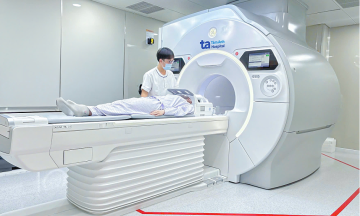
A 2,560-slice computed tomography (CT) scan revealed a thickened colon wall at the hepatic flexure, spanning approximately 6,4 cm, causing luminal narrowing and signs of partial obstruction. Subsequent endoscopy identified an ulcerated, fungating mass in the transverse colon, close to the hepatic flexure. The tumor was prone to bleeding and nearly obstructed the entire bowel lumen, preventing the endoscope from passing.
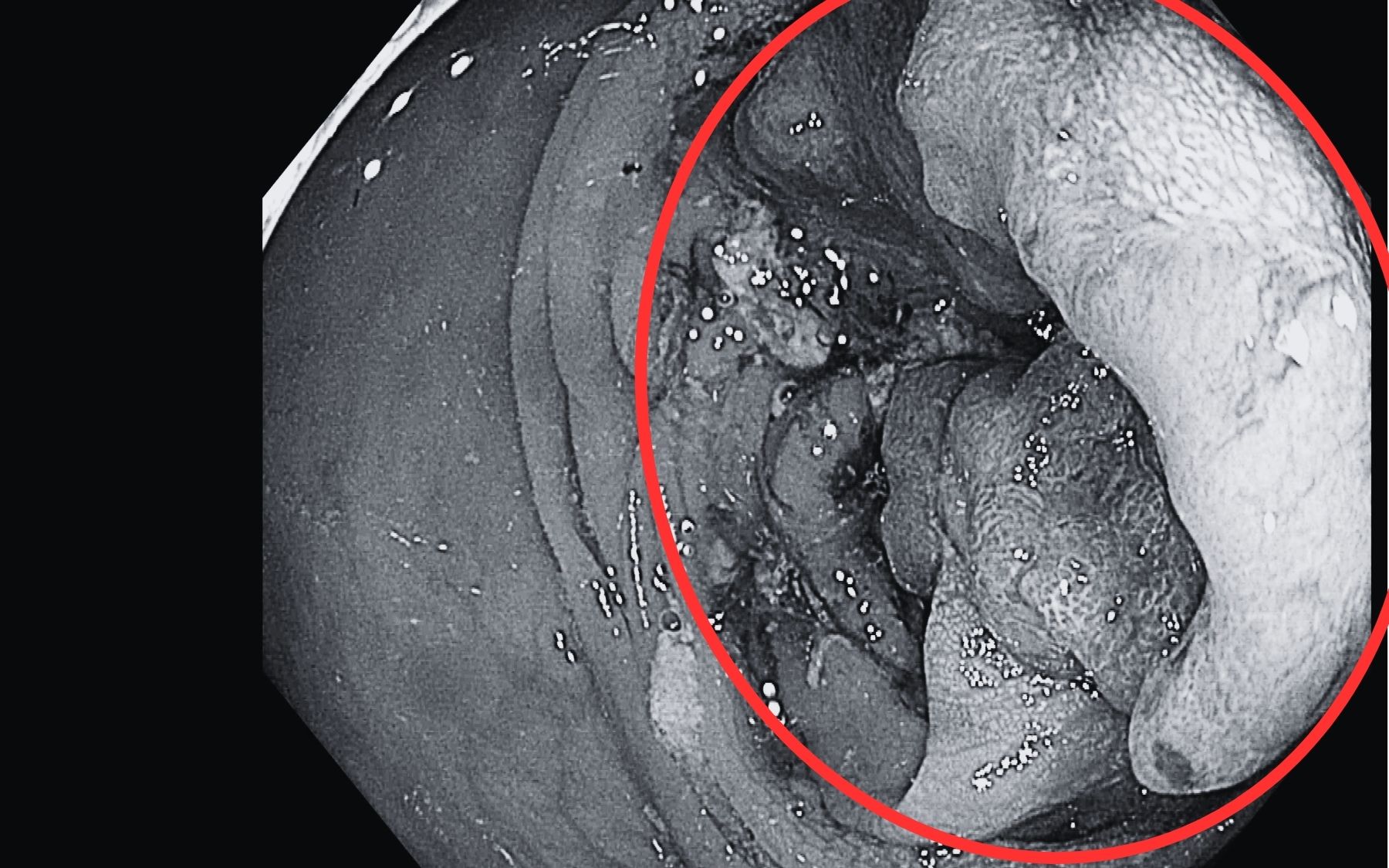 |
Endoscopic image revealing a fungating tumor in the transverse colon. Photo: Hong Ngoc General Hospital |
During the endoscopy, doctors performed biopsies at multiple sites. The results confirmed that Thanh had colorectal adenocarcinoma. Although her pain had only recently become pronounced, the tumor had been developing silently for some time.
Following the diagnosis, a multidisciplinary board comprising gastrointestinal surgeons, oncologists, diagnostic imaging specialists, and anesthesiologists evaluated Thanh's condition. The doctors agreed on laparoscopic colectomy combined with lymph node dissection.
Associate Professor, Doctor of Medicine Nguyen Xuan Hung, Director of the Center for Digestive and Colorectal - Perineal Diseases, performed the surgery. The surgical team noted a tumor approximately 5x5 cm in the transverse colon near the hepatic flexure, accompanied by numerous mesenteric lymph nodes but without invasion of adjacent organs.
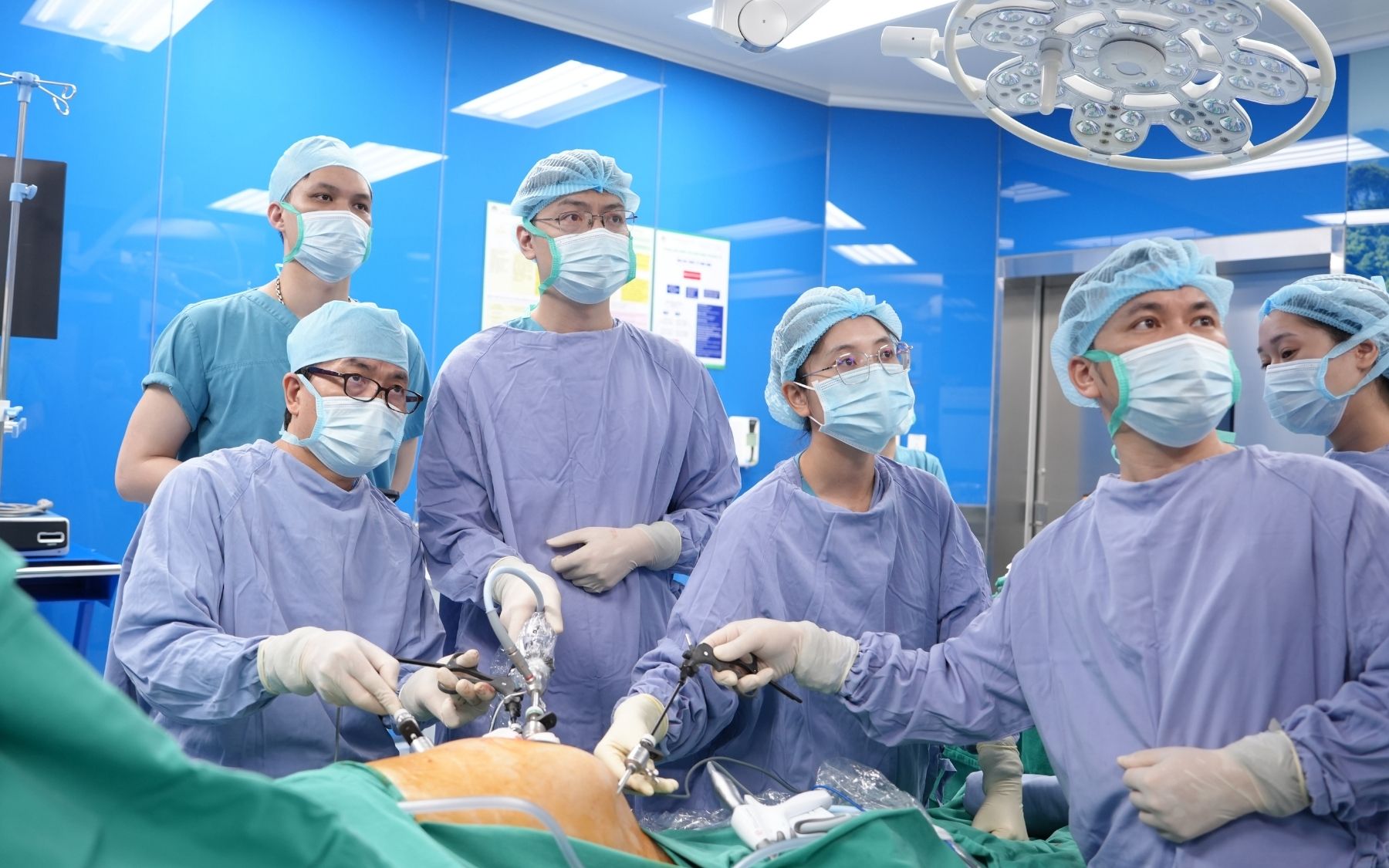 |
Associate Professor, Doctor of Medicine Nguyen Xuan Hung and his team performing surgery. Photo: Hong Ngoc General Hospital |
The team performed a laparoscopic right colectomy and D3 lymph node dissection, removing 42 lymph nodes systematically up to the root of the right colonic vessels. The greater omentum was also resected as indicated by the surgery. Pathological analysis revealed that the tumor had invaded beyond the serosa and metastasized to 4 out of the 42 lymph nodes removed.
"International recommendations require a minimum of 12 lymph nodes to be removed for disease staging. Removing 42 lymph nodes helps determine the extent of spread and guides subsequent treatment protocols", said Doctor Hung.
Post-surgery, Thanh received care under the Enhanced Recovery After Surgery (ERAS) program, which included pain management, early feeding, and early mobilization. A few days later, she was able to walk independently and resume nearly normal activities.
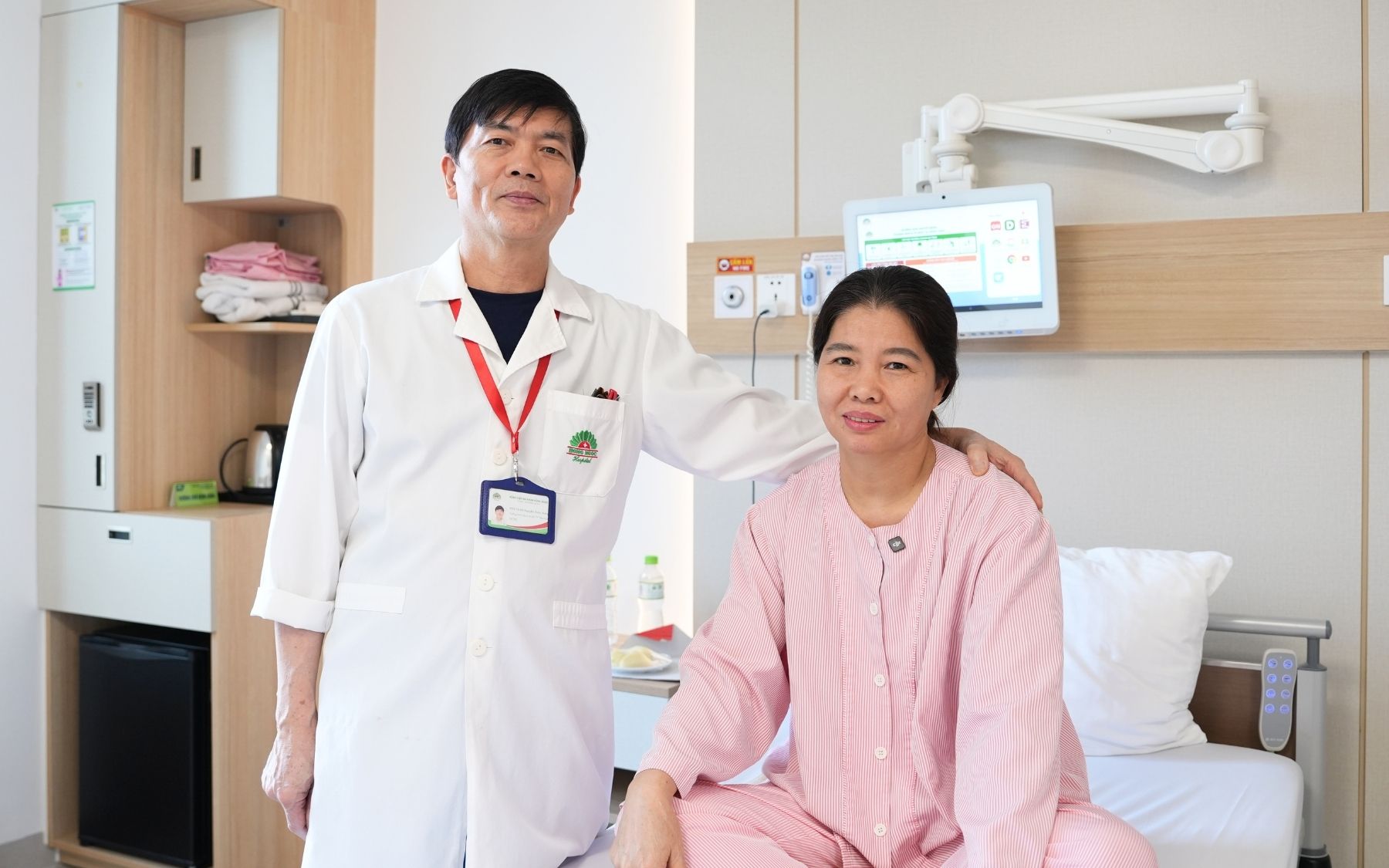 |
Thanh recovering well after surgery. Photo: Hong Ngoc General Hospital |
According to Doctor Hung, colorectal cancer often progresses silently. In its early stages, the disease may present with vague symptoms such as recurrent abdominal pain, changes in bowel habits, blood in stool, or unexplained anemia.
When detected late, the tumor can cause intestinal obstruction, perforation, or distant metastasis, reducing the chances of curative treatment. Adults, especially those aged 45 or older or with a family history of colorectal cancer, should undergo screening as advised by a doctor.
Van Ha
Currently, Hong Ngoc General Hospital is offering a 30% discount on all cancer screening packages, including gastrointestinal cancer screenings. Individuals can visit the hospital directly or contact the hotline for more details.
Hong Ngoc General Hospital - Phuc Truong Minh. Address: 8 Chau Van Liem Street, Tu Liem ward, Hanoi.
Operating license number: 308/BYT – GPHD
Daily operating hours: 24 hours a day
Scope of professional activities: Performs specialized techniques approved and issued by the Minister of Health, as stipulated in the operating license.