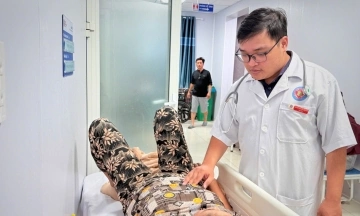
On 11/10, Dr. Nguyen Thang Nhat Tue, Head of the Emergency Department at Gia An 115 Hospital, reported that the patient developed symptoms approximately 40 minutes after consumption. The man was conscious but experienced numbness in his lips, tongue, and extremities, and vomited two times. Following initial treatment, he was transferred to the Intensive Care Unit for monitoring and care due to suspected neurotoxin poisoning.
 |
Patient receiving emergency care at Gia An 115 Hospital. *Photo: Hospital provided*
According to Dr. Tue, the toxic sea animal (so bien) and the horseshoe crab (sam bien) have similar appearances, making them easily mistaken during fishing, buying, and preparation. The toxic sea animal contains tetrodotoxin, a potent neurotoxin that can cause numbness, muscle weakness, respiratory muscle paralysis, leading to respiratory arrest and death. This toxin is heat-stable, so cooking does not guarantee its elimination.
Adult horseshoe crabs typically weigh about 1,5-2 kg, with a distinct ridge on their dorsal tail and a triangular cross-section. Toxic sea animals are smaller, usually weighing under 1 kg, with tails lacking a distinct ridge and a nearly round or oval cross-section. However, non-experts should not rely on these external characteristics for self-identification.
Doctors advise people to absolutely avoid eating toxic sea animals and not to catch or purchase horseshoe crabs for consumption without certain species identification. If lip numbness, tongue numbness, limb numbness, vomiting, or muscle weakness occurs after eating seafood, seek emergency medical care immediately. In cases of difficulty breathing, paralysis, or altered consciousness, call emergency 115. Do not self-treat at home, as the tetrodotoxin in the toxic sea animal can cause muscle paralysis and dangerous respiratory failure.
Le Phuong