Eng English
China 中国人

Eng English
China 中国人
  • News
  • World
  • Business
  • Entertainment
  • Sports
  • Law
  • Education
  • Health
  • Lifestyle
  • Travel
  • Science
  • Digital
  • Automobiles
  • Trở lại Thể thao
  • Health
Wednesday, 24/12/2025 | 12:01 GMT+7

What to avoid eating when infected with H. pylori?

Individuals with H. pylori infection should avoid spicy, sour, fried foods, and alcohol to reduce stomach lining irritation and support treatment.

Nguyen Trung Hieu, a nutrition specialist from the Nutrition Department at Tam Anh General Hospital Hanoi, emphasizes that healthy eating protects the digestive system, preventing inflammation, ulcers, and stomach cancer. Those with H. pylori infection must follow their prescribed treatment plan. Certain foods can increase stomach acid secretion, exacerbating ulcers or diminishing the efficacy of H. pylori eradication.

**Spicy and Hot Foods**

Spicy and hot foods, including chili, pepper, mustard, raw garlic, and raw onions, should be limited by individuals with H. pylori. These ingredients stimulate the stomach to produce more acid, leading to burning pain from ulcers, nausea, and bloating. For patients on antibiotic treatment, spicy foods intensify the burning sensation in the epigastric region (above the navel), causing discomfort and appetite loss. Reducing or removing spicy condiments from the diet aids in reducing stomach lining inflammation and promotes healing.

**Fried Foods and Fast Food**

Individuals with H. pylori should avoid fried and fatty foods like fried chicken, french fries, hamburgers, and sausages. Consuming large amounts of fat forces the stomach to work harder, increasing gastric acid secretion. Saturated fats in these items can also inhibit intestinal motility, slowing digestion and leading to bloating and indigestion. Repeated consumption of such foods can damage the stomach lining and elevate the risk of cancer.
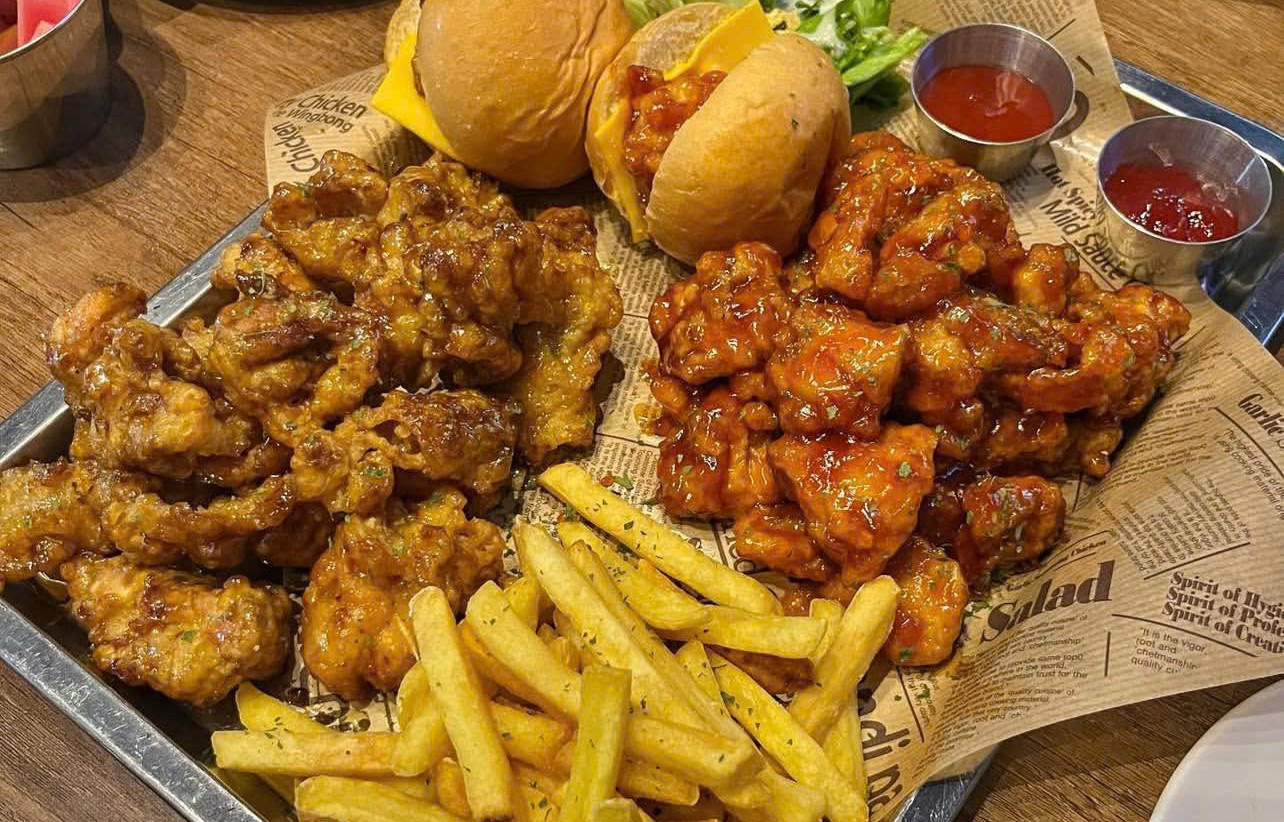
Individuals with H. pylori bacteria should avoid fried foods, fast food, and spicy, hot dishes. Photo: Hang Tran

**Sour Fruits**

Highly acidic foods are also on the restricted list. Sour fruits such as oranges, lemons, grapefruits, green mangoes, hog plums, and tamarind elevate stomach acidity, aggravating existing ulcers and intensifying burning sensations. Patients with H. pylori should opt for sweet, vitamin C-rich fruits like bananas, papayas, sweet apples, or watermelon instead.

**Alcoholic Beverages**

Alcohol, beer, coffee, strong tea, and carbonated soft drinks all stimulate the stomach to produce more acid, worsening ulcers and diminishing medication efficacy. The ethanol in alcoholic beverages further breaks down the stomach's protective mucus layer, allowing H. pylori to penetrate deeper into the lining. Patients should completely abstain from alcoholic drinks during treatment and significantly limit consumption post-recovery to prevent reinfection.

**Processed Foods**

Processed foods, canned goods, bacon, sausages, and Chinese sausages are also unsuitable for individuals with H. pylori. Doctor Hieu explains that these items contain high levels of nitrite salts, preservatives, and additives. When combined with gastric acid, these substances can form nitrosamine compounds, which are linked to stomach cancer. Prolonged consumption of processed foods can damage the stomach and create an environment conducive to H. pylori growth.

**Sugary Foods**

Sugar promotes H. pylori growth, leading to bloating and impeding stomach healing. Patients can opt for unsweetened yogurt or low-sugar fresh fruits to support a balanced gut microbiome. It is recommended to eat small, frequent meals, chew food thoroughly, avoid lying down immediately after eating, and refrain from late-night meals to reduce stomach pressure and prevent acid reflux.

Patients should incorporate probiotic yogurt, garlic, turmeric, honey, broccoli, spinach, and whole grains into their diet. Sulforaphane, an active compound in broccoli, and curcumin, found in turmeric, are known to inhibit H. pylori growth.

Thanh Ba

Readers can send nutrition questions here for a doctor's response
By VnExpress: https://vnexpress.net/tranh-an-gi-khi-nhiem-vi-khuan-hp-4997669.html
Tags: H. pylori bacteria nutrition

News in the same category

What happens to your skin after a month of quitting alcohol?

What happens to your skin after a month of quitting alcohol?

Smoother skin, improved hydration, reduced puffiness, dark circles, and fewer wrinkles appear after one month of abstaining from alcohol.

Who should not receive mesotherapy injections for hair loss?

Who should not receive mesotherapy injections for hair loss?

Pregnant or breastfeeding women, individuals with severe internal medical conditions, myocardial infarction, blood clotting disorders, or dermatitis should not undergo mesotherapy for hair loss treatment.

How hepatitis D virus destroys the liver

How hepatitis D virus destroys the liver

Hepatitis D virus can rapidly devastate the liver, causing severe damage and increasing the risk of cirrhosis, liver failure, and liver cancer.

Man rescued after heart attack on offshore oil rig

Man rescued after heart attack on offshore oil rig

A patient was airlifted to the mainland and successfully received cardiac intervention at FV Hospital, reaching care within the critical "golden hour."

8 daily habits for better digestion

8 daily habits for better digestion

Maintaining daily habits such as light exercise, a balanced diet, and adequate rest helps the digestive system function efficiently, reducing bloating and abdominal discomfort.

Teenager experiences three bouts of testicular torsion

Teenager experiences three bouts of testicular torsion

After being hospitalized for the third time due to testicular torsion, Kien, 17, underwent surgery to secure his testicles and prevent recurrence.

Warning signs of high blood pressure

Warning signs of high blood pressure

Frequent shortness of breath, chest pain, severe headaches, and nosebleeds can indicate rising blood pressure.

large tonsil stones cause bad breath

large tonsil stones cause bad breath

kim, 20, had bad breath despite diligent oral hygiene; endoscopy revealed a block of tonsil stones.

Why high cholesterol persists despite gym workouts?

Why high cholesterol persists despite gym workouts?

Thanh (34, Hanoi) asks: "I have been consistently going to the gym for one year, working out 6 days a week and using supplements like whey protein and BCAA. Why is my cholesterol still high?"

VNVC expands monoclonal antibody for RSV prevention in children up to two years old

VNVC expands monoclonal antibody for RSV prevention in children up to two years old

The Nirsevimab monoclonal antibody, designed to prevent respiratory syncytial virus (RSV) in children, is now more widely available at the VNVC vaccination system, with expanded administration beginning on 23/12.

Eng English
China 中国人
  • News
  • World
  • Business
  • Entertainment
  • Sports
  • Law
  • Education
  • Health
  • Lifestyle
  • Travel
  • Science
  • Digital
  • Automobiles
FPT Tower, 10 Pham Van Bach Street, Dich Vong Ward,
Cau Giay District, Hanoi, Vietnam
Email: contacts@vnportal.net
Tel: 028 7300 9999 - Ext 8556
Advertise with us: 090 293 9644
Register
© Copyright 2025 vnnow.net. All rights reserved.
Terms of use Privacy policy Cookies