Quang first dislocated his shoulder at 14 years old. It recurred with collisions, minor falls, or incorrect movements. Initially, doctors diagnosed recurrent dislocations and performed reductions. Later, he learned to reduce the dislocations himself and lived with the condition. For the past two years, both his shoulders have been painful, even without dislocation.
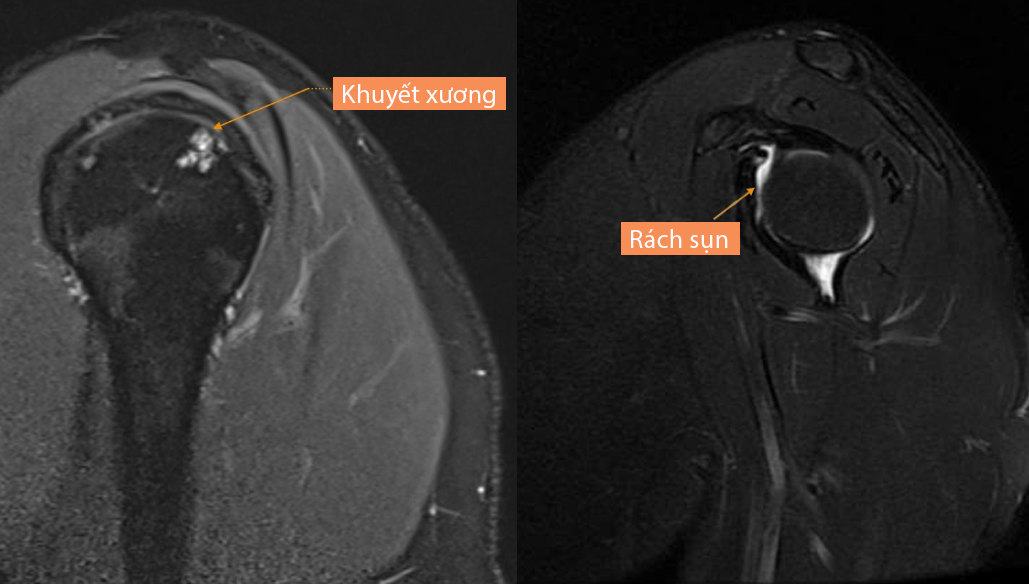 |
Humeral head bone defect and torn labrum on Quang's MRI scan. *Photo: Tam Anh General Hospital*
Dr. Vu Trung Hieu, an orthopedic trauma specialist at Tam Anh General Hospital Hanoi, noted that the patient could bend his little finger back beyond 90 degrees, hyperextend his elbow beyond 10 degrees, and bend forward to place both hands flat on the floor. He diagnosed hypermobility syndrome based on the Beighton hypermobility score. This congenital condition involves weak ligaments and connective tissues around the joints, leading to an abnormal range of motion and recurrent dislocations. The shoulder joint is commonly affected because it is the most flexible joint in the body.
X-ray and MRI scans clearly showed Quang's recurrent shoulder dislocations, with repeated friction causing a torn anterior labrum. His right shoulder dislocated more frequently, leading to bone loss in the glenoid and a humeral head bone defect. Dr. Hieu performed open surgery on Quang's right shoulder, suturing the labrum, grafting bone into the defect, and securing it with cancellous screws to stabilize the joint.
Post-surgery, Quang received multimodal pain management and wore a shoulder immobilizer for one month. The patient underwent physical therapy, regaining strength and normal shoulder range of motion after 3-6 months, with complete resolution of dislocations.
His left shoulder also dislocated but was less lax, showing no bone damage. Dr. Hieu performed arthroscopic surgery on the patient, suturing and securing the labrum and anterior capsule with screws into the glenoid. He was discharged 24 hours after surgery, continuing to wear an immobilizer for one month before starting physical therapy.
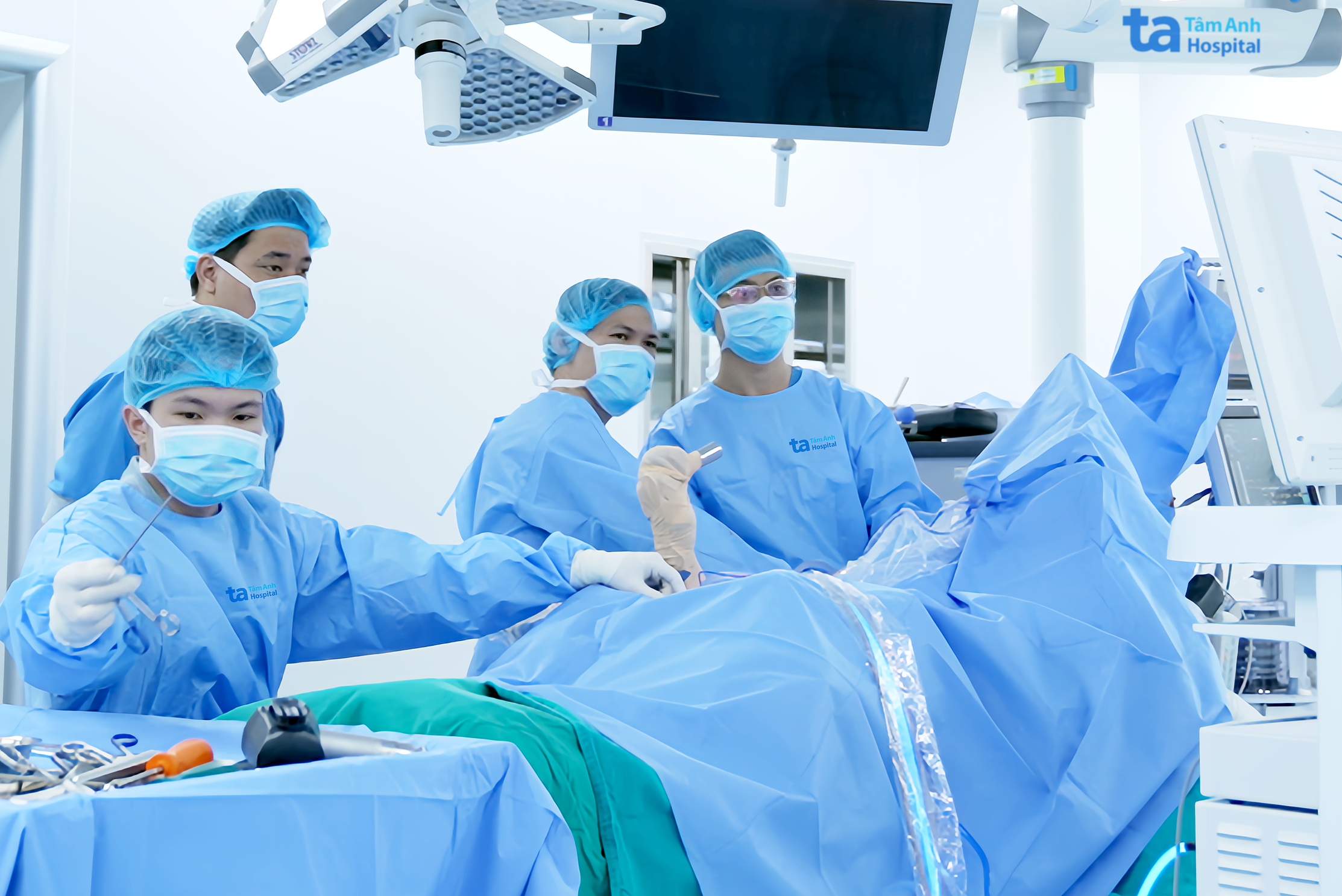 |
Dr. Hieu (right) with his surgical team operating on Quang. *Photo: Tam Anh General Hospital*
According to Dr. Hieu, hypermobility can be genetically linked, as patients may have abnormal genes involved in collagen formation, leading to defects. Tendons and ligaments made of faulty collagen become weak, causing loose joints with an excessive range of motion.
The condition often manifests during adolescence. Children may bend their finger joints, thumbs, elbows, or perform splits beyond normal limits without pain. However, this condition also easily causes shoulder or kneecap dislocations, with recurrent dislocations leading to pain and affecting movement.
Dr. Hieu advises patients exhibiting symptoms of hypermobility to seek examination at a specialized hospital. Depending on the condition, doctors may prescribe conservative treatment, physical therapy to increase joint strength and improve balance, and the use of braces or specialized equipment to protect joints during strenuous activity or sports. Preventing recurrent dislocations can help avoid joint damage, surgery, protect joints in adulthood, and reduce the risk of early osteoarthritis in middle age.
Thanh Long
*Patient's name has been changed