Answer:
Astigmatism is not a dangerous disease, but if high astigmatism or astigmatism in one eye is not detected and corrected early, it can affect vision development, potentially leading to amblyopia (lazy eye). Amblyopia occurs when the brain does not receive clear images from the affected eye for an extended period, preventing normal visual function development.
Astigmatism is a common refractive error in children, caused by an uneven curvature of the cornea or lens, which prevents light from focusing correctly on the retina. Children may experience blurred or distorted vision at all distances, frequently squint, rub their eyes, tilt their head when looking, or suffer from eye strain or headaches during study. However, many children do not recognize abnormal vision or cannot articulate it, making astigmatism easy to miss without regular eye exams.
The degree of astigmatism varies among children. Most cases of mild astigmatism, under one diopter, have minimal impact on visual function and may not require immediate treatment. However, when the degree of astigmatism is one diopter or higher, children may experience blurred vision, eye strain, and difficulty concentrating on their studies. Cases of high astigmatism, especially above 2 diopters, or astigmatism in one eye, if not detected and corrected promptly, can lead to amblyopia.
Once amblyopia has developed, vision may not reach a normal level even with correctly prescribed glasses. Therefore, in addition to correcting the refractive error, children may need visual function rehabilitation treatment. Intervention before 7-8 years of age yields the best results as the visual system is still developing.
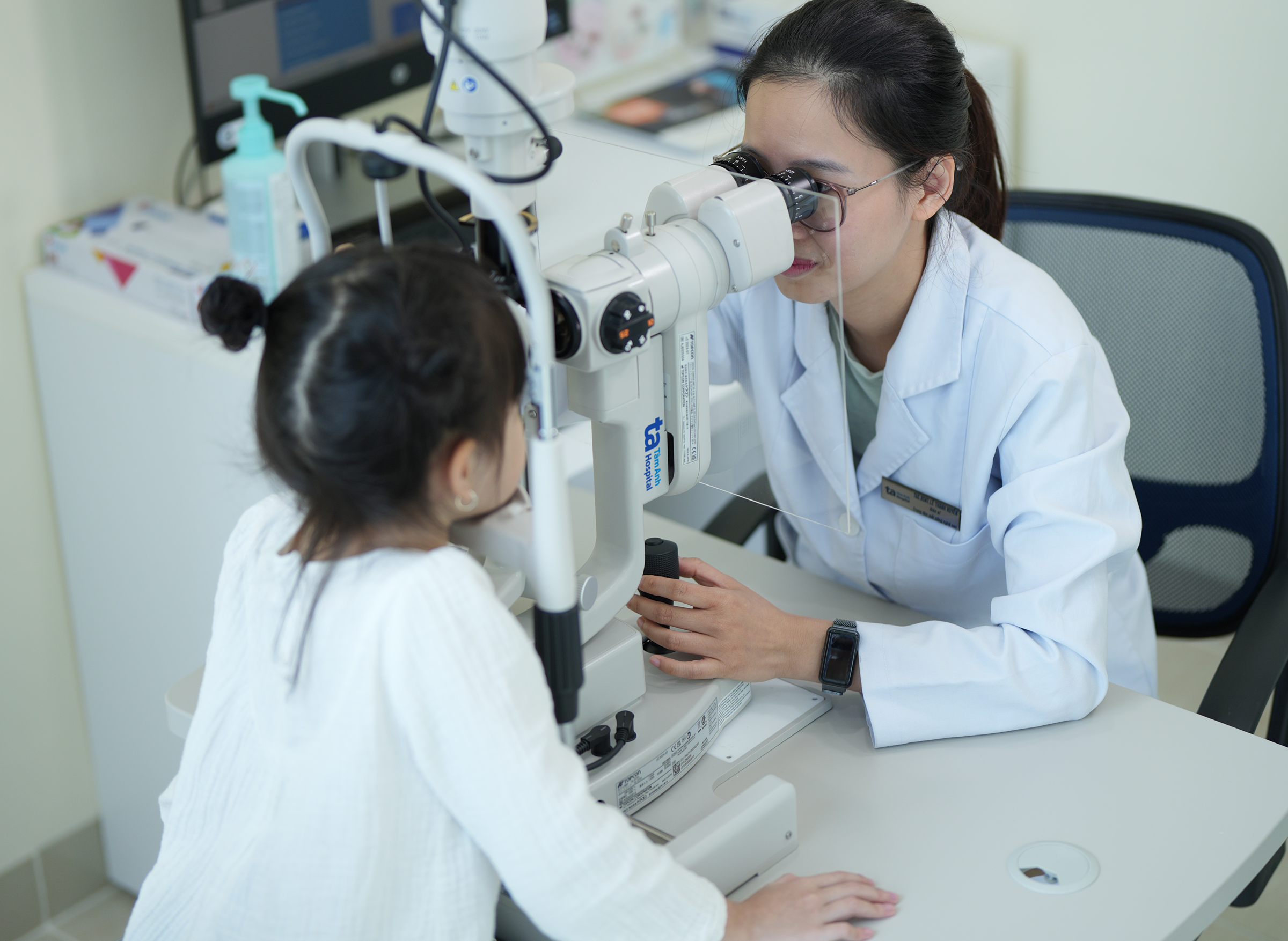 |
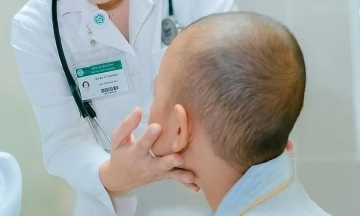
An ophthalmologist examines a young child. Illustration: Tam Anh Cau Giay General Clinic
Astigmatism is primarily related to the structure of the cornea or lens, so it cannot be cured with medication or traditional remedies. Most children only need to wear correctly prescribed glasses and have regular follow-up appointments to monitor changes in their refractive error. If accompanied by amblyopia or other eye conditions, the doctor will prescribe additional treatment. Refractive surgery is only considered when the child reaches adulthood and the refractive error has stabilized.
The information you shared is insufficient to determine the extent of your child's astigmatism or the specific treatment required. You should take your child to an eye specialist clinic for a refraction measurement, vision assessment, and consultation on appropriate monitoring or treatment methods. Additionally, regular follow-up appointments with the doctor are necessary to track changes in refractive error and adjust glasses as needed.
Master, Doctor Luong Thi Anh Thu
High-Tech Eye Unit
Tam Anh Cau Giay General Clinic
| Readers can submit ophthalmology questions here for doctors to answer |