Dr. Nguyen Van On, from the Orthopedic Trauma Center, Tam Anh General Hospital TP HCM, stated that bow legs and knee osteoarthritis form a pathological vicious cycle. Bow legs cause knee osteoarthritis because the bone axis curves into an O-shape, subjecting the inner joint space to significantly higher pressure than normal. This imbalance of force on the joint, especially during walking and movement, leads to cartilage cracking, thinning, and accelerates degeneration. Consequently, patients experience inflammation, swelling, pain, and difficulty walking.
Conversely, knee osteoarthritis exacerbates bow legs. As cartilage on the inner side of the joint is destroyed more than the outer side, the joint space narrows, and the leg axis deviates further, making the O-shaped knee deformity more pronounced. This condition causes chronic pain, reduced motor function, and muscle atrophy around the knee joint.
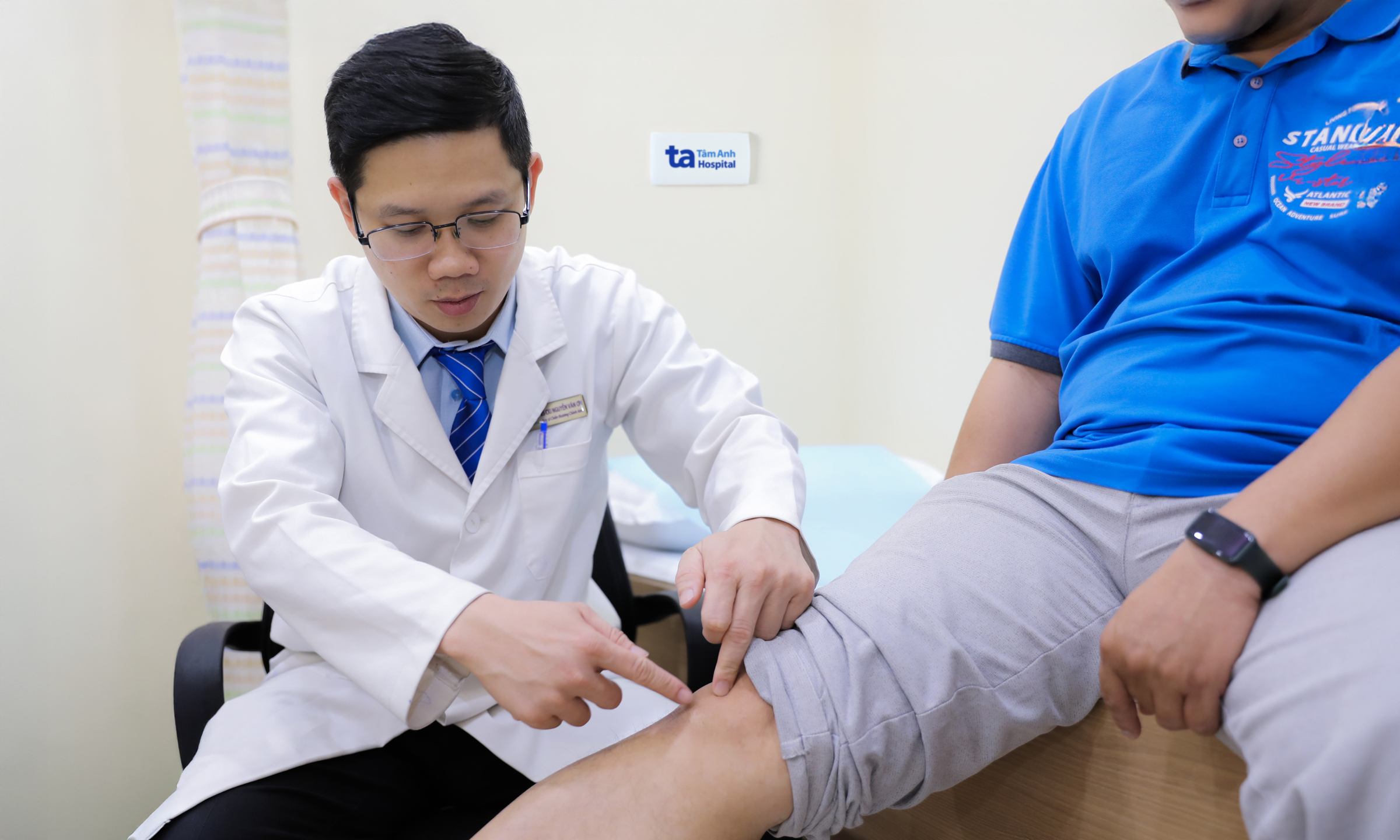 |
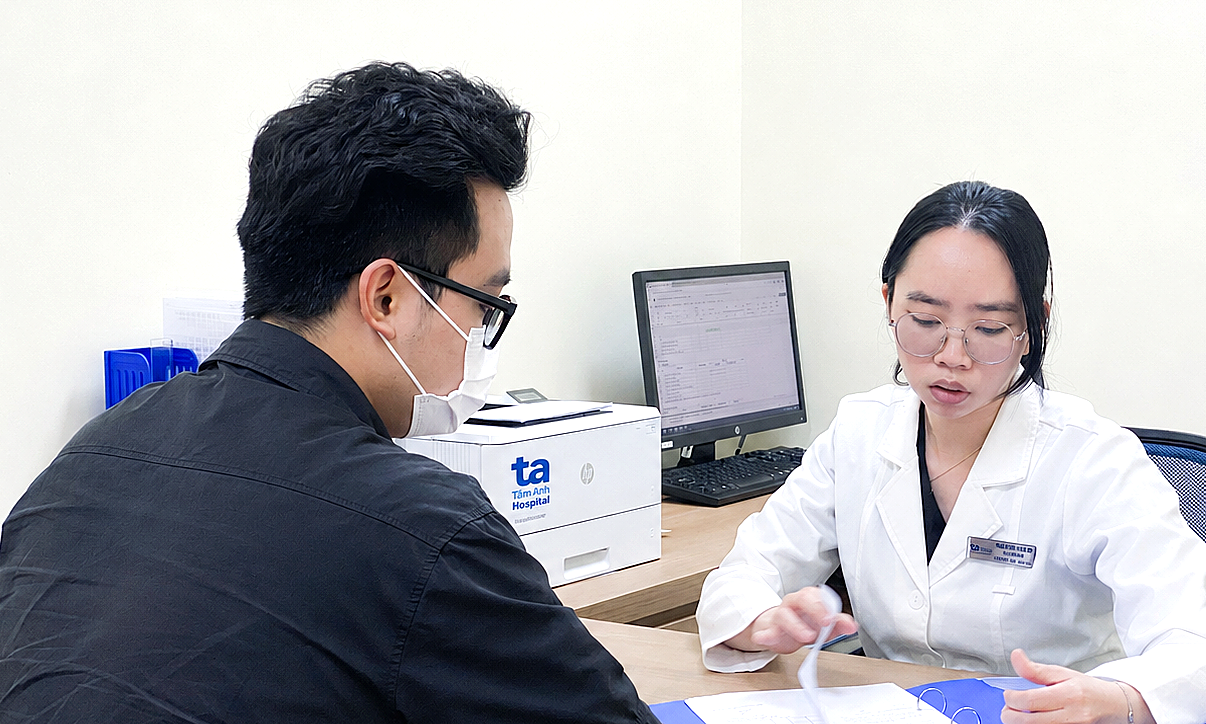
Dr. On assesses the patient's knee joint function. *Photo: Tam Anh General Hospital.* |
Doctors employ various treatment methods depending on the severity of bow legs and knee osteoarthritis. In the early stage, when damage is not severe, patients typically receive a combination of pain medication, lubricant injections, and physical therapy to strengthen the quadriceps muscles, along with using alignment braces to reduce pressure on the damaged joint compartment.
When the condition progresses, causing significant bow leg deformity and nearly complete cartilage loss, patients may be advised to undergo surgery. During corrective osteotomy, doctors cut and realign deformed bone segments, restoring the leg's weight-bearing axis to normal, reducing pressure on joint cartilage surfaces, alleviating pain, and preventing further degeneration.
The final treatment for knee osteoarthritis and bow legs is total knee replacement, which involves removing the damaged knee joint and its components, and simultaneously correcting the leg's axis. After surgery, patients no longer experience pain, their legs are straightened, and their gait improves. With the support of modern equipment like the Cuvis-Joint robotic system for joint replacement, patients achieve optimal soft tissue balance and joint load, preserving healthy bone, which leads to better recovery and post-operative mobility.
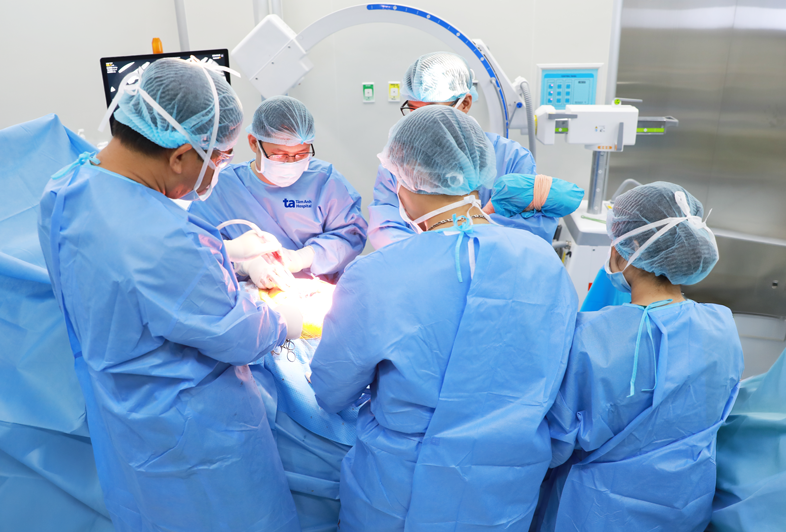 |
Dr. On (second from left) performs knee replacement surgery for a patient. *Photo: Tam Anh General Hospital.* |
To prevent knee osteoarthritis or bow legs from worsening, patients must improve their lifestyle habits in addition to adhering to their doctor's treatment plan. Maintaining a healthy weight is crucial for knee protection, as excess weight can increase pressure on knee cartilage many times over, exacerbating the condition.
Patients should exercise regularly at an appropriate intensity, guided by rehabilitation specialists, to improve balance and muscle strength. Avoid sports that place high stress on the knee joint, such as continuous running and jumping, soccer, and basketball.
Phi Hong
| Readers can submit questions about musculoskeletal conditions here for doctors to answer. |