Passion fruit is rich in vitamins and minerals, including calcium, folate, iron, magnesium, potassium, vitamin A, and vitamin C, along with antioxidant compounds. These antioxidants neutralize free radicals, reduce oxidative stress, and protect cells, including those in the gut. Vitamin C supports immune function, enhancing the body's ability to fight off pathogens.
Rich in fiber
Fiber plays a crucial role in health, especially for the digestive system. According to Verywell Health, passion fruit is a rich source of fiber. A medium-sized passion fruit contains about 2 g of fiber, with the pulp primarily providing soluble fiber and the seeds offering insoluble fiber.
Soluble fiber absorbs water to form a gel, which softens stool and aids digestion. Insoluble fiber adds bulk to stool, promotes bowel movements, and reduces the risk of constipation. Adequate fiber intake also increases feelings of fullness, supporting weight management when combined with a healthy diet and lifestyle.
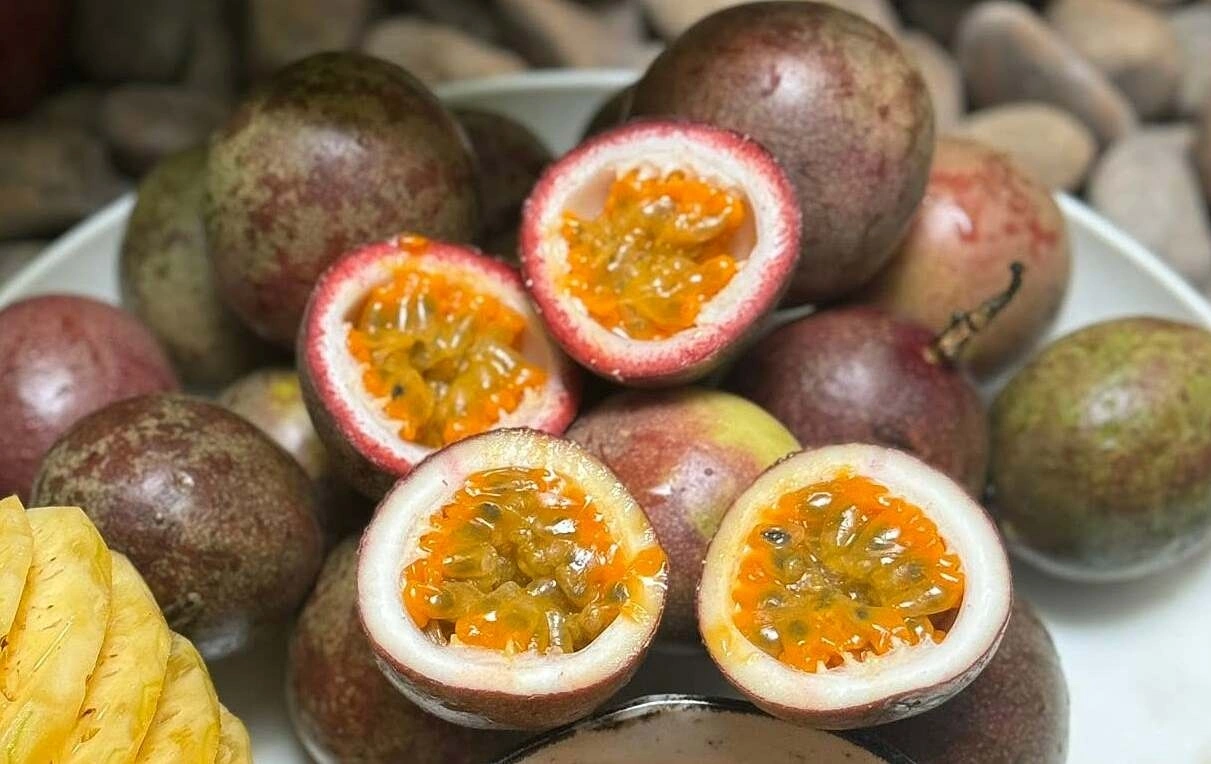 |
Passion fruit has a tart taste and is rich in vitamin C. *Tuyen Le* |
Supports gut microbiome
The soluble fiber in passion fruit, primarily pectin, has a prebiotic effect, serving as a nutrient source for beneficial bacteria in the gut. This helps maintain the diversity and balance of the gut microbiota. A healthy microbiome supports digestion, strengthens the gut barrier, and contributes to immune regulation and metabolic health.
Maintains stable blood sugar levels
Passion fruit contains piceatannol, a plant compound that helps improve certain metabolic indicators and insulin sensitivity. This fruit also has a low glycemic index (GI), around 30. Combined with its abundant fiber content, passion fruit helps slow carbohydrate absorption, thereby contributing to stable blood sugar levels, according to EatingWell.
Maintaining stable blood sugar levels not only benefits metabolic health but also helps protect digestive function. In people with diabetes, good blood sugar control can reduce the risk of neurological complications while creating a favorable environment for a balanced gut microbiota to thrive.
Suitable for a low-FODMAP diet
Some individuals are sensitive to FODMAPs – a group of fermentable, poorly absorbed short-chain carbohydrates in the small intestine, including oligosaccharides, disaccharides, monosaccharides, and polyols. When consuming high-FODMAP foods, they may experience symptoms such as abdominal pain, bloating, distension, or diarrhea.
Passion fruit is classified as a low-FODMAP food when consumed in appropriate portions. Therefore, this fruit is generally well-tolerated and may be suitable for individuals with irritable bowel syndrome or those sensitive to FODMAPs.
By Anh Chi (Compiled)