The financial burden of chronic obstructive pulmonary disease (COPD) directly correlates with the disease's severity, according to a 2020 data analysis of over 300,000 patients by Associate Professor, Doctor Vu Van Giap, Deputy Director of Bach Mai Hospital. Specifically, the average annual direct medical cost for patients in the mild stage (group A) is approximately 3,1 million VND. This figure rises to 12,2 million VND for group C patients and reaches 58,6 million VND in the most severe stage (group D).
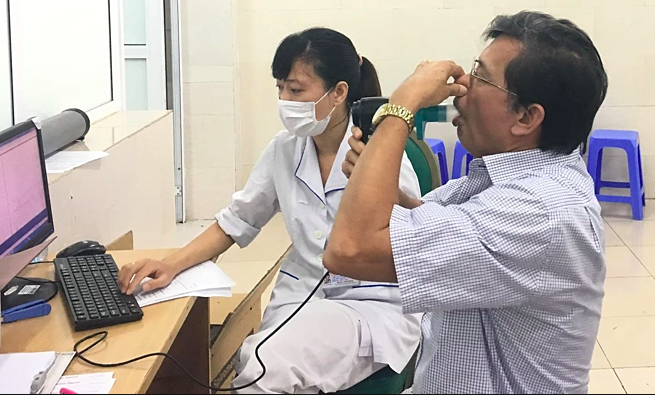 |
Patients being examined for chronic obstructive pulmonary disease at Bach Mai Hospital. *Photo: Le Nga* |
Mr. Thanh, 70 years old, exemplifies this situation. After suffering from COPD for many years, he arbitrarily stopped his medication, leading to a pneumothorax complication following an acute exacerbation, requiring treatment at Bach Mai Hospital. "Normally, my preventive medication at home costs about 1,5 million VND per month, but now with complications, the amount I have to pay is 10 times higher," the patient shared.
According to Associate Professor Giap, cases like Mr. Thanh's are not uncommon. Approximately 50% of complications arise from patients who do not adhere to their treatment regimen, discontinuing medication when they feel stable, despite COPD requiring continuous maintenance treatment.
Associate Professor, Doctor Phan Thu Phuong, Director of the Respiratory Center, highlighted another concerning reality: over one-half of people with COPD in Vietnam have never been diagnosed or are only detected when their lung function is severely impaired. Dr. Phuong emphasized that effective management of asthma and COPD from the stable phase can reduce treatment costs by 90% for patients, by limiting out-of-network emergency visits and maximizing health insurance coverage.
Statistics from the World Health Organization (WHO) rank COPD as the third leading cause of death in Vietnam, surpassing even cancers and traffic accidents. The prevalence of the disease in the population aged 40 years and older is 4.2%; with the North accounting for the highest proportion at 5.7%, followed by the Central region (4.6%) and the South (1.9%).
Beyond financial losses, COPD patients face high health risks. Moderate exacerbations increase the frequency of future severe relapses, double the risk of heart attacks, and heighten the likelihood of stroke and death.
Globally, factors such as environmental pollution, an aging population, and smoking habits are accelerating the disease's spread. The report, "The Global State of COPD - Driving Change to Address Lung Health Crises", recently published, indicates that about 213 million people are currently living with COPD, with the actual number potentially reaching 391 million due to many undiagnosed cases. The disease is projected to cost the global economy 4,3 trillion USD from 2020 to 2050 if effective interventions are not implemented.
To alleviate this burden, Jenifer Horton, WHO Deputy Representative in Vietnam, suggested integrating COPD management into grassroots healthcare systems to improve access to care for the public. Deputy Minister of Health Nguyen Thi Lien Huong also urged citizens to proactively prevent the disease through healthy lifestyles, quitting smoking, and undergoing health screenings as soon as persistent symptoms like coughing or shortness of breath appear.
Le Nga