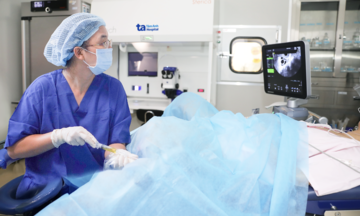
Quang, 31, and his wife, Huong, 29, recently welcomed a pregnancy, now over 10 weeks, thanks to advanced reproductive techniques at Tam Anh General Hospital - District 8, Ho Chi Minh City. The couple had faced two years of infertility due to Quang's azoospermia and had experienced three failed embryo transfers previously.
Dr. Phan Ha Minh Hanh, from the Center for Reproductive Assistance at Tam Anh General Hospital - District 8, Ho Chi Minh City, noted that Huong was still within reproductive age and had a natural pregnancy with a previous husband. This indicated good uterine and hormonal function. Consequently, the repeated embryo transfer failures were primarily due to poor embryo quality, directly affected by Quang's low-quality sperm.
Quang's retrieved sperm samples were immature, sparse, highly malformed, and mostly immotile. While combining them with his wife's eggs produced day-3 embryos, these embryos lacked the vitality to implant and develop in the uterus. Dr. Hanh explained that the treatment needed to focus on meticulous sperm filtration, extended embryo culture, and minimizing interventions that could stress the wife's body.
Quang underwent another micro-TESE microsurgery to retrieve sperm. Under a microscope with 30x magnification, doctors accessed potential seminiferous tubules, transferred them to the lab, and found some sperm. However, all sperm were immotile.
Embryologists then employed the HOS-test technique, also known as sperm activation. This method identifies live sperm among immotile sperm for injection into the oocyte cytoplasm. When sperm are placed in a hypotonic solution, their tails curl, allowing doctors to select viable sperm for in-vitro fertilization. This technique filtered out viable samples from Quang's immotile sperm, which were then used for fertilization with eggs.
This crucial step resulted in 7 day-5 embryos. Defective embryos were removed, maximizing the implantation rate. "Without this step, injecting dead sperm into the egg would certainly damage the embryo, leading to repeated failures", Dr. Hanh said. Doctors successfully transferred one high-quality embryo into Huong's uterine cavity on the first attempt.
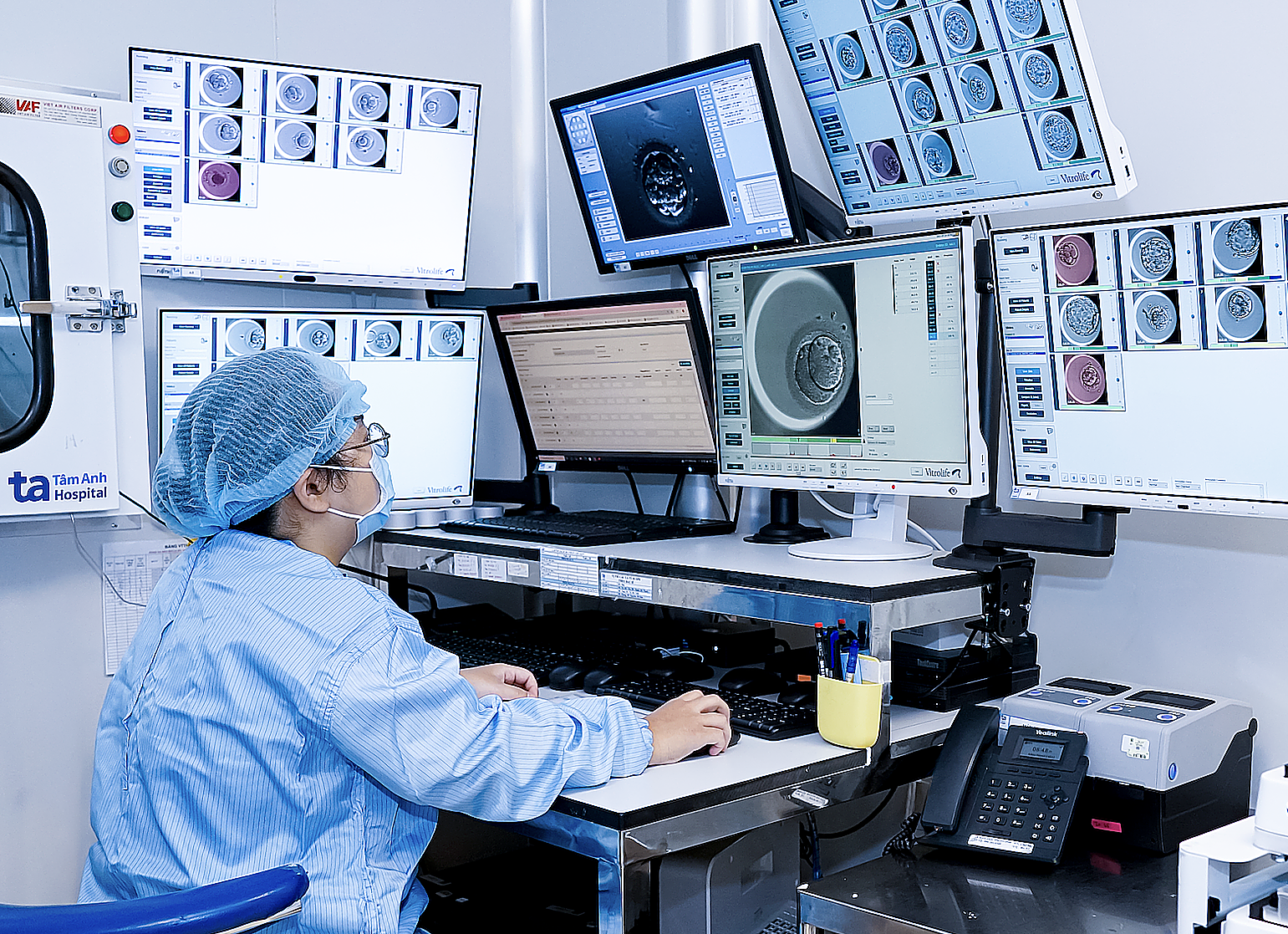 |
The embryo culture incubator system features continuous monitoring cameras with integrated artificial intelligence. Photo: IVF Tam Anh |
Azoospermia is a condition where a man ejaculates but his semen contains no sperm, which can be due to obstruction or non-obstruction, as in Quang's case. Dr. Hanh emphasized that with current techniques and a modern lab, couples can still have their own children as long as a few live sperm remain in the testicles.
At IVF Tam Anh, the embryo culture lab meets ISO 5 standards, providing an ultraclean environment. This setup reduces the risk of bacterial, fungal, and viral infections and limits the presence of cytotoxic volatile organic compounds. These conditions enhance fertilization efficiency, blastocyst development rates, and the chances of implantation and pregnancy. The lab-in-lab design creates an optimal environment, preventing embryos with weak sperm from experiencing stress or further DNA damage, helping them overcome the critical transition phase from day 3 to day 5.
By Dinh Lam
*Names in the article have been changed