The cyst, first detected in Mr. Hung's epididymis two years ago, had progressively enlarged, causing pain and impacting his daily life. According to Master of Science, Doctor, Level II Specialist Doctor Pham Thanh Truc from the Center for Urology - Nephrology - Andrology at Tam Anh General Hospital, TP HCM, epididymal cysts typically measure a few millimeters to 1-2 cm. However, Mr. Hung's cyst was 10 times larger, comparable to a grapefruit.
Dr. Truc explained that the massive cyst compressed the blood vessels supplying the testicle, stretching the scrotal area and causing the patient discomfort. Continued growth of the cyst could lead to testicular atrophy or rupture, potentially causing inflammatory reactions in the scrotum, fluid accumulation, severe pain, and an increased risk of infection.
Mr. Hung's existing conditions of asthma and high blood pressure posed risks of respiratory and cardiovascular complications during the cyst removal surgery. After an interdisciplinary consultation with specialists in anesthesiology and resuscitation, respiratory, and cardiovascular care, doctors prescribed bronchodilators to manage his asthma and stabilized his blood pressure prior to the operation.
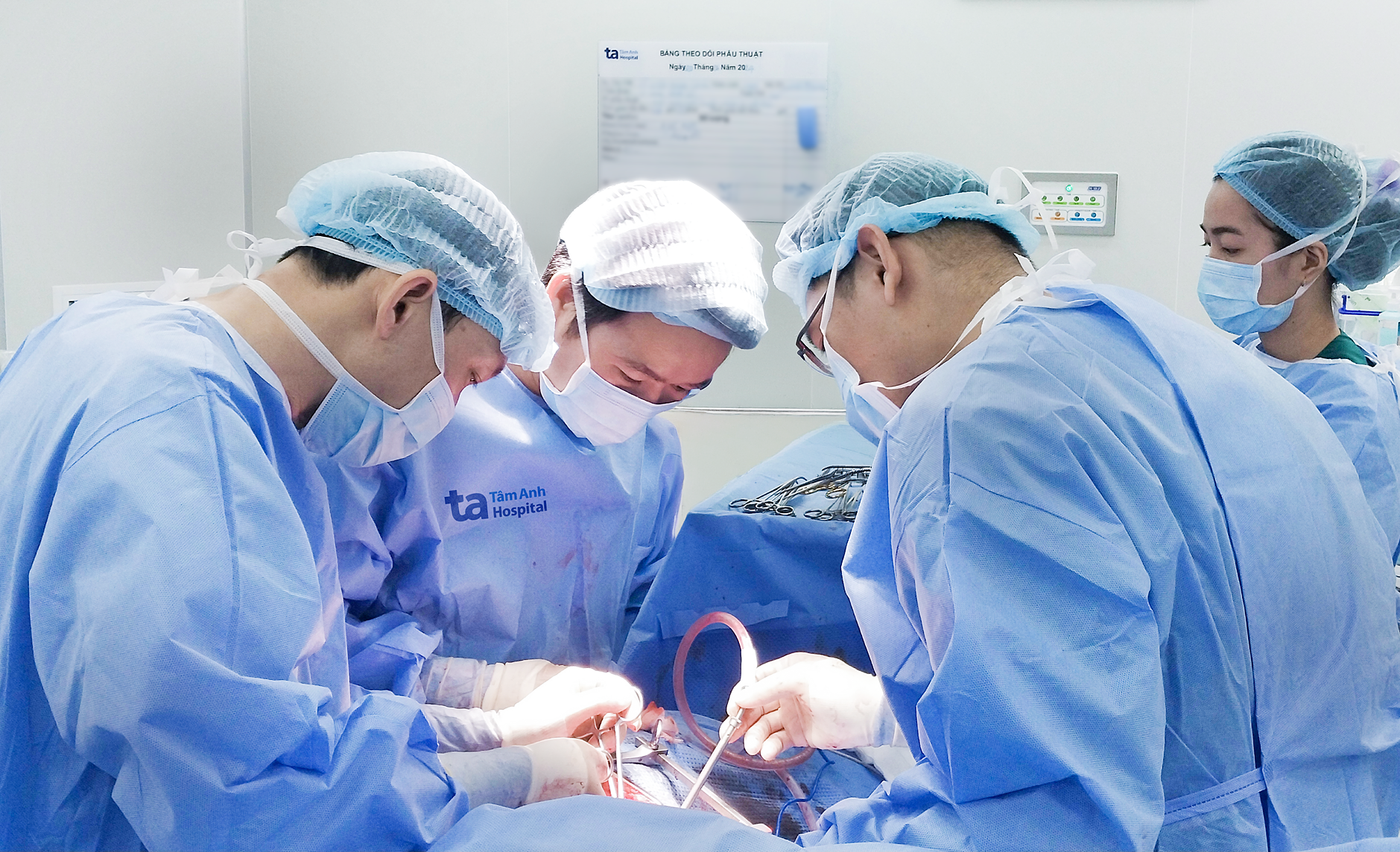 |
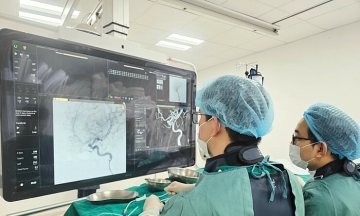
Doctor Thanh Truc (center) performing surgery to remove a cyst from the patient's groin area. *Photo: Tam Anh General Hospital* |
The surgical team meticulously dissected the cyst from the epididymis, ensuring the preservation of the vas deferens and surrounding blood vessels. They successfully removed the cyst intact, crucial to prevent rupture. Leaked fluid from a ruptured cyst would have complicated the dissection and increased risks of inflammatory reactions and tissue adhesion. Throughout the procedure, the team continuously managed bleeding, as the highly vascular scrotal area is susceptible to hematoma formation post-surgery, which can lead to swelling, pain, and infection.
Three days post-surgery, Mr. Hung was free of pain and discomfort, walking normally. He was discharged from the hospital and continued light exercises at home.
An epididymal cyst is a fluid-filled sac forming in the epididymis. Most are asymptomatic and discovered incidentally during routine check-ups or self-examinations. Common causes include blockages in the epididymal ducts, inflammation, scrotal trauma, or congenital factors. Small, asymptomatic cysts generally do not require treatment, with patients needing only regular monitoring. However, surgery becomes necessary if a cyst grows too large, causes pain, impacts daily life, or presents a cosmetic issue.
Dr. Truc advises men to seek specialist medical attention if they discover any abnormal mass in their groin area. This allows for the exclusion of dangerous conditions like cancer or testicular torsion and ensures timely intervention, preventing complications from a growing mass.
Dinh Lam
* Patient's name has been changed