Hong had previously been diagnosed with lumbar disc herniation, sacroiliac joint inflammation, piriformis syndrome, and pelvic floor dysfunction. Recently, she experienced numbness spreading to the perineal region, a heavy, throbbing sensation in the sacrum, and difficulty controlling urination. An MRI 3 Tesla scan at Tam Anh General Hospital revealed two large Tarlov cysts, measuring 3x2 cm, at the S2-S3 spinal level.
Master of Science, Doctor of Medicine, Level II Specialist Chu Tan Si, Head of Neurosurgery - Spine Department, Neuroscience Center, explained that cysts appearing at the S2-S3 spinal level affect nerve roots that control sensation in the perineal region and urinary, bowel functions. When compressed for a prolonged period, patients not only experience nerve-type pain but also bladder control disorders or sexual dysfunction.
Tarlov cysts, also known as perineural cysts, are sacs filled with cerebrospinal fluid formed by the dilation of nerve root sheaths. This condition is often related to congenital factors from the embryonic development stage. This structure causes cerebrospinal fluid to tend to enter the cyst via a "one-way valve" mechanism but struggles to exit. Over time, fluid accumulates, causing the cysts to grow, increasing pressure and compressing adjacent nerve roots.
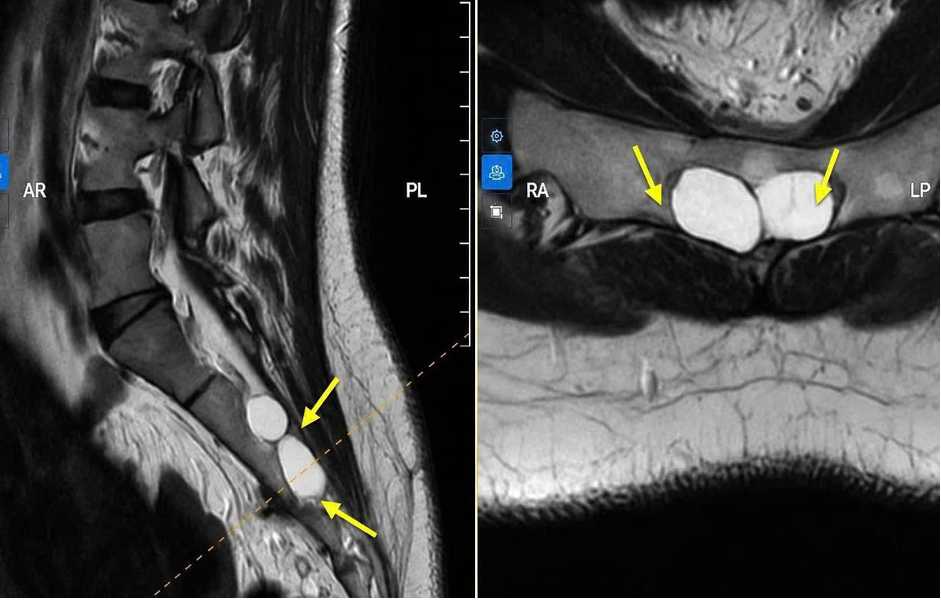 |
MRI image showing two large Tarlov cysts compressing Hong's sacral nerve roots. Photo: Tam Anh General Hospital
Unlike many other benign cysts, Tarlov cysts are not merely simple fluid sacs but are directly involved with nerve tissue. The cyst walls often contain nerve fibers or are tightly adhered to nerve roots, making intervention difficult. If left untreated, the cysts can increase in size, progressively worsening symptoms. Prolonged compression carries the risk of leading to chronic pain, persistent urinary dysfunction, or complete loss of control, causing irreversible nerve damage.
Hong was indicated for surgery to remove the cysts and relieve nerve compression. Before the operation, doctors thoroughly analyzed MRI scans to assess the size, direction of compression, and the cysts' relationship with each nerve root, thereby selecting the shortest, least invasive approach.
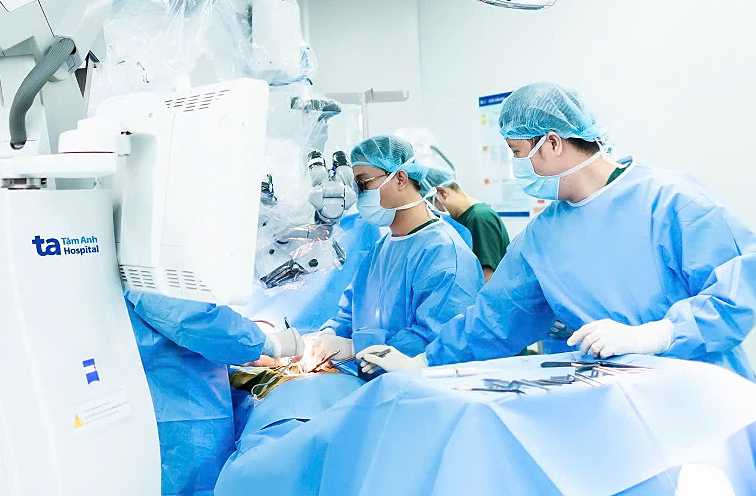 |
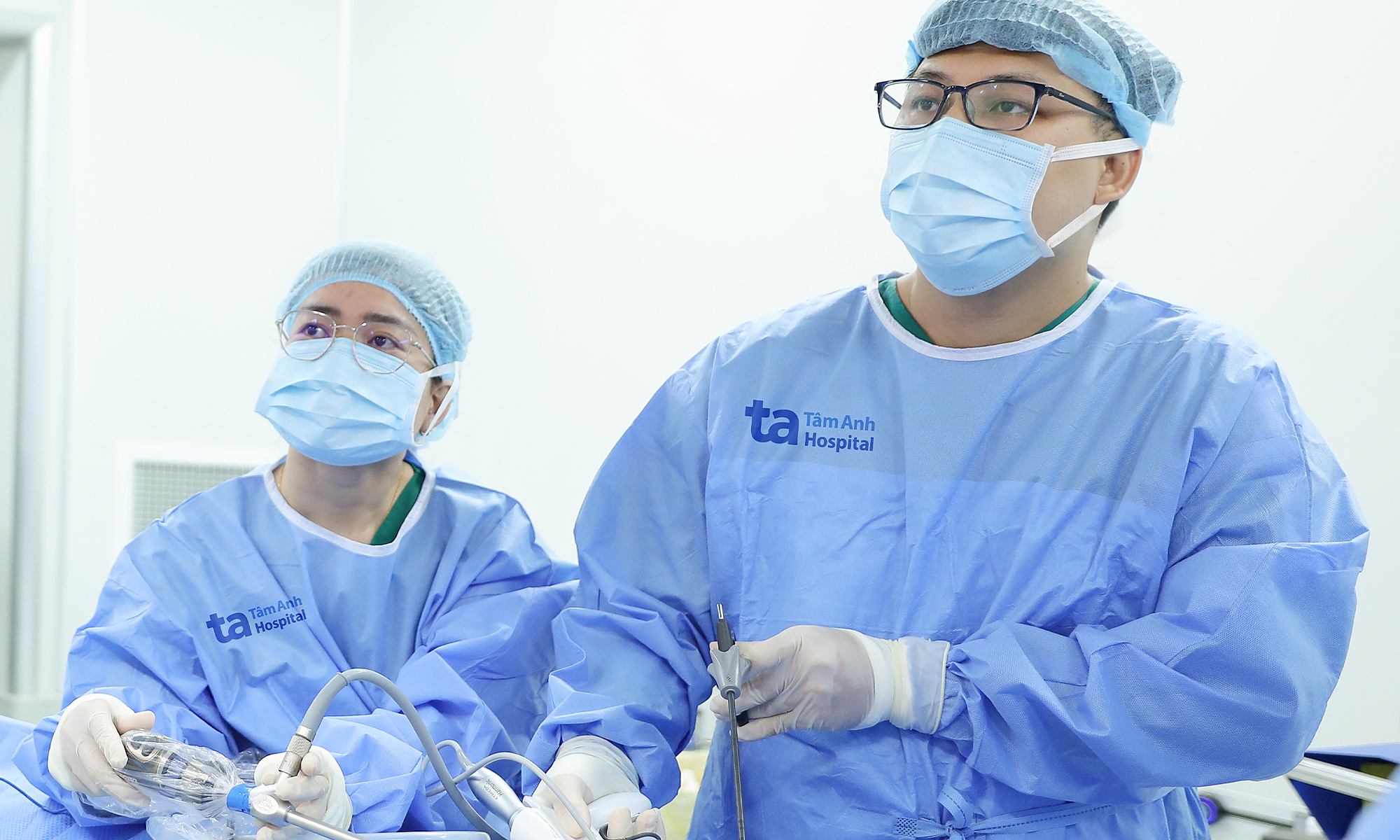
Doctors surgically removed Tarlov cysts for Hong using an AI K.Zeiss Kinevo 900 microsurgical microscope. Photo: Hospital provided
During the surgery, the team utilized a C-arm system for precise S2-S3 localization. They made a small skin incision, separated muscles along natural fibers, and opened a limited bone window to access the lesion. Doctors dissected the nerve roots, exposed and incised the cyst sheath, aspirated fluid, decompressed, and maximally preserved the surrounding nerve roots.
After removing the cysts, doctors sutured and reshaped the cyst sheath along the nerve roots to restore natural anatomical structure, limiting fluid re-accumulation. They also reinforced the area with artificial dura to reduce the risk of cerebrospinal fluid leakage and recurrence.
Post-surgery, Hong's buttock and coccyx pain resolved, numbness improved, and urinary function gradually stabilized. The patient mobilized early after one day, with activities returning to near-normal after a few days of monitoring.
 |
Hong's lower back and sacral pain resolved, and she was able to walk one day after surgery. Photo: Tam Anh General Hospital
According to Doctor Tan Si, Tarlov cysts often develop silently, with no clear symptoms or only dull lower back and sacral pain, easily mistaken for common spinal conditions. As the cysts grow and compress nerve roots, patients begin to experience pain spreading to the buttocks and legs, perineal numbness, or urinary dysfunction.
Doctors advise individuals with prolonged lower back and sacral pain accompanied by saddle numbness, urinary or bowel dysfunction to seek care at a hospital with a neurosurgery - spine department.
Trong Nghia
| Readers can submit questions about neurological diseases here for doctors to answer |