The city people's committee expects to submit this resolution to the people's council for consideration and approval in 2026. This policy applies to patients with health insurance who receive treatment at healthcare facilities in the city and have registered permanent or continuous temporary residence for 12 months or more.
According to the submission from the city people's committee to the people's council, individuals with end-stage chronic kidney disease undergoing hemodialysis or peritoneal dialysis will not have to pay the co-payment portion after health insurance covers routine services within its scope.
The city will pay healthcare facilities directly through a hospital fee deduction mechanism, so patients will not need to complete additional procedures.
Ho Chi Minh City currently has approximately 9,091 individuals with end-stage chronic kidney disease requiring regular kidney replacement therapy. Hemodialysis patients undergo blood filtration an average of 12 times per month, while peritoneal dialysis patients undergo it approximately 30 times.
Although health insurance covers most costs, patients still have to pay the co-payment portion throughout their treatment. For dialysis cases lasting many years, even a lifetime, this amount becomes a significant burden for many families. The department of health estimates the total amount patients self-pay for these two methods to be about 165,85 billion VND annually – which is also the estimated annual budget the city plans to allocate.
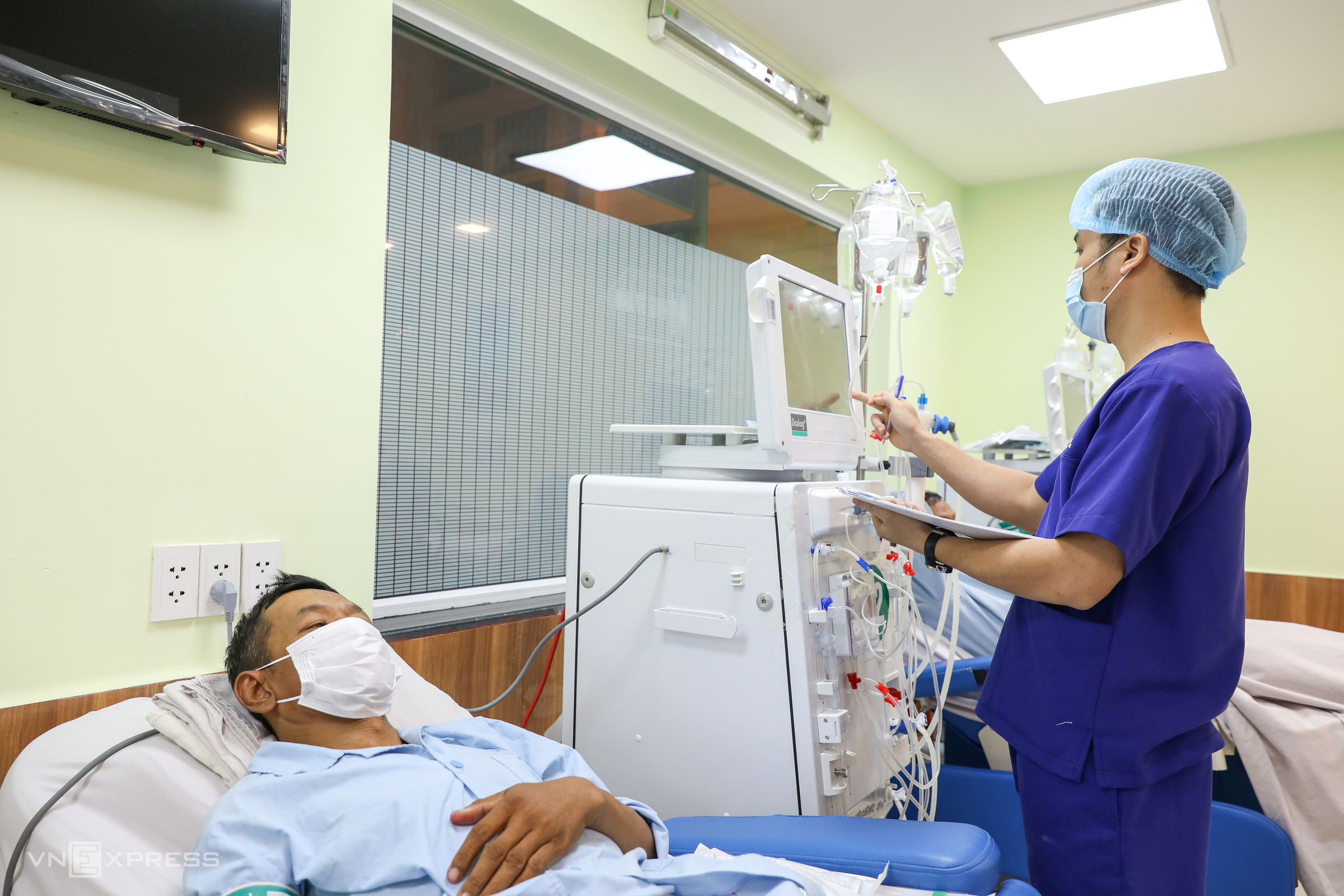 |
Patients undergoing dialysis at Thong Nhat Hospital, Ho Chi Minh City. *Photo: Phung Tien* |
According to a VnExpress survey, the cost of one dialysis session currently ranges from approximately 700,000 to 2,000,000 VND, or even higher depending on the healthcare facility, supplies, and services used. Individuals with health insurance have most of their costs covered by the insurance fund as regulated, but they still have to co-pay – meaning they self-pay the portion of costs within health insurance scope that the fund does not fully cover. Additionally, patients may also have to pay for expenses outside the scope of health insurance (if any). Because dialysis is required about three times per week, along with medication, tests, and prolonged treatment, the total amount patients currently self-pay each month is approximately 2,5-12 million VND.
End-stage chronic kidney disease is an irreversible condition, and patients are entirely dependent on kidney replacement therapy to sustain life. Frequent hospital visits each week reduce earning capacity and income, while prolonged treatment costs can easily push many families into financial hardship. The city people's committee recognizes that financial pressure is a reason some patients delay or abandon treatment, increasing the risk of complications, threatening lives, and incurring additional medical costs.
The city budget will only support the co-payment portion within the scope of health insurance, not including medications, supplies, or technical services outside the insurance list.
Ho Chi Minh City currently has 47 hemodialysis facilities, including 39 units under the department of health and 8 hospitals affiliated with ministries and sectors, equipped with 766 dialysis machines. These facilities operate three shifts per day, 6 days per week, to meet the increasing demand.
Le Phuong