Orthopnea, or difficulty breathing when lying down, is a condition where individuals experience shortness of breath in a supine position, which typically lessens upon sitting up or standing. This is not a standalone illness but a symptom indicating various underlying heart or lung conditions.
When transitioning from an upright position to lying down, blood flow from the veins in the legs and lower body increases, returning to the lungs. This raises the circulatory volume within the chest. While a healthy respiratory system can adapt to this change, individuals with lung damage or impaired respiratory function may experience shortness of breath due to the increased blood flow through their lungs.
 |
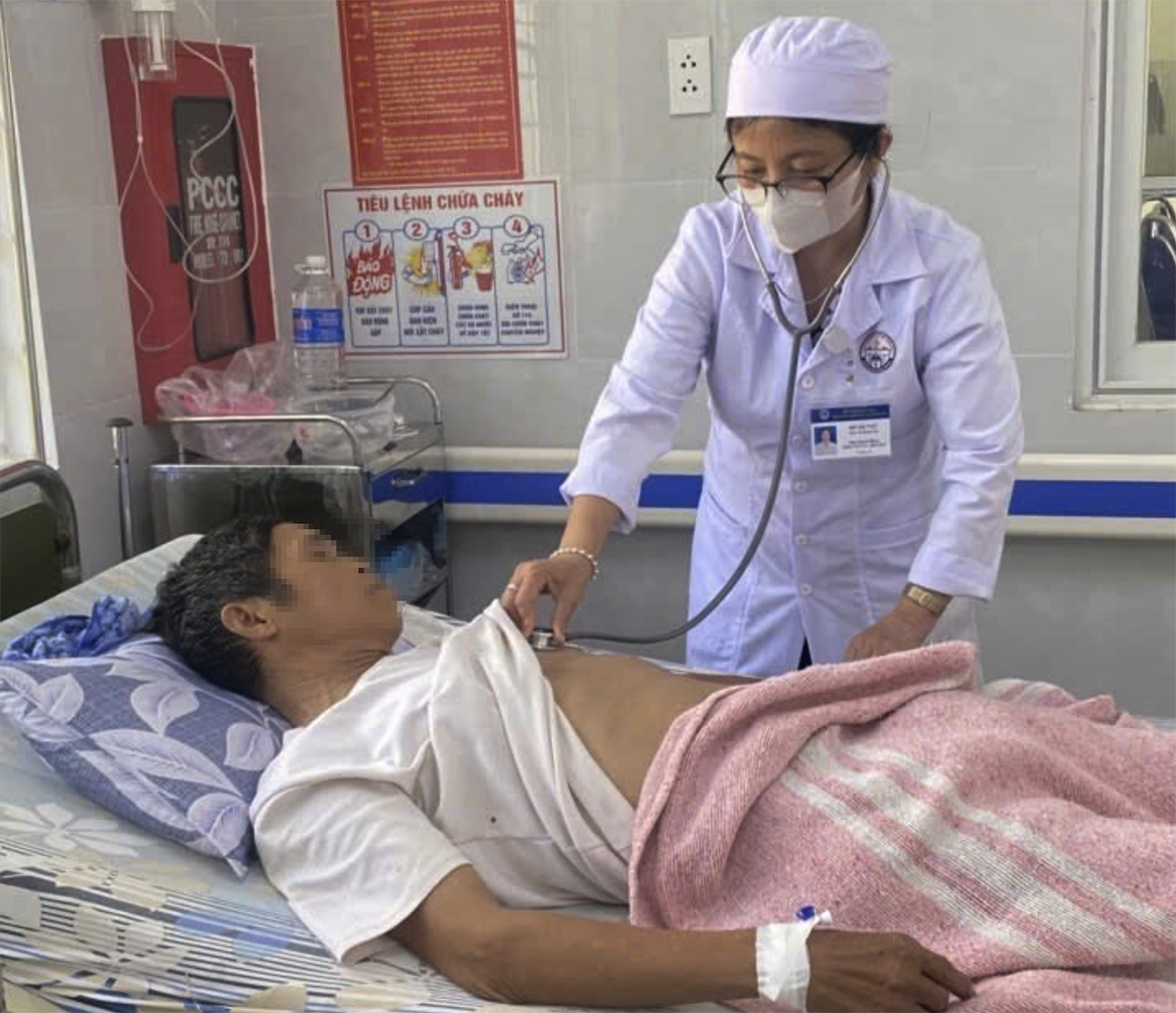
A doctor consults a patient experiencing difficulty breathing when lying down. Illustration: Tam Anh General Hospital |
Orthopnea can indicate several chronic lung conditions. For instance, individuals with chronic obstructive pulmonary disease (COPD) experience persistent airway inflammation and narrowing, which obstructs airflow. Asthma also presents similarly. At night or during rest, asthmatic airways tend to constrict more, leading to increased coughing, wheezing, or shortness of breath. Consequently, many asthma sufferers notice their respiratory symptoms worsen at night or while sleeping.
Other lung conditions can also lead to orthopnea, including pneumonia, pulmonary edema, pulmonary hypertension, and pleural effusion. These diseases increase fluid or pressure within the lungs, impeding their expansion and causing individuals to feel breathless when lying down.
Orthopnea is a symptom that can manifest in various conditions, encompassing not only respiratory illnesses but also cardiovascular diseases. If this symptom is frequent, persistent, or accompanied by signs such as a prolonged cough, wheezing, chest discomfort, fatigue, or leg swelling, medical consultation is advised.
Doctors may order diagnostic tests such as chest X-rays, computed tomography (CT) scans of the chest, lung function tests, echocardiograms, electrocardiograms (ECGs), or blood tests. These help pinpoint the exact cause and guide an appropriate treatment plan.
Doctor Nguyen Thac Dung
Department of Respiratory
Tam Anh General Hospital Hanoi
| Readers, send your questions about respiratory diseases here for doctors to answer. |