Doctor Tran Ngoc Hai, Director of Tu Du Hospital, stated at the 16th Obstetrics and Gynecology Anesthesia and Resuscitation Conference on 19/9 that anesthesia and resuscitation not only ensures safety during surgery but also helps control pain and promotes early patient recovery. Currently, many patients can stand up and walk after a few hours and be discharged after 2 or 3 days, depending on the type of surgery and health condition.
"Patients being able to stand up, walk, and manage personal needs on their own is a dream scenario that we, as surgeons, greatly hoped for and longed for," Mr. Hai said.
Tu Du Hospital performs over 50,000 surgeries annually, with a nearly absolute safety rate. The anesthesia and resuscitation phase is increasingly emphasized throughout the entire treatment process: pre-operative, intra-operative, and post-operative.
 |
Doctor Tran Ngoc Hai, Director of Tu Du Hospital, at the 16th Obstetrics and Gynecology Anesthesia and Resuscitation Conference on 19/9. *Photo: Tu Du Hospital* |
Early mobilization after surgery is also a measure to reduce the risk of venous thromboembolism (VTE), the third leading cause of cardiovascular death. According to Doctor Tao Tuan Kiet, Head of the Anesthesia and Resuscitation Department at Tu Du Hospital, the risk of venous thrombosis in pregnant women is 4 to 5 times higher than in non-pregnant women, with the highest risk occurring during the postpartum period.
Pregnancy increases blood clotting ability, while the enlarged uterus compresses the venous system, slowing blood circulation. After childbirth, especially following a cesarean section, postpartum women often need to rest and have limited movement in the initial hours, further increasing the risk of clot formation.
According to Doctor Hong Cong Danh, Deputy Director of Tu Du Hospital, factors increasing the risk of thromboembolism include: obesity, severe preeclampsia, diabetes, cancer, a history of thrombosis, blood clotting disorders, or prolonged bed rest. This condition can occur before birth, during surgery, or after surgery; therefore, prevention and early identification play a crucial role.
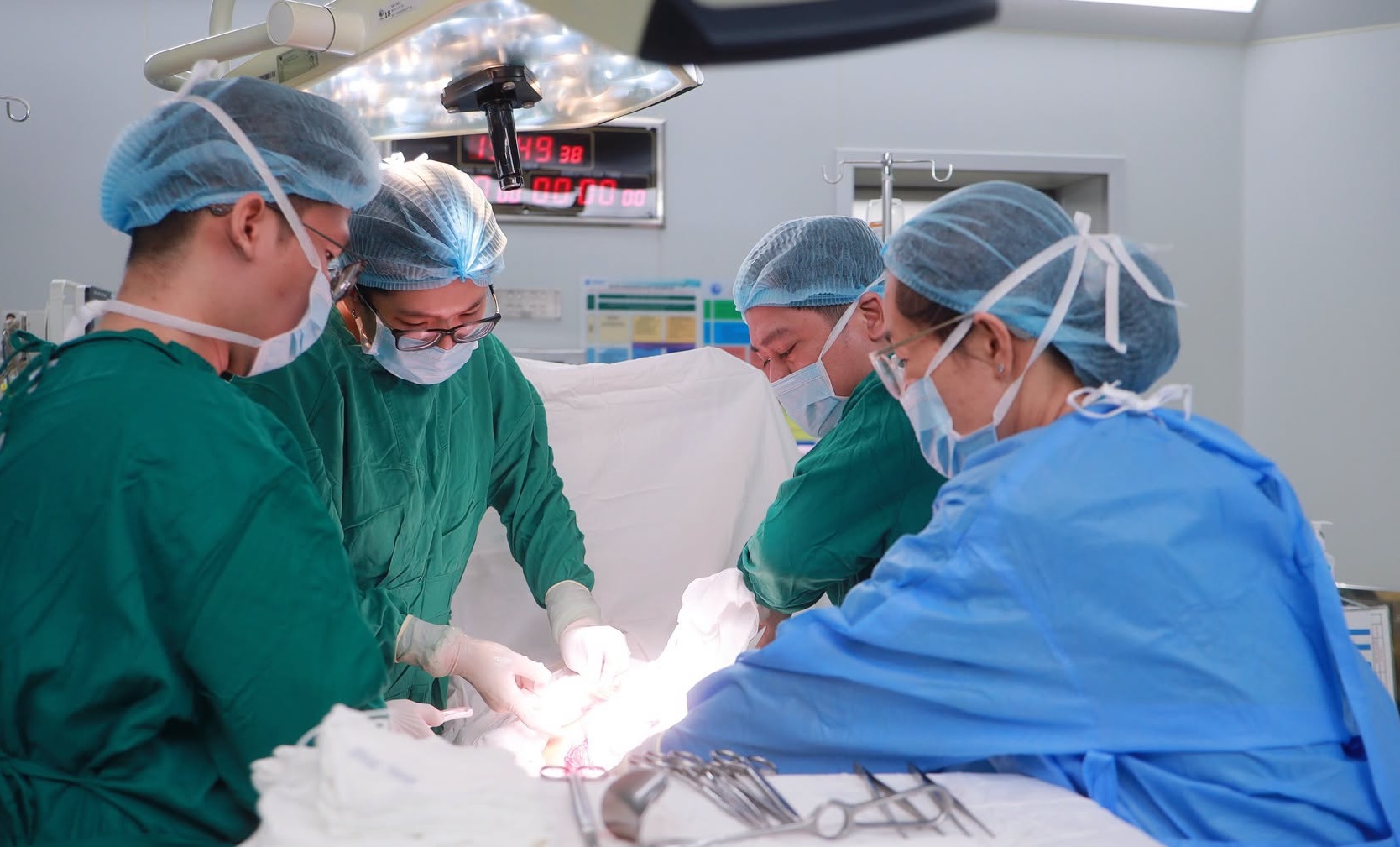 |
Doctors performing a cesarean section at Tu Du Hospital. *Photo: Tu Du Hospital* |
Tu Du Hospital developed protocols for thrombosis prevention in obstetrics since 2021 and in gynecology since 2025. Doctors use the Caprini score to assess risk while also considering bleeding risk. Low-risk patients are encouraged to mobilize early; medium- and high-risk groups may use mechanical methods such as compression stockings, intermittent pneumatic compression devices, or anticoagulants.
The 16th Obstetrics and Gynecology Anesthesia and Resuscitation Conference brought together the largest number of anesthesia and resuscitation specialists from domestic medical facilities to date, along with experts from Malaysia and China. Discussion sessions focused on: prevention and treatment of venous thrombosis, anesthesia in high-risk pregnancies, obstetric emergency resuscitation, and regional anesthesia.
Le Phuong