As the Mid-Autumn Festival approaches, a familiar concern about weight gain resurfaces. The Taiwan Health Authority warns that a traditional 180-gram lotus seed and pine nut mooncake contains a substantial 720 kcal—the energy equivalent of two and a half bowls of white rice. When combined with barbecues, soft drinks, and snacks during the moonlit festival night, the body's calorie intake quickly reaches alarming levels.
Faced with this worry, many people immediately reduce their rice portions, cut out carbohydrates entirely, or meticulously scrutinize the calorie and "sugar" figures printed on mooncake labels. However, the core of the issue extends beyond simply how much you eat. While both fall under carbohydrates, the health impact of fresh fruit and whole grains differs significantly from refined sweets. Similarly, the "sugar" index on a nutrition label does not always represent free sugar or added sugar. To maintain a healthy physique and well-being, understanding the "quality" of carbohydrates is crucial, in addition to controlling consumption.
In his book, "The Precise Diet", Doctor Tang Kham Nguyen, often called the "Sherlock Holmes of medicine", explains that with the exception of fiber, all forms of carbohydrates convert into simple sugar molecules as they pass through the digestive system. Sugars and starches naturally exist in foods, while "added sugar" is an ingredient introduced during processing. Biochemically, the body does not distinguish between these two because they possess equivalent molecular structures. Yet, their biological consequences on the body are diametrically opposite.
Research published in 2022 confirms that individuals consuming high-quality carbohydrates from whole grains, legumes, vegetables, and fresh fruits significantly reduce their risk of premature mortality. Conversely, groups consuming low-grade starches, including refined grains, canned juices, and sweets, face a significantly higher mortality rate.
 |
Illustration. Pexels |
The US Dietary Guidelines for the 2025-2030 period also affirm that minimally processed foods help protect cardiovascular health, whereas ultra-processed foods containing refined sugar promote metabolic diseases. Original carbohydrate sources bring a network of fiber, vitamins, minerals, and bioactive compounds like polyphenols and carotenoids. This natural structure slows the rate at which sugar enters the bloodstream, extends feelings of fullness, and prevents visceral fat accumulation, protecting the heart and preventing type 2 diabetes.
In contrast, added sugar in mooncakes or soft drinks provides empty calories, meaning energy lacking in nutrients. This type of sugar causes blood glucose to spike immediately after eating, overworking the liver and pancreas, which then activates the mechanism for storing excess fat.
An excess of sweet substances directly leads to fatty liver, insulin resistance, dyslipidemia, and metabolic syndrome. Statistics in Taiwan record that the average person consumes up to 25 kg of sugar annually.
Doctors advise consumers to clearly differentiate between three concepts: added sugar, free sugar, and total sugar. Added sugar includes refined sugars, corn syrup, or concentrated fruit juice that manufacturers intentionally add during processing. Free sugar encompasses all added sugar, plus natural sugar found in honey, syrups, and fruit juices.
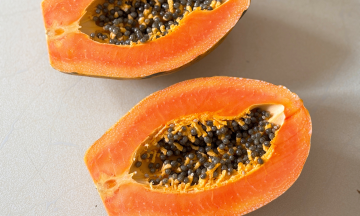
Pressing or pureeing fresh fruit breaks down the plant fiber membrane, transforming natural sugar into free sugar, which the intestines absorb directly into the bloodstream at a rate similar to soft drinks. Meanwhile, total sugar represents all simple and complex sugar molecules in a food item. A fresh apple contains natural sugar as part of its total sugar content but no free sugar; however, a glass of apple juice contains harmful free sugar.
The World Health Organization (WHO) recommends that adults keep their free sugar intake below 10% of their total daily energy, ideally under 5%. International data indicates that an adult currently consumes up to 67.1 grams of free sugar daily, equivalent to 13.3% of their energy intake, far exceeding the recommended safe level. Buyers face challenges in controlling this risk due to labeling loopholes.
Taiwan's current labeling standards only require the disclosure of total sugar, without mandating a breakdown of added and free sugars. Conversely, the US Food and Drug Administration (FDA) requires manufacturers to clearly print the amount of added sugar on nutrition labels.
Weight management during the festive season does not necessitate extreme elimination of rice or fresh fruit. Instead of fearing every gram of carbohydrate, consumers should proactively remove empty calories from ultra-sweet baked goods, carbonated soft drinks, and bottled milk tea, making room for natural, whole carbohydrate sources.
My Y (According to Money.und)