"Sleep divorce" is a term often used to describe couples who sleep in separate beds or rooms to minimize factors that disrupt sleep. While sharing a bed helps many couples maintain intimacy, it can also make it difficult for one or both partners to sleep if their habits and rest needs differ. In some cases, sleep divorce can be an option to improve sleep duration and quality.
Loud snoring frequently wakes a partner
Persistent snoring throughout the night can make it difficult for the person next to them to fall asleep or cause them to wake up multiple times. If this occurs regularly, couples might consider sleeping separately to ensure each person gets more continuous sleep.
However, sleeping separately does not address the underlying cause of snoring. Individuals who snore loudly, especially if accompanied by symptoms like periodic breathing pauses, gasping, choking, or excessive daytime sleepiness, should seek medical evaluation for the risk of sleep apnea. This is a disorder that can affect sleep quality and health if left untreated.
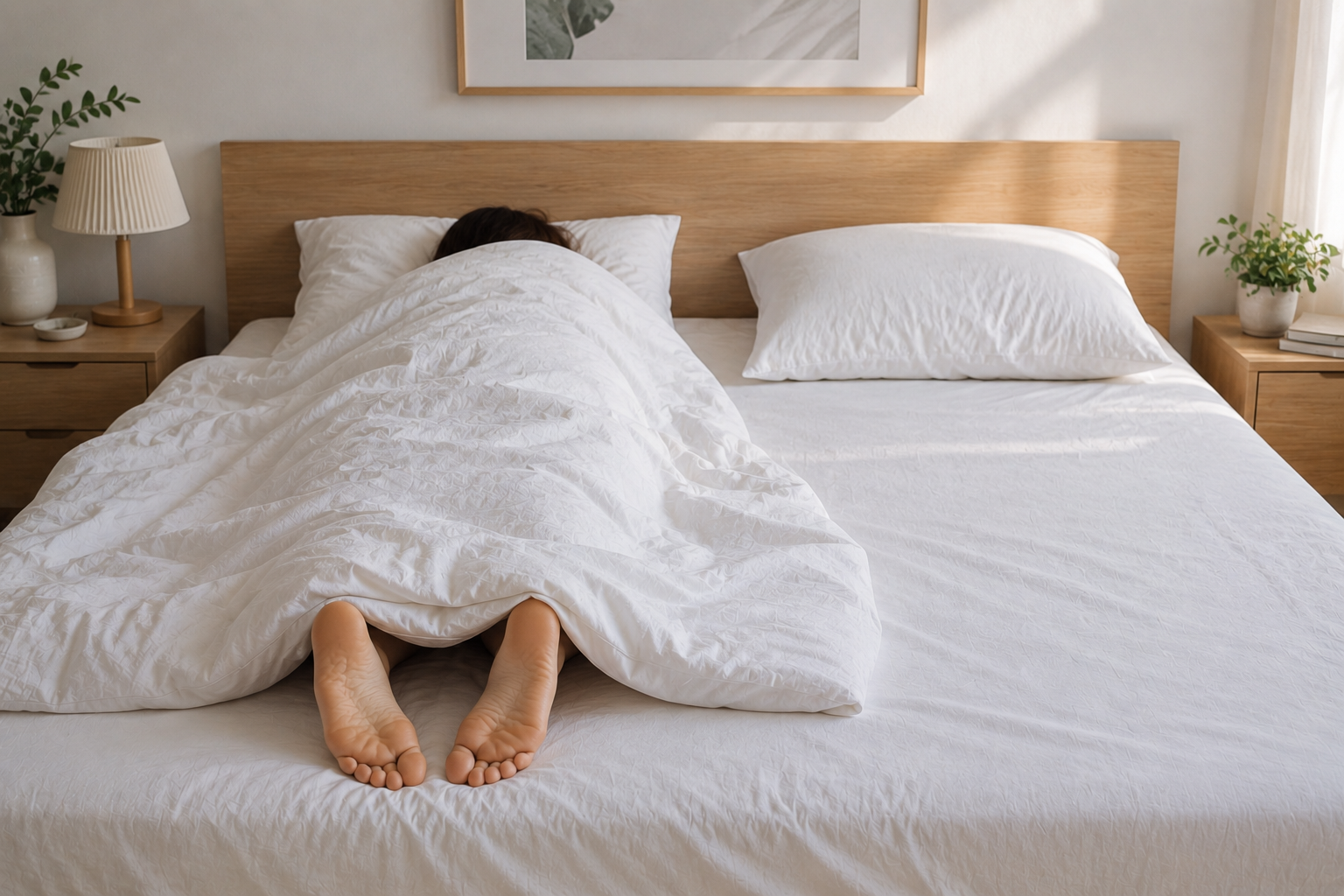 |
Sleeping separately can help limit sleep disruptions when a partner's snoring persists through the night. *Illustration: AI*
Couples have different sleep schedules
If one partner consistently works late while the other needs to go to bed early or wake up early, both of their sleep schedules can be affected.
One person getting into bed, turning on lights, using a phone, or waking up while the other is sleeping can disrupt rest. If work demands prevent adjusting schedules, sleeping separately can help each individual maintain a more suitable sleep duration.
Alternatively, couples can try to agree on a bedtime, reduce light, and minimize noise once one partner is asleep. If these measures are ineffective, sleeping separately on certain nights might be considered.
One partner frequently tosses and turns or moves a lot
Frequent tossing and turning, shaking the bed, or moving limbs can wake a partner, even if the person doing it is unaware. This is one reason couples choose to sleep separately. This approach can help the awakened partner reduce sleep interruptions.
According to Very Well Mind, restless legs syndrome can also affect both partners' sleep. Sufferers often experience uncomfortable sensations in their legs accompanied by an urge to move them, with symptoms typically more pronounced during rest and in the evening or at night. Constant leg movements can make it difficult for the affected person to sleep and disrupt their partner's sleep.
If sleep movements are violent, involving hitting, kicking, or posing a risk of injury to a partner, it is important to identify the cause rather than simply changing sleeping arrangements. Certain sleep disorders can lead to abnormal behaviors during sleep and require medical evaluation.
Couples have different preferences for their sleep environment
Room temperature, light, noise, or mattress firmness can all affect the ability to fall asleep. If one person prefers a cool room while the other gets cold easily, or one needs complete darkness while the other wants some light to sleep, these differences can create ongoing inconveniences.
Before deciding to sleep separately, couples can try simple solutions such as using separate blankets, adjusting room temperature, using blackout curtains, earplugs, or eye masks. If these differences still make it difficult for one partner to sleep regularly, sleeping separately might be an option. The goal is to create a suitable environment so each person can get sufficient, uninterrupted sleep.
Sharing a bed causes one or both partners to be sleep deprived
If one partner is constantly awakened by snoring, movements, schedules, or other factors from their partner, sleep deprivation can become chronic.
A 2023 survey by the Sleep Foundation of 1,250 adults in the US found that 52,9% of those who had slept separately reported improved sleep quality; those who maintained this practice reported sleeping an average of 37 minutes more per night. However, this was a self-reported survey, not a clinical trial, so it cannot be concluded that sleeping separately will improve sleep for everyone.
According to the Cleveland Clinic, this sleep arrangement does not necessarily reflect problems in the relationship; for some couples, the goal is simply to help both partners get enough sleep and be healthier.
It is important to determine whether sleeping together genuinely disrupts sleep. If one partner still sleeps well with their partner beside them, there is no need to sleep separately. If choosing to sleep separately, couples should discuss it beforehand to avoid one partner feeling distant or rejected.
Bao Bao (Compiled)