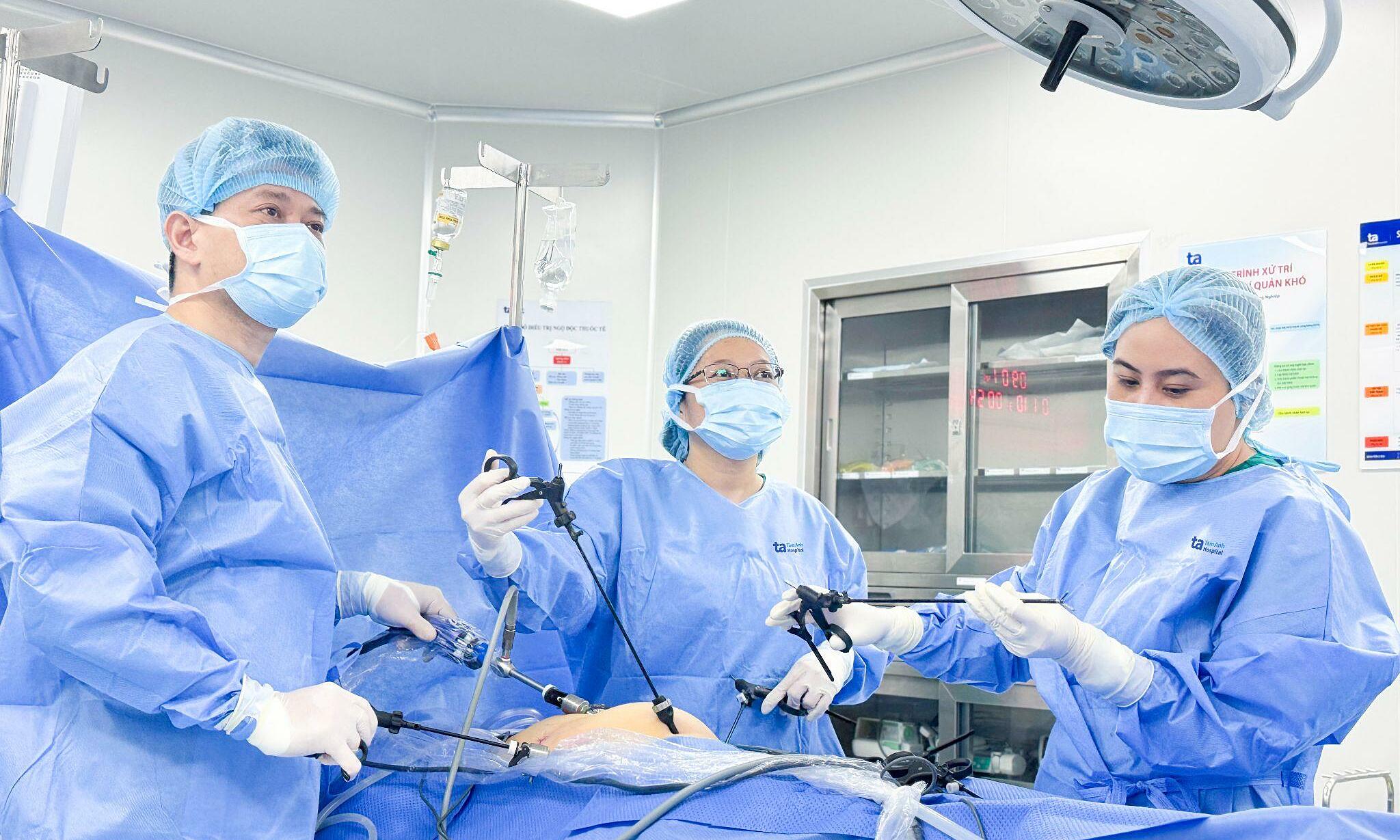
Master of Science, Doctor, Level II Specialist Duong Quang Huy, Head of the Andrology Unit at the Reproductive Support Center, Tam Anh Ho Chi Minh City General Hospital (IVF Tam Anh), advises that men can identify testicular abnormalities early, even before marriage. This early detection allows for identifying risks of impaired reproductive function and seeking suitable treatment.
Testicles have two primary functions: producing sperm and testosterone. Testosterone is crucial for maintaining male sexual characteristics, sexual desire, muscle mass, blood formation, and bone density. Consequently, one potential indicator of a problem is small testicle size.
According to Doctor Huy, Vietnamese men typically have a testicular volume of about 12-30 ml per testicle. A significant reduction in volume, particularly on both sides, can decrease the number of seminiferous tubules and cells involved in sperm production. This reduction may impact sperm quantity, quality, or even result in azoospermia.
Testicle size varies between individuals, and a slight difference between the two sides is normal. However, if a man notices small testicle size or a significant difference between the two sides, he should consult a specialist.
 |
Master of Science, Doctor, Level II Specialist Duong Quang Huy advises men on reproductive health. *Photo: IVF Tam Anh*
Another warning sign is the absence of one or both testicles in the scrotum. This condition, known as an undescended testicle, occurs when a testicle is located in the inguinal canal or abdominal cavity. The warmer environment can impair sperm production, increasing the risk of reproductive dysfunction. Undescended testicles also carry an increased risk of testicular cancer, emphasizing the need for early detection and treatment.
Doctor Huy notes that while men with only one testicle may still have a normal semen analysis, about 13% of such cases present with no sperm. If both testicles are undescended, the risk of azoospermia rises to 89%.
Men with a history of mumps, particularly those who developed orchitis (testicular inflammation) as a complication, should be aware of its potential impact on reproductive function. Inflammation can cause testicles to swell and become painful, eventually leading to atrophy and reduced sperm production. However, not all men who have had mumps experience impaired fertility; the risk is higher when both testicles are affected.
Men are also at risk of impaired reproductive function following genital surgery, chemotherapy, or radiation therapy for cancer. The impact's severity depends on the medication type, treatment dosage, irradiated area, and the individual's condition.
External signs can also indicate male hormonal abnormalities, including sparse pubic hair or gynecomastia. These may be linked to disorders of testosterone, estrogen, or other hormones that regulate reproductive function.
Doctor Huy advises individuals exhibiting these signs to seek an early medical examination. A doctor's assessment for men may include ultrasound, hormonal tests, and semen analysis to evaluate sperm production. Early detection of abnormalities allows for timely intervention, preventing adverse effects on reproductive function.
Nguyet Nhi
| Readers can submit questions about infertility here for doctors to answer. |