On 20/4, Quang Tri General Hospital announced the successful surgery of a rare case: a patient with two primary cancers originating in different organs.
The patient, a 56-year-old woman, was admitted after experiencing prolonged abdominal pain. Initial examinations and screenings led doctors to discover sigmoid colon cancer. Pathology results confirmed it as a moderately differentiated adenocarcinoma, already in an advanced stage.
During a systemic evaluation, doctors found an additional lesion of about 2 cm in her left lung. Initially, metastasis was suspected. However, biopsy results revealed this was also an adenocarcinoma. Subsequent immunohistochemistry tests confirmed the two tumors had independent origins, ruling out colon cancer metastasizing to the lung. This led to a diagnosis of two distinct primary cancers, with the lung cancer identified at an early stage (T1N0M0).
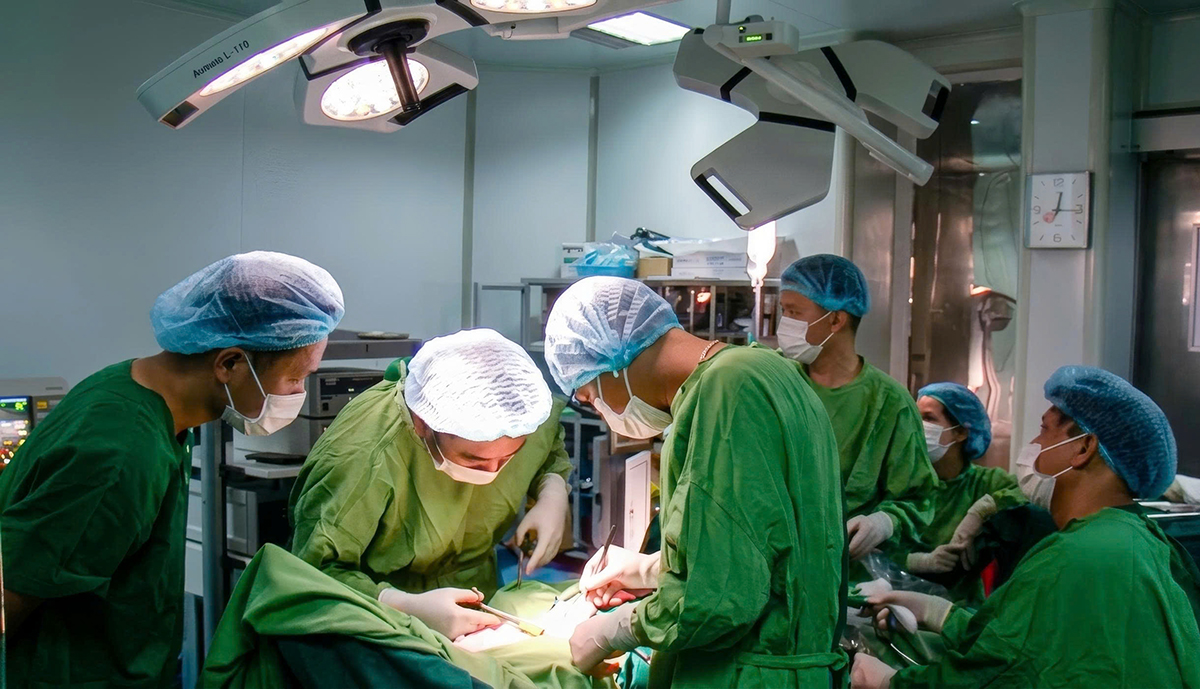 |
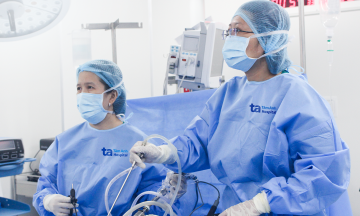
The surgery lasted approximately 4,5 hours, including sigmoid colectomy and left upper lobectomy. *Photo: Hospital provided*
According to the medical team, a major challenge was accurately distinguishing between primary cancer and metastasis, a crucial factor in determining the treatment strategy. An incorrect diagnosis could have deprived the patient of the opportunity for curative surgery.
Furthermore, with the two diseases being at different stages, selecting the optimal treatment approach became complex. Doctors debated between staged surgeries or a simultaneous intervention to leverage the "golden moment", especially for the early stage lung cancer.
After extensive multidisciplinary consultation, the medical team opted for simultaneous endoscopic surgery. The procedure, lasting about 4,5 hours, successfully removed the sigmoid colon and the left upper lung lobe. Six days post-surgery, the patient was conscious, breathing independently, eating, and defecating normally, and all drainage tubes had been removed.
Post-operative pathology results confirmed the lung tumor as stage T1N0 adenocarcinoma, with no lymph node metastasis observed. In the colon, the tumor was invasive T3N0, also without detected lymph node metastasis.
Doctors highlighted this as a rare occurrence: a patient simultaneously developing two primary cancers in different organs. Successfully performing radical endoscopic surgery for both conditions at once was a significant medical feat, demanding high professional expertise and close coordination among multiple specialties.
Dac Thanh