Eyelid twitching involves involuntary, repetitive contractions of muscles in or around the eyelids. According to Associate Professor, Doctor Nguyen Thanh Nam, Director of the High-Tech Eye Center at Tam Anh General Hospital, TP HCM, these twitches can affect one or both eyes, lasting from a few seconds to several minutes. Severe cases recur more frequently, causing difficulty opening the eyes, or even complete eyelid closure during spasms. This can also affect the eyebrows, corners of the mouth, and surrounding facial areas.
Eyelid twitching can affect individuals of any age, stemming from various causes. Most cases are idiopathic, meaning the muscle movement disorder around the eyes has no clear origin. It can also be a symptom of blepharospasm syndrome, often exacerbated by factors such as stress, fatigue, or prolonged sleep deprivation. Additionally, heavy consumption of caffeine, alcohol, or tobacco can stimulate the nervous system and periorbital muscles, triggering these spasms.
While not painful, eyelid spasms cause discomfort and a gritty sensation in the eyes. This can impair vision and daily activities, thereby reducing quality of life.
Treatment varies based on the condition's cause and severity. Mild, benign eyelid twitching, often triggered by fatigue or lack of sleep, typically resolves with adequate rest. For more severe cases, characterized by strong, prolonged twitches or hemifacial spasm, botulinum A toxin (botox) injection is a common treatment. Botox inhibits acetylcholine, a neurotransmitter, temporarily blocking nerve signals to the eyelid muscles and reducing spasms.
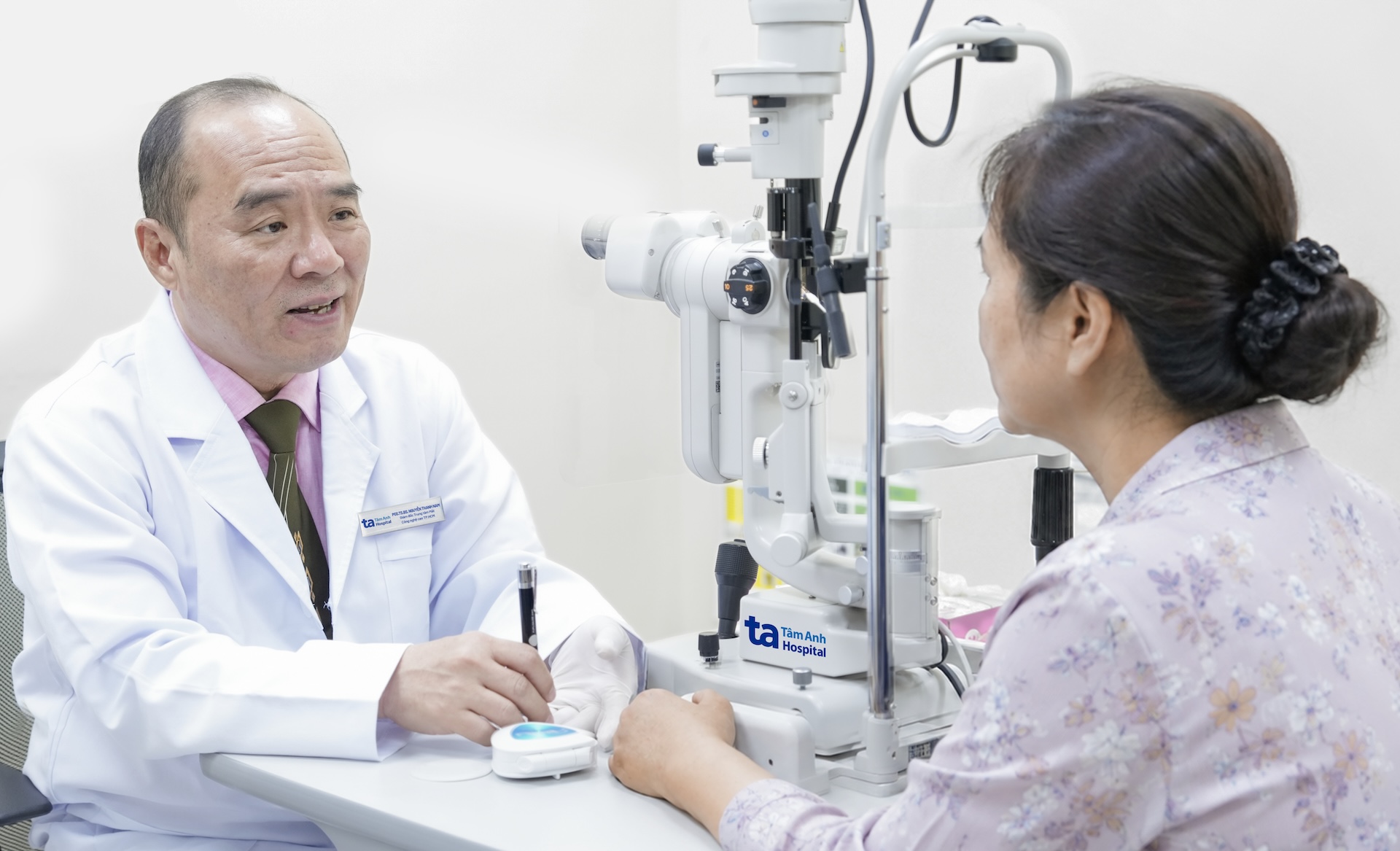 |
Associate Professor Nam advises a woman. Illustration: Tam Anh General Hospital |
Associate Professor Nam emphasizes that only qualified doctors should administer botox injections, after accurately identifying the cause and target muscle location. Patients must undergo a thorough eye examination, assessing their eyelid condition, periorbital muscles, medical history, and current medications. If suitable, the doctor will inject the customized dosage into the target muscle group. Effects typically manifest 3-5 days post-injection and can last for about 3-4 months, depending on individual response. Patients require repeat injections as prescribed when the effects wane and spasms return.
Patients also receive guidance on dietary supplements, including vitamin B and magnesium, found in foods like pumpkin, potatoes, and radishes. They should limit neural stimulants such as coffee and alcohol, ensure adequate sleep, and prioritize rest to improve their condition.
While most eyelid twitches are harmless, some cases may indicate underlying neurological conditions. These include cranial nerve 7 compression, central nervous system movement disorders, Parkinson's disease, or myasthenia gravis.
Doctors advise individuals experiencing prolonged eyelid twitching, especially if accompanied by sudden ptosis, one-sided weakness or numbness, difficulty speaking or swallowing, or loss of balance, to seek immediate hospital evaluation. These symptoms can be dangerous, necessitating prompt treatment to prevent severe complications.
Ngoc Kim Tham
| Readers can submit questions about ophthalmological conditions here for doctors to answer. |