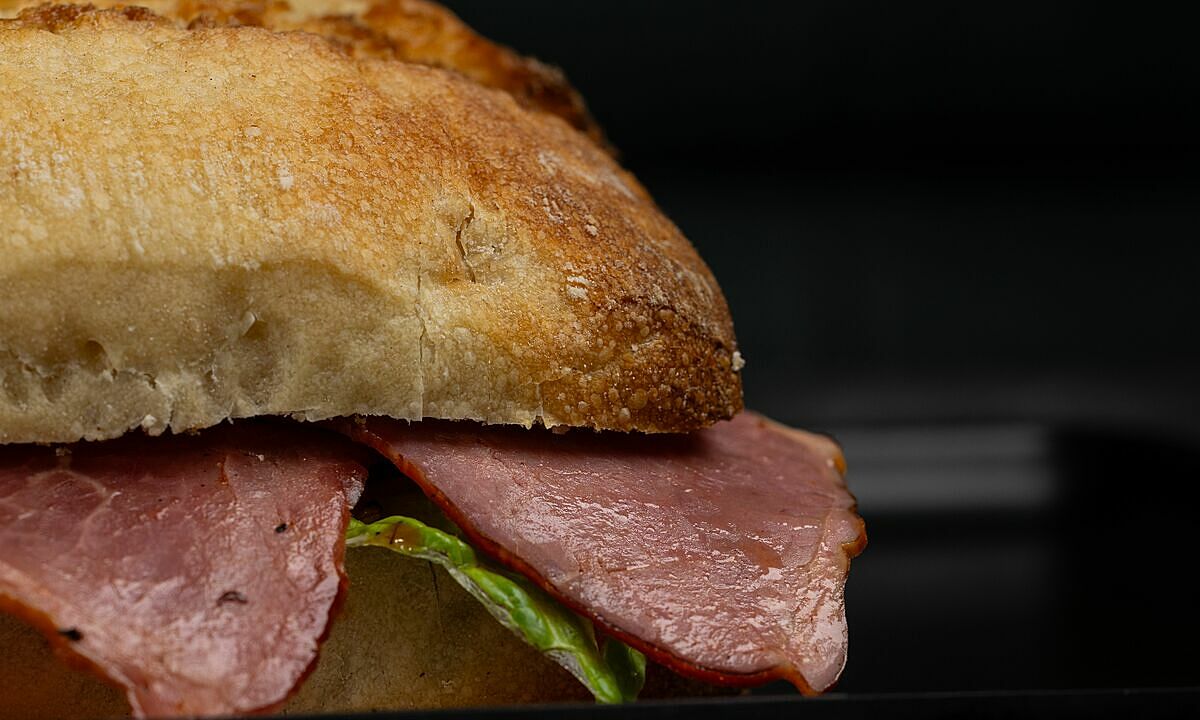
Minh Hoang's lunch often consists of a bowl of instant noodles. The 28-year-old software engineer in Tay Ninh, who earns 22 million dong each month and maintains over 100 million dong in emergency savings, has declined all invitations from friends for many months. He cuts his own hair with old scissors and repeatedly postpones routine health check-ups.
"If I accidentally spend an extra 30,000 dong on an unplanned meal, I lose sleep all night, sitting up to open my banking app and recalculate every single dong", Hoang recounted.
His account has never been empty, yet the feeling of insecurity persists. Past family financial setbacks, coupled with news about inflation and housing prices, make Hoang view his savings as a drop in the ocean.
"My financial safety net seems to recede every time I get close to it", the young man expressed.
Phuong Anh, 26, a stockbroker in TP HCM, lives by a similar principle. Earning 25 million dong, with over 200 million dong saved, she has not bought new clothes in two years. She subsists on packaged food daily, turning down all trips with colleagues.
The wave of layoffs reported in the news and the social media standard of "must have billions of dong before age 30" have created an unattainable finish line in her mind. "Every time I see my account balance drop, even slightly, through a notification message, my heart pounds as if I'm on the verge of destitution", she said.
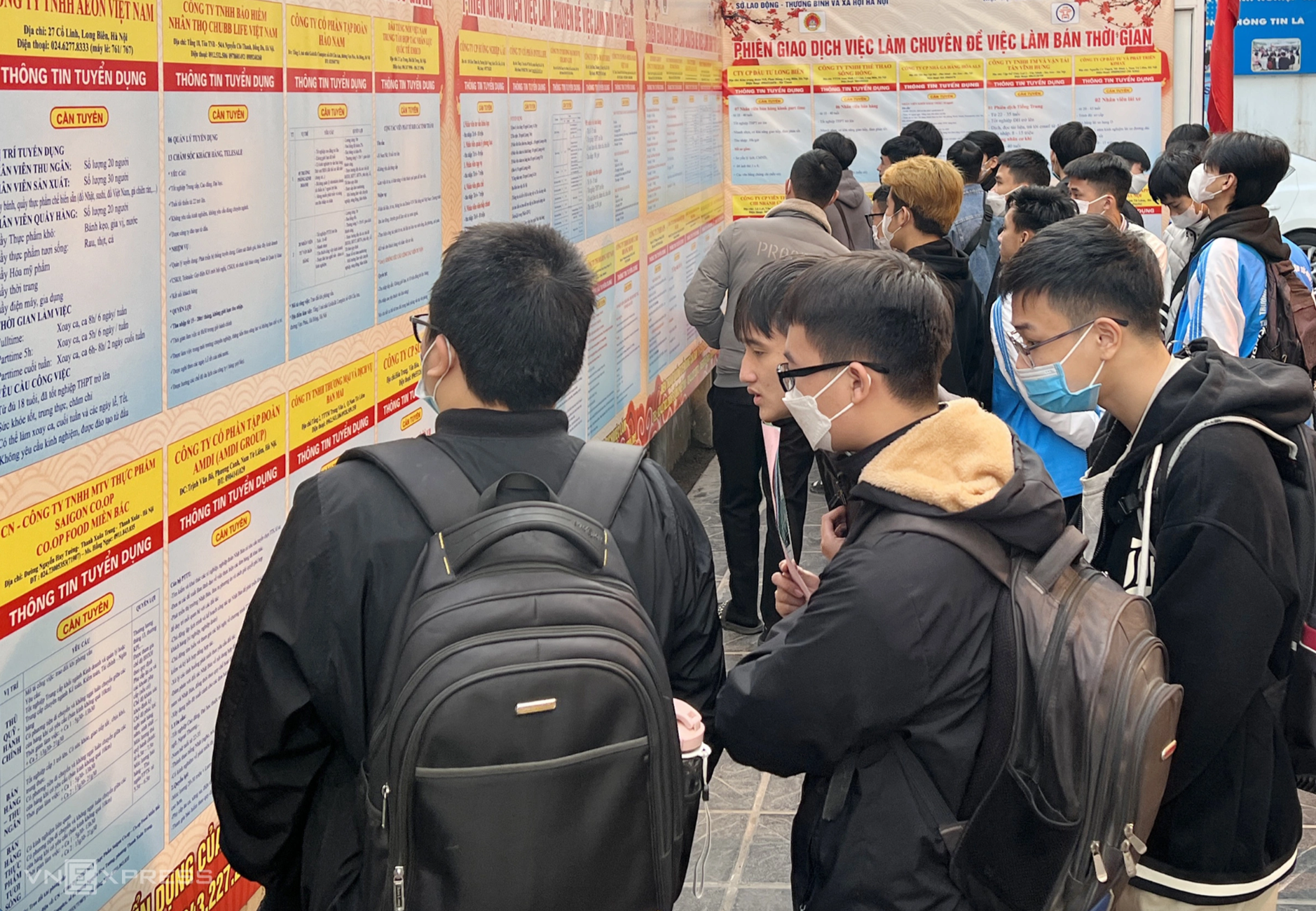 |
Young workers learn about recruitment information at a job fair at the Ha Noi Employment Service Center. Photo: Hong Chieu
Vuong Nguyen Toan Thien, Clinical Psychology Master and Professional Director of Lumos Counseling and Therapy Center, noted that this distorted perception of money is not yet an official psychiatric diagnosis in the DSM-5-TR or ICD-11 manuals. It represents a cognitive distortion where a subjective feeling of wealth or poverty does not accurately reflect objective reality.
"The problem does not stem from the account balance itself, but from the psychological meaning attached to money. When a person uses money as the sole measure of self-worth, the question of how much money they possess immediately transforms into a question of personal dignity", the expert analyzed.
This pressure arises from constant social media comparisons combined with negative economic news. Young people live in an unending cycle of comparison, using strangers' standards and worst-case scenarios from the news as benchmarks for their own lives. The body reacts accordingly. The hypothalamic-pituitary-adrenal axis, an endocrine pathway that secretes cortisol when danger is perceived, is designed for short-term situations. When constantly activated, it impairs sleep and concentration. This creates a loop: financial worries consume brain resources, work performance decreases, career opportunities narrow, and the belief "I'm not good enough" is further reinforced.
The cost extends beyond emotions. Hoang postpones routine health check-ups to save money, an action that allows a silent illness time to progress. Phuong Anh's two-year diet of instant noodles and packaged foods lacks fiber and micronutrients, while containing excess salt. The money both individuals accumulate in their accounts, in a worst-case scenario, will flow back out as treatment costs.
To escape this invisible pressure, Mr. Thien advises young people to clearly distinguish three concepts: assets, achievements, and human value. Income reflects the economic value of labor in a specific market; it does not represent an individual's entire dignity. Factors such as professional competence, responsibility, healthy relationships, and life experience are not displayed on banking apps but are decisive for quality of life. Instead of using others' lifestyles as a benchmark, each person needs to build their own frame of reference based on personal circumstances and values.
After psychological counseling sessions, Hoang and Phuong Anh began to re-establish spending limits for basic living needs, learning to dismantle the irrational guilt associated with money.
Standing before his usual lunch counter, for the first time in two years, Hoang ordered an extra plate of stir-fried vegetables and a 15,000 dong portion of meat, leisurely finishing his meal without checking his phone for his balance.
Phuong Anh also added a brand-new shirt to her cart after months of hesitation, and confirmed her participation in a weekend outing with colleagues. Looking at the bank notification confirming the deduction, the young woman's breathing was no longer hurried.
My Y