In 1/2026, doctor Tai underwent a kidney transplant at Viet Duc Friendship Hospital. After nearly one month of intensive care, his vital signs are now stable, and the transplanted kidney is adapting and functioning well.
The phone call delivering the good news to his wife brought overwhelming joy. On the other end, the young doctor simply asked, "Are the children well?". After long days of treatment, his small family is about to reunite for a complete, warm Tet celebration.
"My greatest wish right now is to regain enough strength to return to work, to continue providing healthcare for the people in the highlands," he said. He expressed gratitude to the donor's family for their invaluable "gift of life," as well as to the doctors and philanthropists who shared the burden of treatment costs.
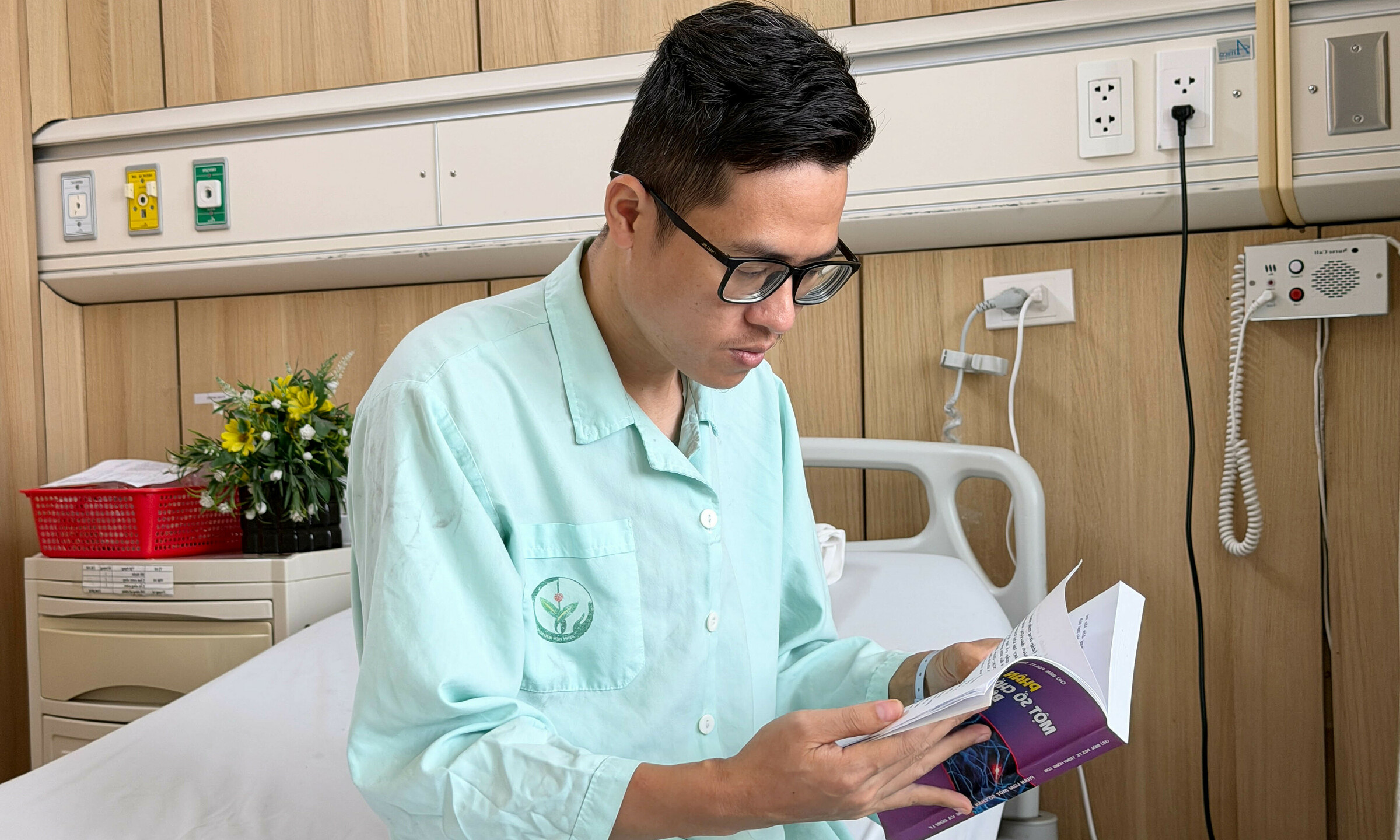 |
Doctor undergoing a kidney transplant at Viet Duc Hospital. Photo: Thao My |
Doctor Tai's health crisis began in late 7/2025. Persistent dizziness, fatigue, and weight loss prompted him to seek medical attention, leading to a diagnosis of end-stage renal failure. As a medical professional, he understood the severity of his condition and the difficult journey ahead.
The financial burden weighed heavily on his family, with transplant costs estimated at over one billion VND, not including regular dialysis expenses. At that time, his wife had just given birth to their second child two months prior, and the family's income relied solely on his modest civil servant salary. Thanks to community support and the "miracle" of the donated organ, he survived the ordeal.
Before becoming a patient, doctor Tai was a trusted pillar for local residents. Graduating from Vinh Medical University in 2019, the young man from the Thai ethnic group declined urban job opportunities to dedicate himself to his homeland. Through his work at Quy Hop Medical Center, Chau Loc Commune Health Station, and Nghia Xuan, he quickly earned the affection of the community due to his dedication.
The number of patient visits at his health station surged from 90 to over 230 visits each month. He frequently traveled to remote villages to encourage people to abandon the habit of using traditional herbal remedies of unknown origin. During the Covid-19 pandemic, doctor Tai was also one of the frontline medical staff who worked to exhaustion to trace and treat the community.
According to statistics, Vietnam has successfully performed nearly 10,000 organ transplants, with kidney transplants accounting for the majority at nearly 9,000 cases, followed by nearly 800 liver transplants. This technique is now not only limited to central hospitals like Viet Duc, Cho Ray, and Military Central Hospital 108, but has also been transferred to many provincial hospitals, with about 30 organ transplant centers nationwide.
The year 2025 marked a significant leap forward for Viet Duc Hospital in this field. From an average of 8-10 brain-dead donor cases annually since 2010, the hospital received over 40 cases last year. Doctors there continuously performed many complex transplants, including simultaneous multi-organ transplants such as heart-liver, heart-lung, and liver-kidney.
Le Nga