Mr. Van's weight increased from 57 kg to 75 kg over five years, leading to a rapidly expanding waistline and grade one obesity with a body mass index (BMI) of 27,5. Concerned about potential complications from fatty liver disease, he attempted various methods to reduce abdominal fat, including massage, hot wraps, "belly fat reduction" treatments, and direct fat-dissolving injections into the abdomen, but these proved ineffective.
Tests, ultrasounds, and InBody measurements performed at Tam Anh General Hospital in TP HCM revealed Mr. Van's visceral fat index was 1,8 times higher than the safe threshold. Doctor Tran Nguyen Quynh Tram, Deputy Head of the Department of Endocrinology - Diabetes, explained that methods like massage and fat-dissolving injections only target subcutaneous fat, offering low effectiveness and a high likelihood of fat returning. For sustainable weight loss, she emphasized the need for multidisciplinary treatment and physical activity to reduce overall body fat.
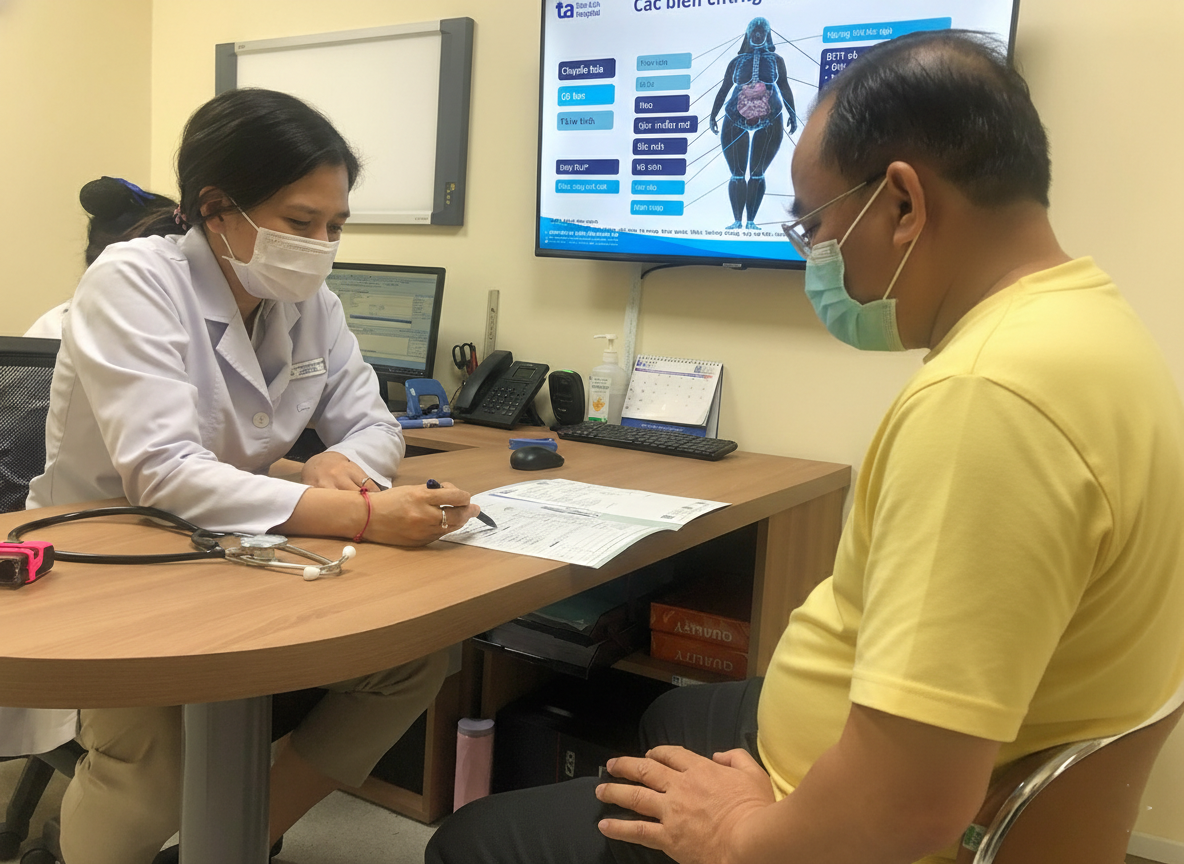 |
Doctor Tram analyzes Mr. Van's fat and muscle indexes. _Photo: Tam Anh General Hospital_ |
The medical team developed a personalized weight loss regimen for Mr. Van, incorporating oral and injectable medications to help reduce calorie intake. A nutritionist provided specific guidance on his daily calorie consumption. Initially, he gradually cut down on beer, consuming only one glass daily before stopping completely. He also restricted fried and grilled dishes, eventually eliminating them from his diet. Concurrently, he participated in his neighborhood's duong sinh (traditional Vietnamese exercise) group, engaging in physical activity for about one hour daily.
After two months, he lost 7 kg, but his waist circumference had not reached the desired level. Doctors recommended an additional cryolipolysis treatment, which works deeply to eliminate excess subcutaneous fat. Four weeks after the cryolipolysis session, his waist circumference decreased by another 7 cm, now measuring approximately 100 cm. He plans to continue his obesity treatment and undergo a second cryolipolysis session to achieve a waist circumference below 90 cm.
 |
Mr. Van undergoes abdominal cryolipolysis treatment. _Photo: Tam Anh General Hospital_ |
A waist circumference above 80 cm for women and above 90 cm for men signals central obesity, often colloquially known as a "beer belly". This condition indicates an excess of visceral fat, which significantly increases the risk of metabolic disorders, type 2 diabetes, fatty liver disease, cardiovascular disease, stroke, and diminished physiological function.
According to Doctor Tram, treating obesity in middle age is generally more challenging due to a slower metabolism, natural muscle loss, and hormonal changes, such as decreased estrogen in women and testosterone in men. As people age, lean muscle tissue gradually diminishes, reducing muscle mass while fat increases, negatively impacting the effectiveness of weight loss. For scientific and sustainable obesity treatment, overweight individuals should avoid self-medicating or injecting drugs based on advertisements. Instead, they should seek medical consultation for appropriate, individualized, and safe treatment plans.
Duc Hanh
*The patient's name has been changed