Colonel, Doctor of Medicine (Second Degree) Vu Dinh An, Head of the Intensive Care and Toxicology Department at Military Hospital 175, shared insights during a community health consultation program on the afternoon of 22/7. He explained that DRS.ABCDE is a pre-hospital emergency protocol designed to guide the public on immediate actions when faced with a critically ill person.
The first step, D (Danger), involves assessing potential hazards. First responders must quickly identify risks at the scene, ensuring their own safety, the safety of any assistants, and the victim before approaching. If the area remains dangerous, it is essential to eliminate or reduce the risk if possible. If safety cannot be guaranteed, one should not approach the victim.
"Many people, upon seeing an accident, immediately rush to provide first aid in the middle of the road or stand where traffic is still moving. This approach is incorrect. First, assess the scene, ensure the safety of the first responder, and then approach the victim," the doctor explained.
The second step, R (Response), focuses on assessing the victim's responsiveness. The first responder should call loudly and gently shake the victim's shoulder to check if they are conscious and reacting.
The third step, S (Send for help), is to call for assistance. According to Doctor An, this crucial step is often overlooked. One person alone cannot easily provide first aid and manage all situations. Therefore, it is important to call for additional support and activate the 115 emergency system as soon as possible, providing information about the location, the victim's condition, and the number of victims.
After these three initial steps, the first responder continues with ABCDE, which includes assessing and managing the airway (Airway), assessing and supporting breathing (Breathing), assessing circulation, controlling bleeding, and performing chest compressions if the patient is in cardiac arrest (Circulation), quickly assessing neurological status (Disability), and finally, exposing the entire body to detect injuries and keep the patient warm (Exposure).
 |
A victim of a street accident in Ho Chi Minh City requiring first aid. Photo: Phung Tien |
Doctor An noted that previously, first aid training primarily focused on the ABCDE principle. However, the international protocol now includes the three initial DRS steps, emphasizing scene safety, rapid patient assessment, and calling for help before performing first aid techniques.
"Many people only remember ABCDE but forget the first three steps, even though DRS comprises the actions that must be taken immediately upon approaching a patient," he stated.
Sharing practical experience, Doctor An revealed that many cases of death or severe complications do not result from hospital treatment but from incorrect initial management. He cited a case of one athlete who suffered heatstroke during a marathon. On-site medical staff correctly removed clothing and cooled the athlete, but during the nearly 20 minutes of transport to the hospital, hypothermia measures were not maintained, leading to brain damage.
"Emergency care must be continuous, even during transport, not just stopping once first aid is done," the doctor emphasized.
Doctor An also advised everyone to recognize emergency signs such as severe chest pain, altered consciousness, blurred vision, or severe headache accompanied by high blood pressure. These signs indicate the need to immediately transport the patient to a medical facility rather than monitoring them at home.
 |
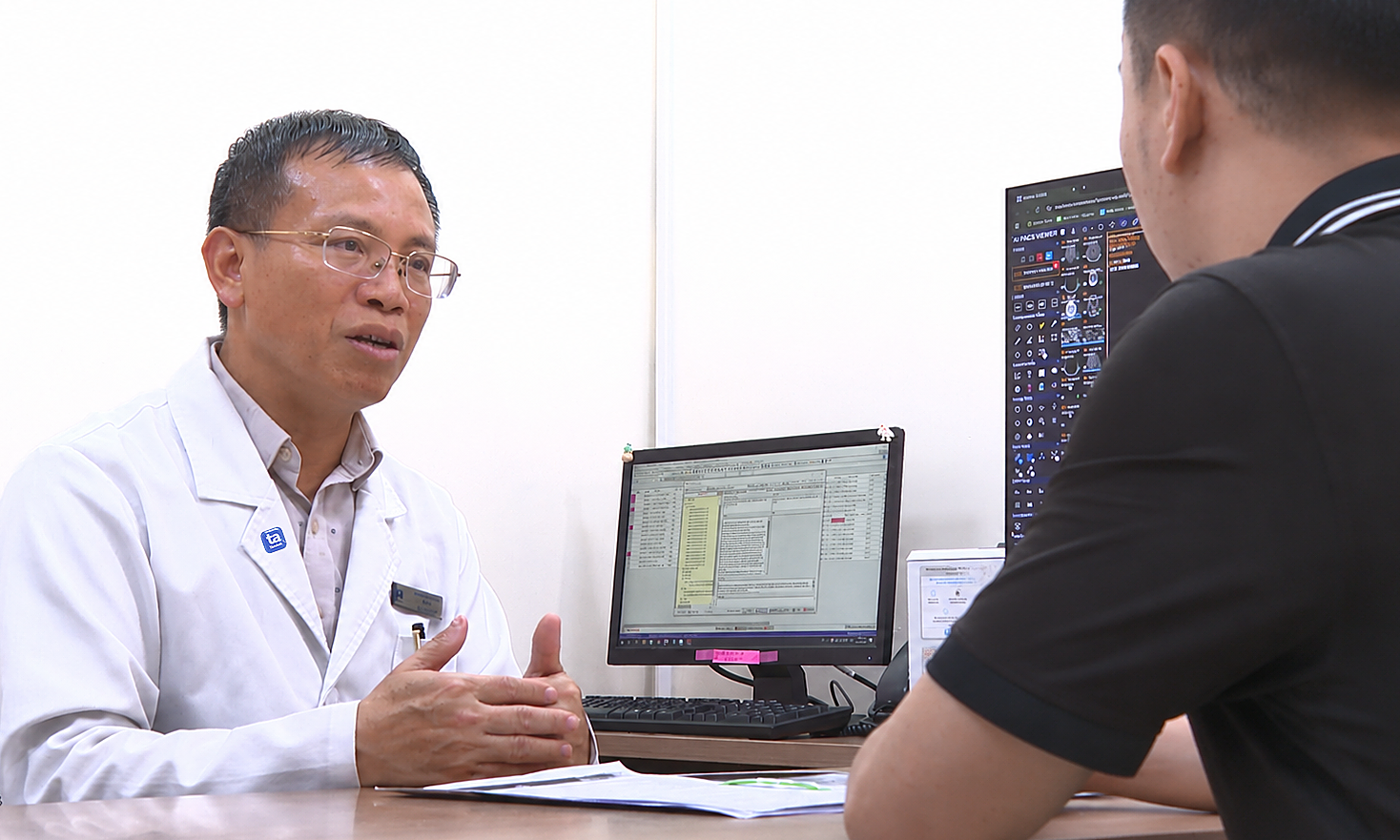
Colonel, Doctor of Medicine (Second Degree) Vu Dinh An, Head of the Intensive Care and Toxicology Department, Military Hospital 175, at a community health consultation program on the afternoon of 22/7. Photo: Hospital provided |
The program was organized by Military Hospital 175 for retired officers, commemorating the 79th anniversary of Invalids and Martyrs Day (27/7). Major General, Associate Professor, Doctor Le Quang Tri, Party Committee Secretary and Deputy Director of the hospital, highlighted that many dangerous emergency situations can occur at any time, with family members or bystanders often being the first on the scene. Therefore, acquiring knowledge for early recognition, correct management, and timely activation of the emergency system is crucial for saving lives and limiting complications.
Le Phuong