Hoang, 30, presented to Tam Anh General Hospital Hanoi with persistent left-sided tinnitus and nasal congestion. An endoscopy revealed a suspicious lesion in his left nasopharynx, which a subsequent biopsy confirmed as undifferentiated nasopharyngeal carcinoma. Doctors diagnosed him with stage three nasopharyngeal cancer (cT3N2M0). The tumor, measuring approximately 20x18x32 mm, had invaded adjacent structures and metastasized to bilateral cervical lymph nodes, compressing the Eustachian tube and causing his tinnitus.
To reduce the tumor size and enhance the effectiveness of radical treatment, Hoang began neoadjuvant chemotherapy.
 |
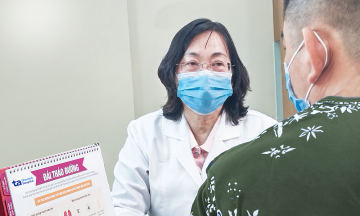
Doctor Hai consults with Hoang after treatment. *Photo: Tam Anh General Hospital* |
Following three cycles of chemotherapy, imaging assessments indicated a positive response in both the primary lesion and cervical lymph nodes. Hoang then proceeded with concurrent chemoradiation using volumetric modulated arc therapy (VMAT), a modern radiotherapy technique employed for head and neck tumors.
After completing concurrent chemoradiation, Hoang's nasopharyngeal region showed only mild mucosal thickening. There were no signs of tumor recurrence or invasion into surrounding areas, and the cervical lymph nodes had shrunk, with no new lesions or disease progression observed.
Master, Doctor Tran Ngoc Hai, from the Oncology Department, explained that nasopharyngeal cancer originates from the epithelial lining of the nasopharynx, the highest part of the pharynx, located behind the nasal cavity. The Epstein-Barr virus (EBV) is a leading risk factor for this cancer, and Hoang tested positive for EBV antibodies. According to Doctor Hai, individuals with EBV antibodies face a 26-fold higher risk of developing nasopharyngeal cancer. EBV is also linked to lung cancer, liver cancer, and various lymphomas.
In its early stages, nasopharyngeal cancer often presents with prolonged nasal congestion, unilateral tinnitus, hearing loss, nosebleeds, or palpable cervical lymph nodes. These non-specific symptoms are frequently mistaken for rhinosinusitis or other ear, nose, and throat conditions, which can lead to delayed diagnosis.
Doctor Hai advises patients experiencing unusual symptoms such as unilateral tinnitus, persistent nasal congestion, or recurrent nosebleeds to seek a medical examination for early detection. Early diagnosis significantly improves treatment effectiveness and prognosis.
Hieu Nguyen
| Readers can submit questions about cancer here for doctors to answer |