Eng English
China 中国人

Eng English
China 中国人
  • News
  • World
  • Business
  • Entertainment
  • Sports
  • Law
  • Education
  • Health
  • Lifestyle
  • Travel
  • Science
  • Digital
  • Automobiles
  • Trở lại Thể thao
  • Health
Thursday, 23/7/2026 | 08:01 GMT+7

Is hepatitis E during pregnancy dangerous?

I am five months pregnant and was diagnosed with hepatitis E. How is this condition treated, do I need regular liver check-ups, and is there a high risk of recurrence? (Lien, Tay Ninh)

Answer:

Hepatitis E is an acute liver disease caused by the hepatitis E virus (HEV), primarily transmitted through the fecal-oral route, particularly via contaminated water or food.

HEV comprises several genotypes, with genotypes one and two being the most common and mainly transmitted through contaminated water. HEV genotypes three and four can be transmitted through food, such as raw or undercooked pork, or from animals to humans.

After entering the body via the digestive tract, HEV replicates in the intestines before spreading to the liver, causing damage to liver cells through an immune response.

Most cases of hepatitis E resolve naturally within 2-6 weeks. However, the disease can lead to severe complications or be fatal in pregnant women and individuals with compromised immune systems. For pregnant women, especially during the second trimester (13-27 weeks) and third trimester (28-40 weeks), the disease carries a higher risk of severe progression, requiring close monitoring to prevent acute or fulminant liver failure.

You have not provided specific laboratory test results. If liver enzymes are significantly elevated compared to normal limits, or if you experience symptoms like jaundice, yellow eyes, severe fatigue, loss of appetite, right upper quadrant pain, fever, or persistent nausea, you should be hospitalized for monitoring and treatment. Doctors will assess liver and kidney function, coagulation status, and potential complications for both the mother and the fetus.
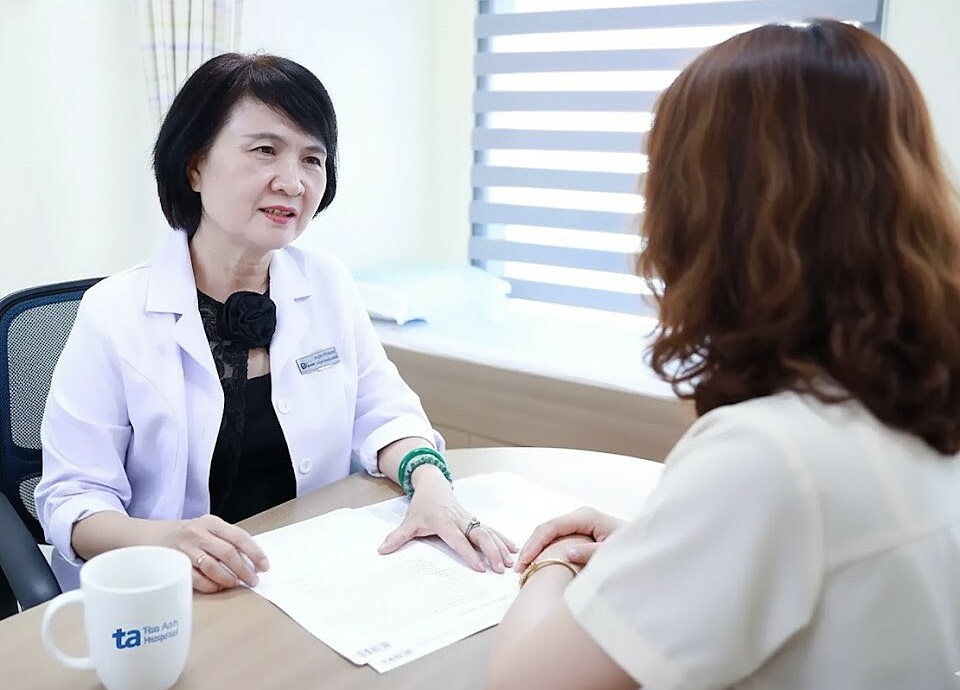
Doctor Thanh Quyt consults a patient. Illustration: Tam Anh General Hospital

Currently, there are no specific antiviral drugs routinely recommended for pregnant women with hepatitis E. Therefore, treatment mainly involves rest, ensuring adequate nutrition, hydration, symptomatic treatment, and managing any complications that arise. Monitoring typically requires coordination between hepatology and obstetrics specialists to ensure the safety of both mother and baby.

If liver enzymes are only mildly elevated, health is stable, and there are no unusual symptoms, you may be monitored as an outpatient under a doctor's guidance. Patients need regular follow-up appointments and liver function tests to assess disease progression and detect any abnormalities early.

Some of the most concerning complications of hepatitis E in pregnant women include acute liver failure, fulminant liver failure, coagulation disorders, postpartum hemorrhage, and an increased risk of mortality for both mother and fetus. Therefore, pregnant women require close monitoring throughout the illness.

Hepatitis E is usually an acute illness and does not become chronic in individuals with normal immune systems. After recovery, the body produces antibodies against the virus. However, the protective ability of these antibodies may decrease over time, so a person can still be reinfected with hepatitis E if exposed to the source in the future.

To prevent reinfection, you should consume thoroughly cooked food and boiled water, use clean water sources, wash hands frequently, and ensure food safety, especially during pregnancy.

Doctor, Level 2 Specialist Ngo Thi Thanh Quyt

Department of Gastroenterology - Hepatology - Pancreatology

Tam Anh General Hospital Ho Chi Minh City

Readers can submit questions about digestive diseases here for doctors to answer
By VnExpress: https://vnexpress.net/mac-viem-gan-e-thai-ky-co-nguy-hiem-5100561.html
Tags: liver damage hepatitis E liver failure

News in the same category

6 seemingly harmless daily habits that accelerate aging

6 seemingly harmless daily habits that accelerate aging

Renowned American biohacker Gary Brecka warns that seemingly harmless habits like irregular sleep and impulsive supplement use are silently damaging health and accelerating the aging process.

Surgery corrects congenital strabismus in teenager

Surgery corrects congenital strabismus in teenager

Thanh, 14, who developed strabismus at the age of 3, underwent surgery to adjust his extraocular muscles, restoring both eyes to their correct alignment.

Thought it was ear ringing, turned out to be nasopharyngeal cancer

Thought it was ear ringing, turned out to be nasopharyngeal cancer

Hoang, 30, experienced left-sided tinnitus and persistent nasal congestion, leading doctors to diagnose nasopharyngeal cancer with cervical lymph node metastasis, for which he received concurrent chemoradiation.

Doctor outlines 8 steps to take when encountering a critically ill person

Doctor outlines 8 steps to take when encountering a critically ill person

The 8 initial first aid steps, following the DRS.ABCDE principle, help identify life-threatening conditions early and ensure correct management before medical personnel arrive.

How to reduce uric acid

How to reduce uric acid

Beyond reducing red meat, individuals with elevated blood uric acid can prioritize low-fat dairy, incorporate vitamin C-rich foods, and gradually lose weight to manage their levels.

Chinese doctor highlights lifestyle habits that can lead to cancer

Chinese doctor highlights lifestyle habits that can lead to cancer

A doctor warns that most cancer cases stem from poor lifestyle habits, pollution, and weakened immunity, rather than being solely genetic.

Poor boy with cancer faces narrow treatment window due to financial exhaustion

Poor boy with cancer faces narrow treatment window due to financial exhaustion

Thirteen-year-old Chamalea Khang's treatment opportunities are severely limited by his family's financial depletion, after his cancer was discovered when he was already suffering from respiratory failure.

What happens to your bones when you drink coffee every day?

What happens to your bones when you drink coffee every day?

Caffeine can affect calcium absorption and excretion, but the extent of its impact depends on consumption levels and daily nutrition.

Is sadness after sex a medical condition?

Is sadness after sex a medical condition?

My girlfriend often feels gloomy, tired, and unhappy after sex. Could this be a sign of decreased libido or a medical condition requiring examination? (Hoang, 26, Hanoi).

Four dietary mistakes that can cause significant hair loss

Four dietary mistakes that can cause significant hair loss

Diets lacking protein, rapid weight loss, or nutritional imbalances can lead to weakened, brittle hair and increased hair shedding.

Eng English
China 中国人
  • News
  • World
  • Business
  • Entertainment
  • Sports
  • Law
  • Education
  • Health
  • Lifestyle
  • Travel
  • Science
  • Digital
  • Automobiles
FPT Tower, 10 Pham Van Bach Street, Dich Vong Ward,
Cau Giay District, Hanoi, Vietnam
Email: contacts@vnportal.net
Tel: 028 7300 9999 - Ext 8556
Advertise with us: 090 293 9644
Register
© Copyright 2026 vnnow.net. All rights reserved.
Terms of use Privacy policy Cookies