The thyroid gland, an endocrine gland located in the front of the neck, produces hormones that regulate the body's metabolism. When the thyroid gland is overactive (hyperthyroidism) or underactive (hypothyroidism), individuals often experience fatigue, abnormal weight changes, hair loss, or heart palpitations. Thyroid hormone imbalances also affect many organs, including the skin, hair, eyes, and facial tissues.
Doctor Phan Thi An, a master of endocrinology and diabetes at Tam Anh General Hospital Hanoi, stated that several facial changes can signal thyroid disease but are frequently overlooked.
Dry, rough, peeling skin, easily reddened
The two thyroid hormones, triiodothyronine (T3) and thyroxine (T4), regulate metabolism, body temperature, blood circulation, and skin moisture. When the thyroid gland functions abnormally, thyroid hormone imbalances cause various skin changes.
In individuals with hypothyroidism, metabolism slows, and blood flow to the skin decreases, leading to dry, rough, pale, and colder-than-normal skin.
Conversely, hyperthyroidism increases metabolism and stimulates sweat production, making the skin softer and moister than usual, but also sensitive, prone to redness, itching, or hives.
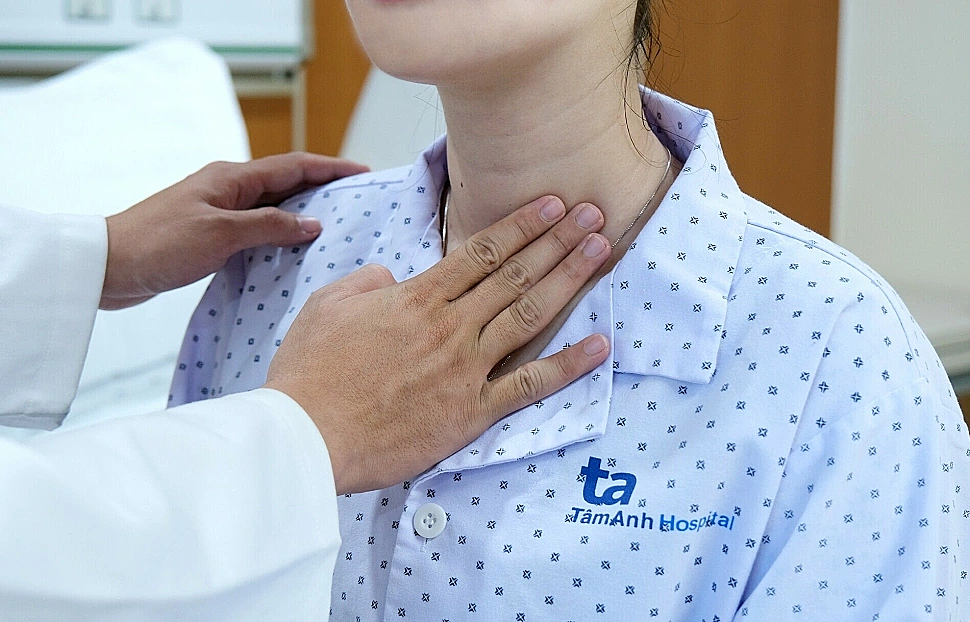 |
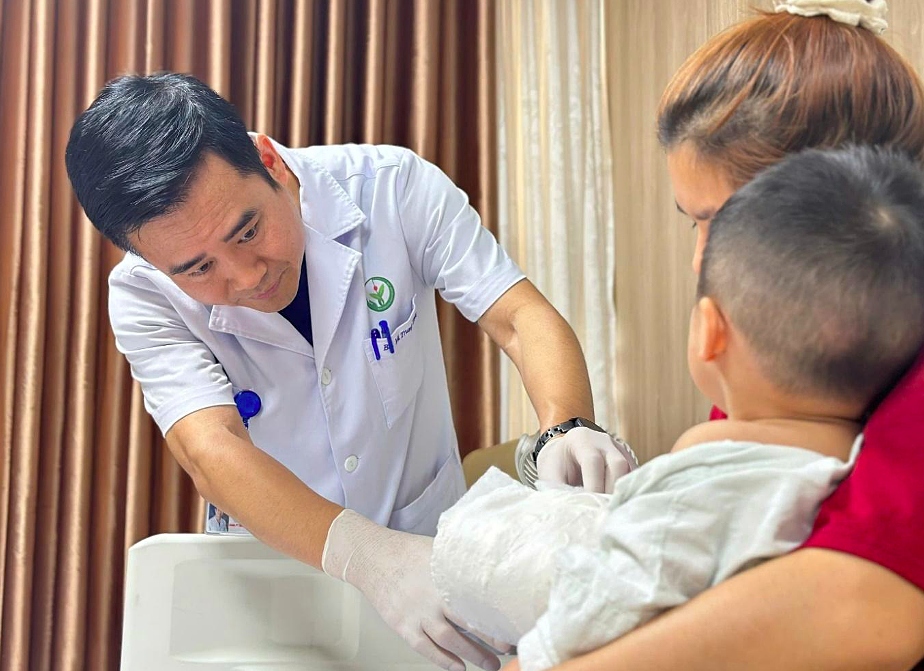
A doctor examines a patient's thyroid gland. Photo: Tam Anh General Hospital |
Swelling of the face, eyelids, or lips
Facial edema is a condition where the face swells due to fluid accumulation in subcutaneous tissues or an inflammatory reaction, often more noticeable in the morning, especially in the eyelids.
When thyroid function declines, reduced blood circulation increases the body's accumulation of glycosaminoglycans (GAGs) – amino acids capable of retaining water. This leads to symptoms of swelling, thickened skin, or tissue damage, particularly around the eyes, cheeks, and lips.
Bulging eyes
Bulging eyes, or exophthalmos, is a condition where the eyeballs protrude due to increased volume of tissues within the eye sockets. This is a typical sign of Graves' disease, the most common cause of hyperthyroidism.
In individuals with Graves' disease, the immune system not only attacks the thyroid gland but also affects the tissues behind the eyeballs. The inflammatory process causes muscles and fatty tissues in the eye sockets to swell, pushing the eyeballs forward. Patients may notice unusually wide-open eyes, a gritty sensation, watery eyes, light sensitivity, or swollen eyelids. In severe cases, the condition can damage the cornea, cause double vision, or impair sight.
Eyebrow and hair loss
Hair loss and eyebrow loss are common symptoms in both hypothyroidism and hyperthyroidism. When thyroid hormone levels are imbalanced, the hair follicle growth cycle is disrupted, making hair and eyebrows prone to breakage and shedding.
According to Doctor An, a relatively characteristic sign of hypothyroidism is the loss of hair in the outer one-third of the eyebrows, specifically the tail end near the temples. This occurs because hair follicles enter a resting phase prematurely and are not stimulated to grow normally.
If you notice thinning eyebrows, especially at the tail end, accompanied by symptoms such as fatigue, weight gain, dry skin, constipation, or consistently feeling cold, you should consult an endocrinology specialist for a thyroid function assessment.
Thuy Duong
| Readers can submit questions about thyroid disease here for a doctor's response. |