Hansani, a Filipino national, had no history of chronic liver disease and did not regularly consume alcohol. Five days before seeking medical attention, he experienced flu-like symptoms, including a mild fever and muscle aches. He presented to Tam Anh General Hospital, TP HCM, for emergency care only after his eyes and skin turned yellow.
Test results confirmed an infection with the hepatitis A virus. His liver enzyme levels were significantly elevated, exceeding 70 times the normal range, with AST (GOT) at 3,100 U/L and ALT (GPT) at 2,950 U/L (normal range 5-40 U/L). An abdominal ultrasound indicated a slightly enlarged liver, heterogeneous hypoechoic parenchyma, and a mildly thickened gallbladder wall, all suggestive of acute inflammation in the liver.
Master Doctor Mai Hoai Sang, from the Department of Gastroenterology, Endoscopy and Gastrointestinal Endoscopic Surgery Center, explained that liver enzyme levels above 3,000 U/L reflect necrotizing inflammation of liver cells. This occurs due to the body's immune response fighting the virus and can progress to acute liver failure.
Doctors prescribed supportive treatment for Hansani, which included oral and intravenous fluid and electrolyte replacement, along with hepatoprotective medications and metabolic support. His liver enzymes showed significant improvement after two days of treatment. He was discharged after five days, continuing medication and scheduled for regular follow-up appointments.
 |
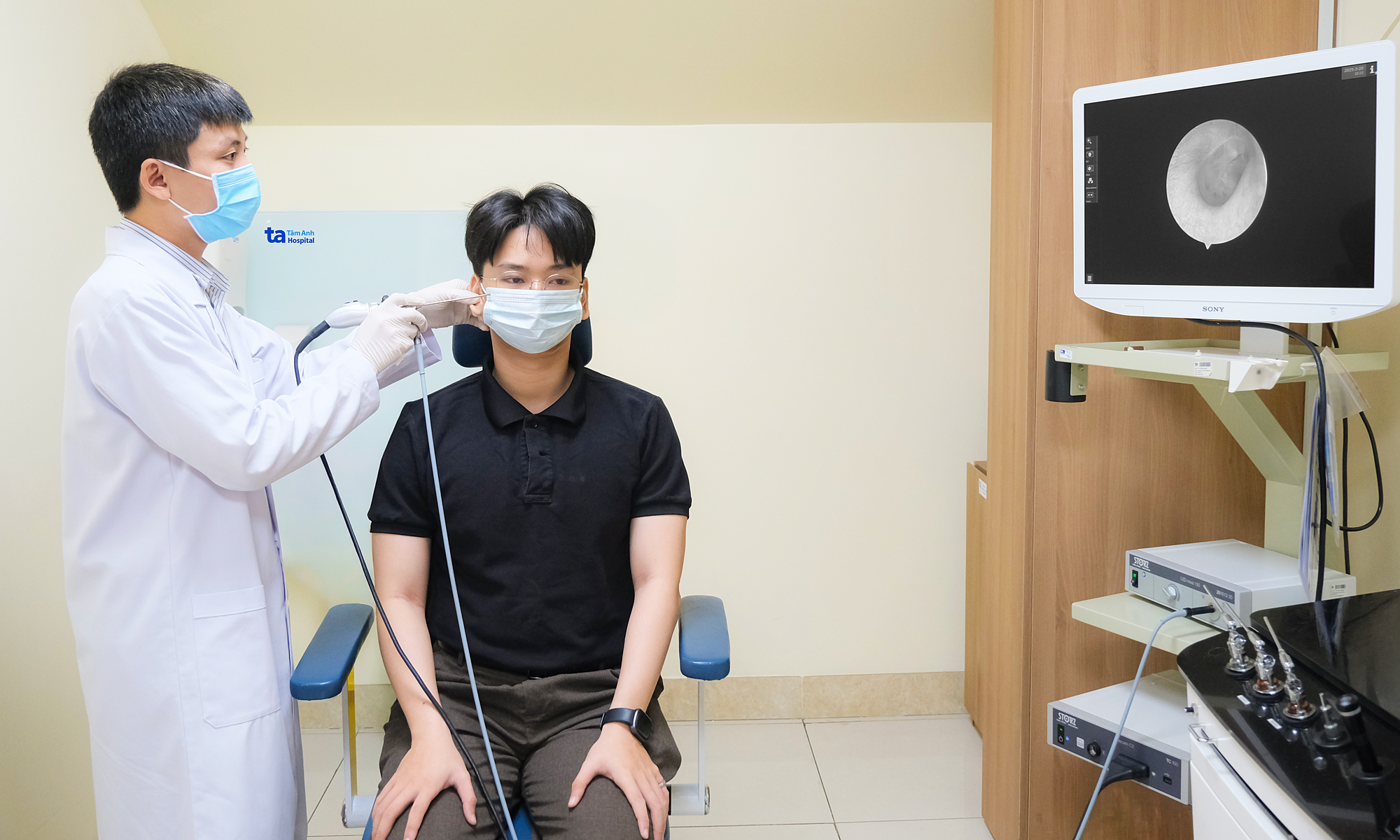
Doctor Sang consults with Hansani during a follow-up visit. Photo: Tam Anh General Hospital |
Doctor Sang consults with Hansani during a follow-up visit. Photo: Tam Anh General Hospital
Hepatitis A is an acute liver infection caused by the HAV virus, primarily transmitted through the digestive tract by consuming contaminated food or water. The disease can also spread through close contact, including unsafe sexual practices.
Doctor of Internal Medicine II Huynh Van Trung, Deputy Head of the Department of Gastroenterology, Endoscopy and Gastrointestinal Endoscopic Surgery Center, noted that the hepatitis A virus can survive for extended periods in unsanitary environments. Consequently, the disease is common in areas lacking clean water and adequate sanitation. While hepatitis A does not cause chronic hepatitis, most patients recover fully within a few weeks to several months and develop long-lasting immunity. However, older adults or those with underlying health conditions face a higher risk of severe progression, potentially leading to acute liver failure.
After an incubation period of two to six weeks, patients may experience symptoms such as mild fever, fatigue, loss of appetite, nausea, liver pain, dark urine, and jaundice. Young children often present with mild or no discernible symptoms.
Currently, there is no specific treatment for hepatitis A. Therapy focuses on alleviating symptoms, supporting liver function, and monitoring for complications. Most patients recover spontaneously within one to six months.
Doctor Sang recommends that everyone get vaccinated against hepatitis A. He also advises maintaining good personal hygiene, which includes: washing hands with soap, cooking food thoroughly, boiling water, and washing and peeling fruits and vegetables before consumption. Patients experiencing prolonged fatigue, jaundice, yellow eyes, dark urine, or liver pain should seek early medical attention for timely diagnosis and treatment.
Quyen Phan
*Patient's name has been changed.
| Readers can submit questions about digestive diseases here for doctors to answer. |