Emergency services admitted the patient to Tu Du Hospital's Facility 2 in Can Gio on the evening of 14/6. He presented in a semiconscious and agitated state, with blood pressure dropped to 90/70 mmHg, a rapid pulse, and signs of severe traumatic shock following a traffic accident. Imaging diagnostics revealed significant fluid around the patient's liver and spleen, suggesting internal abdominal bleeding, alongside a broken right collarbone.
Can Gio is located over 80 km from the city center, a journey that takes over one hour by car. The patient's critical condition prevented long-distance transfer. Doctors activated a remote consultation, determining that urgent surgery was necessary directly in Can Gio. A surgical team from Le Van Thinh Hospital, including Dr. Hoang Dinh Tuy, Dr. Ngo Thanh Trung, and Dr. Phan Dien Manh Nguyen, traveled to Can Gio to collaborate with doctors at Tu Du Hospital's Facility 2 for the operation.
The surgery commenced at 22:40 on 14/6 and concluded at 1:15 the next morning. Doctors identified intra-abdominal bleeding due to a grade 3 liver rupture and gallbladder damage resulting from blunt abdominal trauma. Early diagnosis, aggressive resuscitation, and immediate on-site surgery helped the patient overcome the critical period without requiring transfer to central city hospitals.
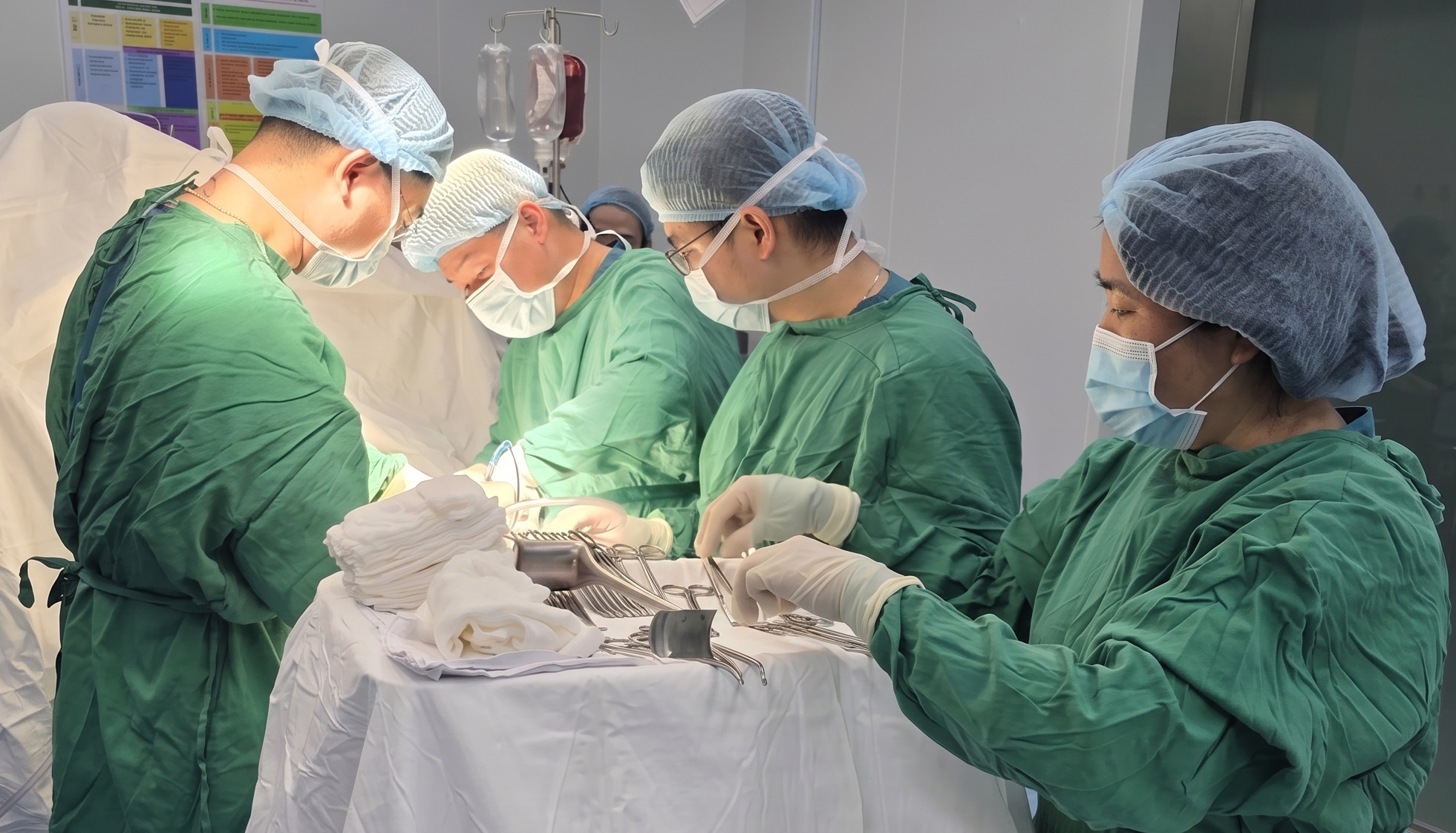 |
Doctors operating on the patient late on 14/6. Photo: Provided by doctors |
Director of Ho Chi Minh City Department of Health Tang Chi Thuong stated that previously, similar cases often necessitated transfers to city centers, prolonging treatment time and increasing the risk of missing the emergency "golden hour." Now, with remote consultation mechanisms and the dispatch of specialists for support when needed, many severe cases in gateway areas can be managed locally.
Can Gio is a coastal area where access to quality medical services has been limited, despite the region's strong development in marine economy, tourism, and seaports. Operating since last November with a 300-bed capacity, Tu Du Hospital's Facility 2 meets the demand for routine examinations and treatment, manages severe emergency cases, and reduces local treatment times for residents.
Le Phuong