The International Agency for Research on Cancer (IARC) classifies air pollution as a group one carcinogen in humans, similar to tobacco smoke, radioactive substances, and alcohol. Polluted air ranks above pesticides, fumes from frying pans, and red meat, which belong to group IIA with more limited evidence of carcinogenicity.
The main risk factor for cancer from air pollution is fine particulate matter under 2,5 micrometers (PM 2.5), which is approximately 30 times smaller than the diameter of a human hair. These particles originate from the combustion of fossil fuels and biomass, forming from various toxic precursors such as sulfur dioxide (SO2), nitrogen oxides (NOx), carbon monoxide (CO), ozone (O3), heavy metals like arsenic, chromium, nickel, and polycyclic aromatic hydrocarbons (PAH).
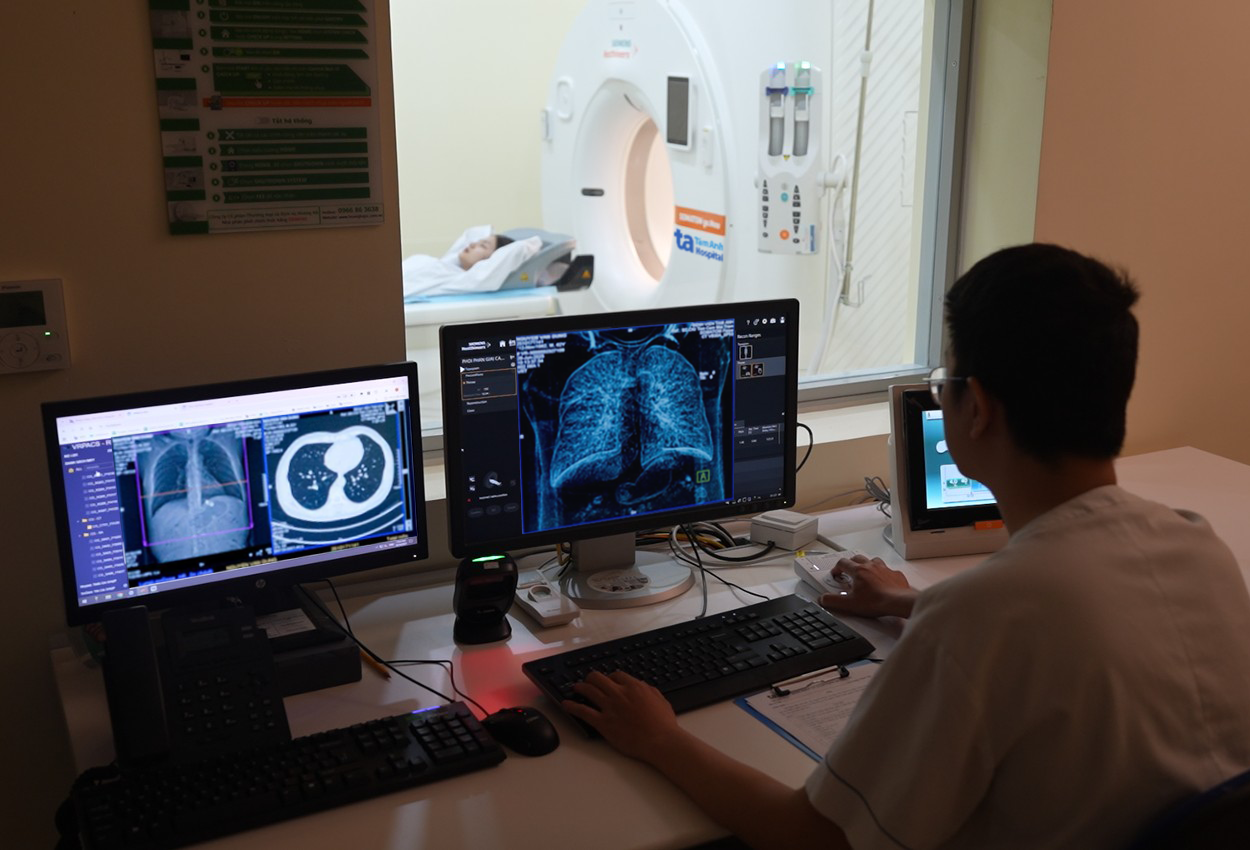 |
Lung cancer screening using a computed tomography scan. *Photo: Tam Anh General Hospital* |
Airborne PM 2.5 fine dust enters the lungs, causing cancer through mechanisms similar to passive tobacco smoke. PM 2.5 contributes to cancer development through several key mechanisms:
- **Promoting inflammation and oxidation**: Many substances within PM 2.5 can activate immune cells, releasing inflammatory mediators and reactive oxygen species (ROS).
- **Inducing DNA mutations**: Inflammation and oxidation lead to mutations, breaking DNA strands and potentially generating oncogenes like EGFR, KRAS, and HER2, which give rise to diseased cells.
- **Inhibiting the body's natural cancer elimination**: PM 2.5 can suppress cells' ability to repair DNA, allowing mutated DNA to persist. It also weakens cytotoxic CD8+ T cells and natural killer (NK) cells, which are crucial for immune surveillance and destroying newly formed cancer cells.
- **Accelerating tumor growth and metastasis**: Fine particulate matter can disrupt cellular and bodily signaling pathways, leading to uncontrolled proliferation and the formation of invasive, metastatic tumors.
Beyond lung cancer, air pollution also increases the risk of developing and dying from cancers of the bladder, breast, kidney, brain, liver, stomach, colorectum, as well as leukemia and lymphoma.
To prevent illness, monitor air quality through weather forecasts or air quality monitoring systems. On days with poor air quality and high PM 2.5 concentrations, avoid outdoor exercise and keep doors and windows closed if possible. When working outdoors, wear a mask with N95, KN95, or FFP2 standards to filter out fine particulate matter and reduce exposure and cancer risk.
Use air conditioners with air filtration functions, air purifiers, and range hoods when cooking to reduce indoor fine particulate matter concentrations. Avoid burning candles, incense, and smoking, as these further increase indoor exposure to fine particulate matter.
Doctor Tran Hai Binh
deputy head of the oncology department
Tam Anh General Hospital Hanoi
| Readers can submit questions about cancer here for doctors to answer. |