Associate Professor Doctor Nguyen Duy Thinh, a former official at the Institute of Biotechnology and Food, Hanoi University of Science and Technology, explains that ducks primarily live in water. To facilitate swimming and maintain waterproof feathers, their bodies secrete an oily, fatty substance located in the preen gland. This fat layer, accumulated on the skin and feathers, is the main contributor to the characteristic strong odor. The preen gland also contains lymphatic fluid, a site where numerous bacteria, viruses, and other unhealthy substances can concentrate.
In contrast, chickens are land-dwelling animals that do not require a waterproof protective fat layer. Consequently, they produce significantly less oil, resulting in meat that is less fishy or gamey.
Even after thoroughly cleaning the outer feathers during preparation, residual fat clinging to the skin and pores can still emit an unpleasant smell.
"Many gourmets still perceive this strong and slightly pungent smell", the expert notes.
To ensure flavorful duck dishes, thorough cleaning is essential, from initial preparation to cooking. First, bring a pot of water to a boil. Immerse the bled duck, then swiftly rub and pluck both the main feathers and fine down. After plucking, if any liquid or black residue remains in the pores, squeeze it out completely before rinsing with water. Crucially, fully remove the preen gland and the yellow lymph node inside it.
Following a quick rinse with hot water, you can rub the duck thoroughly, inside and out, with lemon (or vinegar), white wine, and crushed ginger to further reduce the odor. Afterward, rinse the duck several times with clean water.
When boiling, preparing soup, or grilling, add a few crushed ginger sprigs, dried shallots, and a pinch of salt to the pot for a more flavorful broth. It is advisable to consume only the meat and avoid the preen gland.
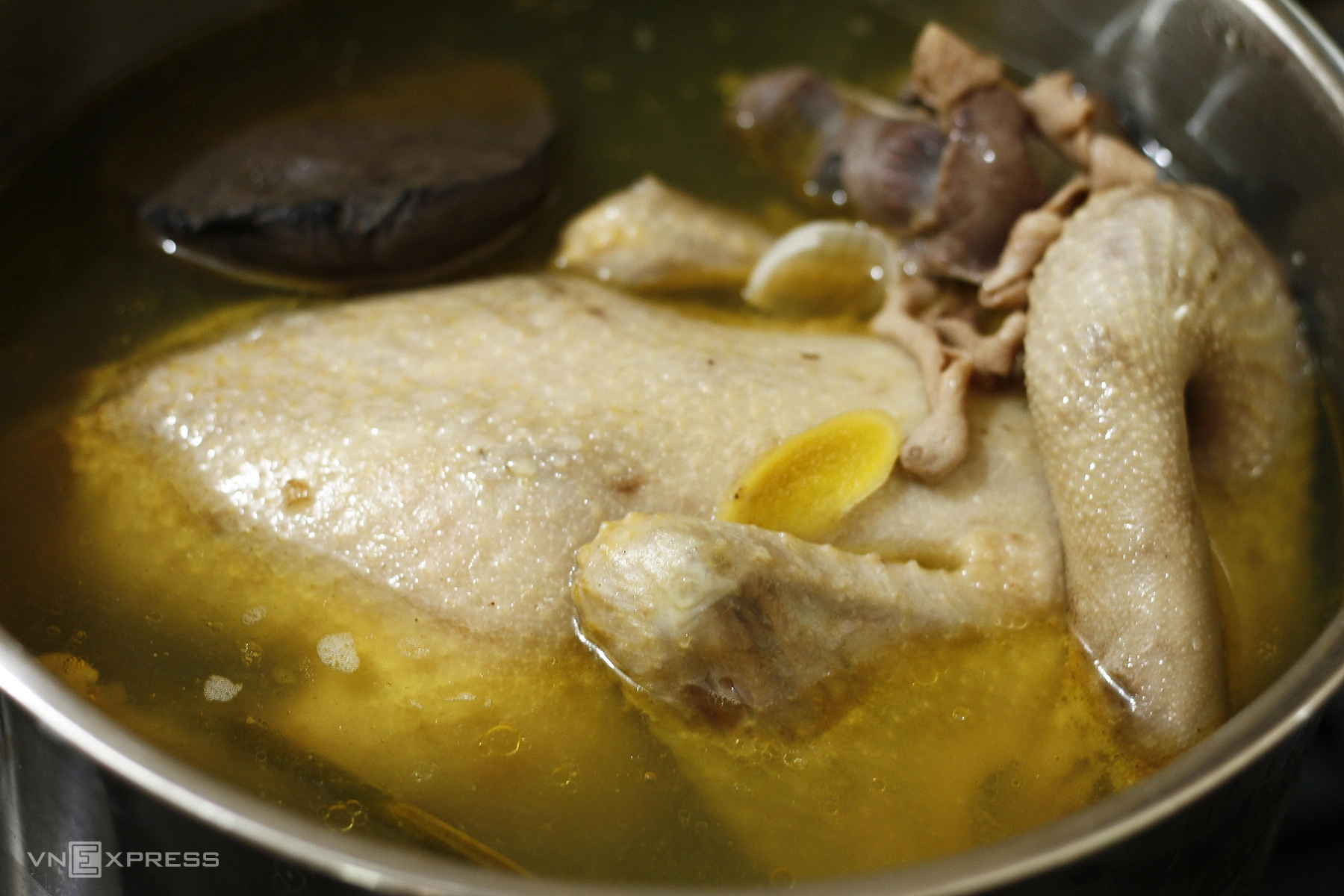 |
Boil duck with ginger and crushed shallots for fragrance. Photo: Bui Thuy. |
Duck meat contains protein, iron, calcium, and vitamins A, B1, D, making it beneficial for individuals aiming to gain weight. However, due to its cooling nature, toughness, and difficulty to digest, it is not ideal for the elderly and children. Individuals prone to bloating, indigestion, weak stomachs, or poor digestion should also limit their consumption.
Chicken meat, being warming in nature, is often prepared in nourishing dishes like stews, porridges, and soups to boost the health of sick or convalescing individuals. It is less fishy or gamey than duck meat. Rich in phosphorus, chicken supports strong, healthy bone and teeth development, making it suitable for those looking to manage their weight.
Furthermore, the nutritional value of a dish varies significantly depending on its preparation method. For example, fried chicken is difficult to digest, whereas boiled chicken or slow-cooked porridge is beneficial for digestion, making it suitable for sick or fatigued individuals. Similarly, grilled or fried duck meat is harder to digest than boiled or soup preparations. Therefore, individuals can select and prepare delicious, healthy dishes based on their preferences and needs.
By Thuy An