Answer:
While wearing a helmet does not directly cause hair loss, prolonged daily use can create conditions conducive to various scalp issues.
When a helmet is worn continuously for many hours, the scalp tends to sweat and produce more sebum than usual. The temperature and humidity inside the helmet also increase. If the helmet or its inner lining is not cleaned regularly, it becomes a favorable environment for bacteria and fungi to thrive.
As a result, helmet wearers may develop conditions such as seborrheic dermatitis, folliculitis, scalp fungus, or contact dermatitis. Seborrheic dermatitis often manifests as dandruff, itching, red scalp, or oily scales, leading to quickly greasy hair. However, a dirty helmet should not be considered the direct cause of scalp fungus.
Scalp fungus is a fungal infection that requires diagnosis based on clinical symptoms, and in some cases, laboratory tests are needed to identify the causative agent. Scalp fungal infections can cause itching, scaling, and hair loss, potentially leading to scarring if not treated appropriately.
Hair loss has many causes. An individual may simultaneously experience scalp problems and a condition causing hair loss, making it important to distinguish between the two situations.
A common cause in men is male pattern hair loss (genetic), characterized by a receding hairline at the forehead and temples or thinning hair on the crown. Without treatment, hair follicles may continue to shrink, causing progressive hair thinning.
Telogen effluvium, a type of diffuse hair loss, can occur after prolonged stress, acute illness, high fever, surgery, rapid weight loss, or nutritional changes. Hair loss typically appears some time after the triggering factor and can improve once the underlying cause is controlled.
Hair loss can also be linked to thyroid disease, iron deficiency, nutritional deficiencies, autoimmune alopecia areata, other scalp diseases, medications, or hair damage from chemicals or improper care. Since each cause requires a different treatment approach, it is crucial to identify the correct cause rather than focusing solely on the daily amount of hair loss.
 |
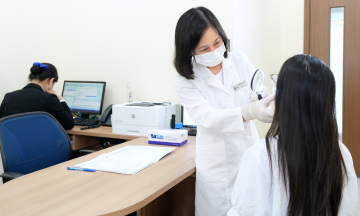
A doctor uses a 6D laser to treat hair loss in a young man. Illustration: Tam Anh General Hospital
You should visit a Dermatology - Aesthetic Dermatology specialist at a hospital for an assessment of your scalp condition and to discuss related factors, including the duration and location of hair loss, hair care habits, and medical history. Depending on the case, the doctor may order additional tests to determine the cause and develop a suitable treatment plan.
For hormonal hair loss, patients may be prescribed topical or oral medications, combined with supportive hair restoration treatments if necessary. If hair loss is due to scalp inflammation or infection, the priority is to control the inflammation before proceeding with hair restoration. For alopecia areata caused by an immune disorder, the doctor may prescribe topical or local injectable medications. In cases where hair loss is related to underlying conditions such as hypothyroidism, lupus, or anemia, treating the underlying disease will be carried out concurrently with hair loss treatment for better efficacy.
If your job requires frequent helmet use, you need to maintain a clean scalp, washing your hair according to your oil production level and scalp condition. If you sweat frequently, you may need to wash your hair more often.
Clean your helmet by washing the shell and liner according to the manufacturer's instructions, ensuring it is completely dry before use. Do not share your helmet with others, and avoid wearing it when your hair is still wet; allow your hair and scalp to dry before wearing a helmet for extended periods. Do not wear an overly tight helmet to prevent pain, friction, or prolonged pressure on the scalp. Replace or clean the liner regularly, especially if it accumulates sweat, odor, or remains damp for long periods. Avoid scratching or harshly scraping your scalp, as this can increase damage and skin inflammation.
These measures primarily help maintain hygiene and reduce scalp irritation; they do not replace medical treatment if you have a condition causing hair loss. Correctly identifying the cause and treating it promptly not only helps improve hair loss but also contributes to preserving hair follicles, increasing the potential for recovery, and reducing the risk of future baldness.
Doctor of First Degree Specialization Nguyen Ngoc Tran
Dermatology - Aesthetic Dermatology Department
Tam Anh General Hospital, Ho Chi Minh City
| Readers can submit questions about dermatology and aesthetic dermatology here for doctors to answer. |