The Ministry of Health of the Democratic Republic of Congo announced that as of 28/7, the country had recorded 3,262 infections and 1,437 deaths. The epicenter of the outbreak is in Ituri province, in the eastern part of the country.
Beginning on 15/5, this outbreak took only 10 weeks to reach a case count comparable to the record-setting epidemic of 2018-2020, which took nearly two years to record over 3,400 infections and more than 2,200 deaths.
Globally, only the Ebola disaster in West Africa from 2014-2016 surpassed this in devastation, with 28,000 cases and over 11,000 deaths.
Health experts consider this a particularly dangerous crisis because the Bundibugyo virus strain causing the disease currently lacks an approved preventive vaccine or official treatment protocol. Furthermore, authorities have yet to identify the first patient carrying the pathogen, making source control difficult.
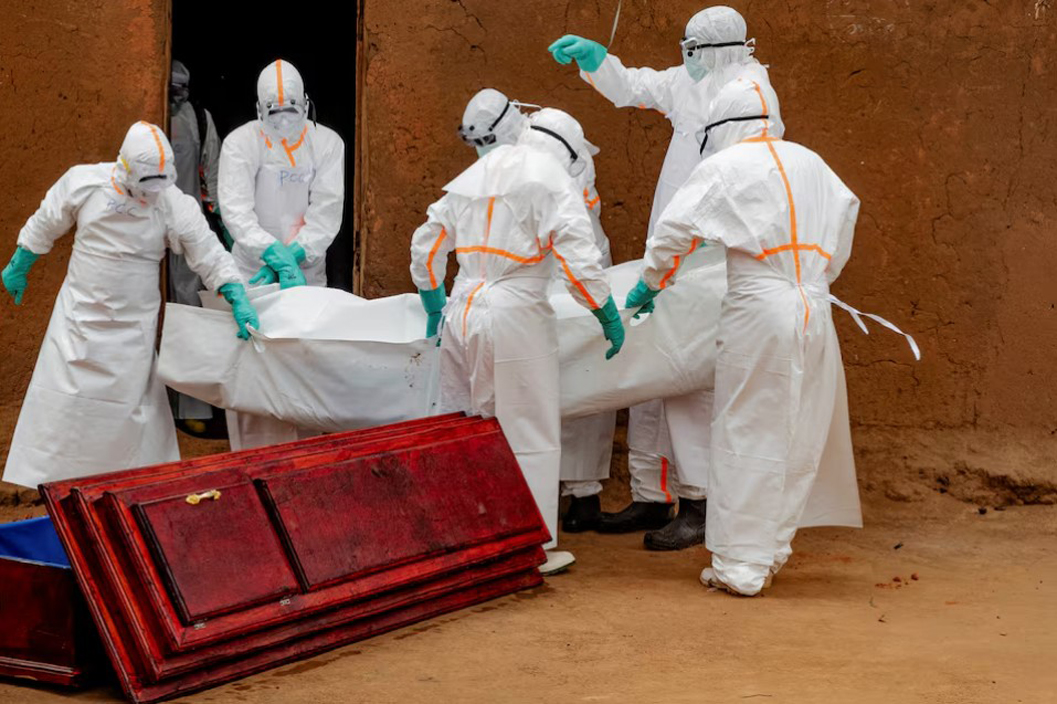 |
A victim is carried away after dying from Ebola in Bunia, Ituri province, Democratic Republic of Congo, 10/7. Reuters
The uncontrolled spread stems from complex factors on the ground. The eastern region of Congo faces ongoing armed conflict and illegal mineral exploitation, generating massive displacement and hindering the tracing of thousands who have contacted the pathogen. Violence from rebel groups and strikes by healthcare workers over unpaid wages further paralyze the response system. Many communities were isolated or lacked support as medical teams withdrew to ensure safety from attacks by both armed forces and local residents.
Despite this, the attitude of residents in the outbreak's epicenter is shifting due to significant losses. Fabrice Mumbesa, a resident of the mining town Mongbwalu, which previously saw people setting fire to treatment centers, shared that the community can no longer oppose response teams. They have lost too many loved ones and are eager to contain the outbreak to restore normal life.
Health agencies and international organizations are under immense pressure. Onesphore Bangenza, Head of the Mercy Corps response team in Bunia, the capital of Ituri province, stated that the virus spreading faster than containment capacity is an alarming sign. This demands more urgent action from all parties to prevent widespread disaster.
By Binh Minh (According to ABC News, Sky News)