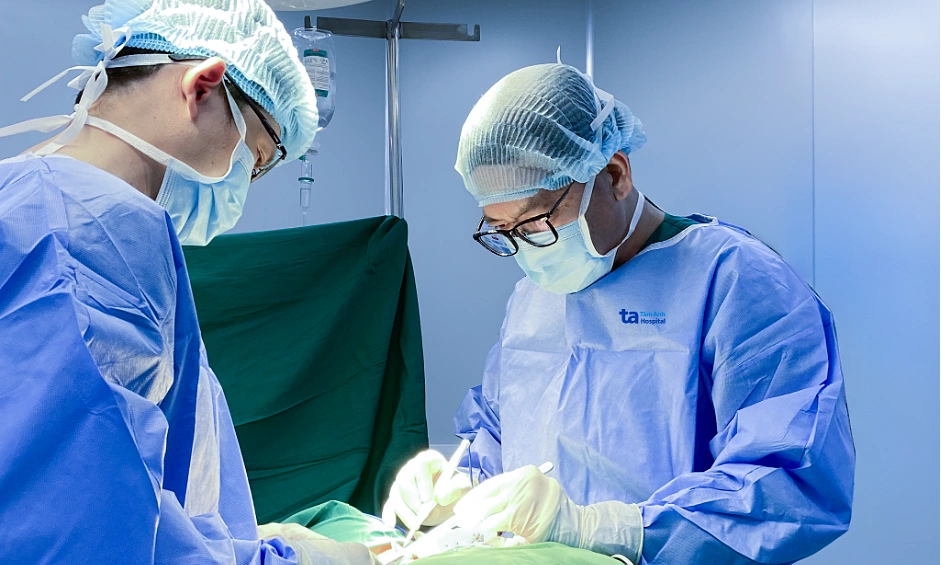
Professor, doctor Vo Thanh Nhan, Director of the Interventional Cardiology Center at Tam Anh General Hospital, Ho Chi Minh City, reported this as a complex case of cardiac arrhythmia. The arrhythmogenic focus was located only 1 cm from the His bundle, an area considered a "forbidden zone" in cardiac electrophysiology interventions.
Thanh was diagnosed with a dangerous cardiac arrhythmia during a pre-pregnancy health check-up. This condition occurs when the heart beats faster than 100 times per minute, originating from abnormal myocardial regions in the ventricles. Electrocardiogram readings showed her heart rate sometimes reached 140 beats per minute. Without treatment, episodes of ventricular tachycardia could lead to heart failure and, in severe cases, the risk of sudden death.
According to master, doctor Le Xuan Hoang from the Interventional Cardiology Center at Tam Anh General Hospital, Ho Chi Minh City, the patient was preparing for pregnancy. Prolonged medication use would increase the risk of birth defects, miscarriage, fetal growth restriction, and premature birth. Conversely, not using medication was also risky, as pregnancy places significant stress on the heart and circulatory system, potentially worsening the condition. After consultation, the team decided to perform definitive ablation of the arrhythmogenic focus with the support of 3D electrophysiological mapping technology.
Doctor Hoang explained that simple arrhythmia cases can often be ablated using conventional 2D technology with a high success rate. However, certain complex arrhythmias or those located in critical areas, like Thanh's, demand absolute precision and require 3D cardiac electrophysiological mapping technology. This advanced technique also reduces the amount of X-ray exposure during the procedure, thereby minimizing complications such as skin damage or cancer risk.
During the procedure, doctors inserted an electrode catheter into the heart chambers via the femoral artery. With each heartbeat, the device collected electrical signals generated by the arrhythmogenic focus at different locations within the ventricles. After approximately 20 minutes, the doctors completed the 3D electrophysiological map, which provided a detailed simulation of the heart's structure and electrical activity. The heart's electrical activities were color-coded based on the speed and abnormality of the electrical signals. This visual guide allowed doctors to precisely locate the conduction system and the arrhythmogenic focus.
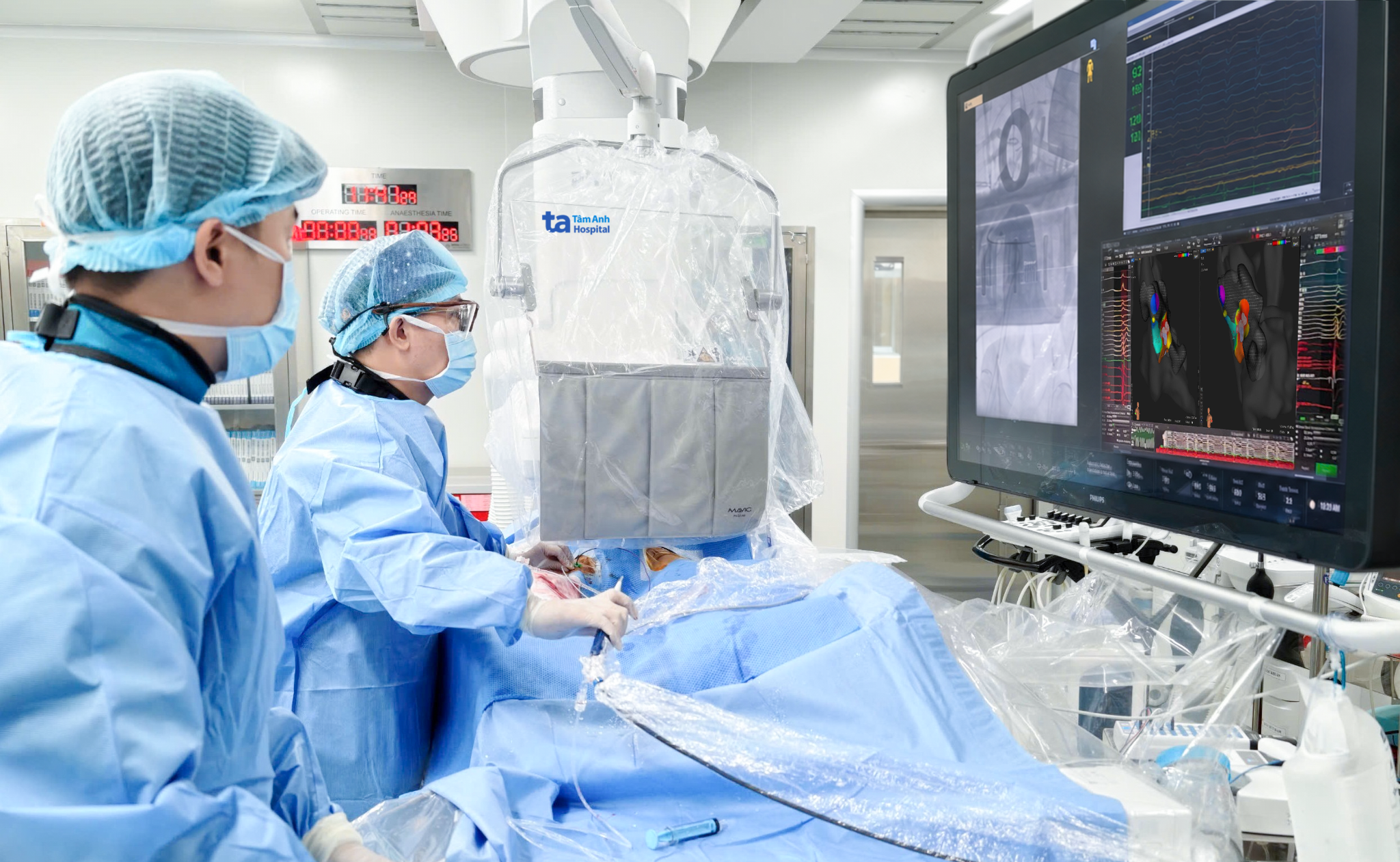 |
The medical team from the Interventional Cardiology Center maps the 3D electrophysiology to ablate the heart arrhythmia focus for the patient. Photo: Tam Anh General Hospital |
"The arrhythmogenic focus was located in the proximal segment of the left anterior fascicle, which is very rare and challenging to ablate. A small error in energy delivery could cause complete atrioventricular block, forcing the patient to rely on a permanent pacemaker", said doctor Hoang. The team utilized high-frequency radiofrequency energy to definitively ablate the arrhythmogenic focus, normalizing the patient's heart rhythm. The procedure lasted nearly 4 hours, almost double the time for a typical arrhythmia ablation.
Thanh's health stabilized after the intervention; she was discharged after two days and is now ready for her pregnancy journey.
According to professor Nhan, ventricular tachycardia episodes can sometimes be transient, lasting only a few seconds with vague symptoms such as palpitations, shortness of breath, fatigue, or a pounding heart. This often leads many people to be complacent. In Thanh's case, if she had not undergone a pre-pregnancy health check, the condition might have been missed. If detected late in pregnancy, the risk of complications for both mother and fetus would significantly increase.
Doctors advise that anyone experiencing symptoms of cardiac arrhythmia, including dizziness, lightheadedness, chest pain, shortness of breath, rapid heart rate, heart pounding, or fainting, should consult a cardiologist promptly. Women planning pregnancy should undergo health screenings to assess cardiovascular function and address any abnormalities before conception.
Thu Ha
* The patient's name has been changed
| Readers can submit questions about cardiovascular disease here for doctors to answer. |