


Polycystic kidney disease (PKD) is a genetic disorder characterized by the development of numerous fluid-filled sacs, or cysts, in the kidneys. As these cysts multiply and enlarge, they gradually expand the kidneys, damaging healthy tissue and ultimately leading to renal failure. In Liu's family, eight individuals have been diagnosed with PKD; however, only he and his elder brother have advanced to end-stage renal failure.
Doctor Do Thi Hang, Head of the Nephrology - Dialysis Unit at Tam Anh General Clinic District 7, explained that while the disease gene is present from birth, initial kidney cysts are small and do not significantly impair the glomerular filtration rate (GFR). Over time, particularly between the ages of 40 and 60, these cysts gradually increase in size and number, compressing healthy kidney tissue and accelerating the decline of kidney function.
The rate of renal failure progression varies among individuals with the same disease gene, influenced by lifestyle factors such as a high-salt diet, smoking, alcohol consumption, or poorly managed blood pressure. Liu's case exemplifies this; his uncontrolled hypertension contributed to faster kidney damage than seen in other affected family members.
Liu first exhibited symptoms of high blood pressure over 20 years ago, at which point a medical examination identified polycystic kidney disease. His kidney function was stable then, and he received advice to increase water intake and reduce salt and protein consumption to protect his kidneys.
Two years ago, while working in TP HCM, Liu developed symptoms including an enlarged abdomen, hip and back pain, fever, abdominal discomfort, and mild edema. A hospital visit led to a diagnosis of stage 5 renal failure and a prescription for regular dialysis.
A year later, with no improvement in his health, Liu sought care at Tam Anh General Clinic District 7. His glomerular filtration rate (GFR) was then approximately 5 mL/min/1.73m2, indicating stage 5 renal failure. Ultrasound images revealed kidneys entirely filled with hundreds of cysts, obliterating their normal structure. The patient also presented with elevated blood potassium and phosphorus, placing a burden on his heart.
Given the high risk of infection in patients with renal failure due to polycystic kidney disease, Doctor Hang prescribed dialysis three times a week. This regimen alternates between hemodialysis (HD) and online hemodiafiltration (HDF online) to effectively remove medium-sized toxins, such as microglobulin, which contribute to joint pain and fatigue. Additionally, this approach aids in direct fluid replacement and blood pressure stabilization. Liu also received antihypertensive medication designed to protect blood vessels and manage potassium levels.
To combat anemia and ensure Liu had the energy to work without shortness of breath, the doctor prescribed regular injections to stimulate red blood cell production in his bone marrow. He also underwent consistent screening for calcium and phosphorus metabolic disorders.
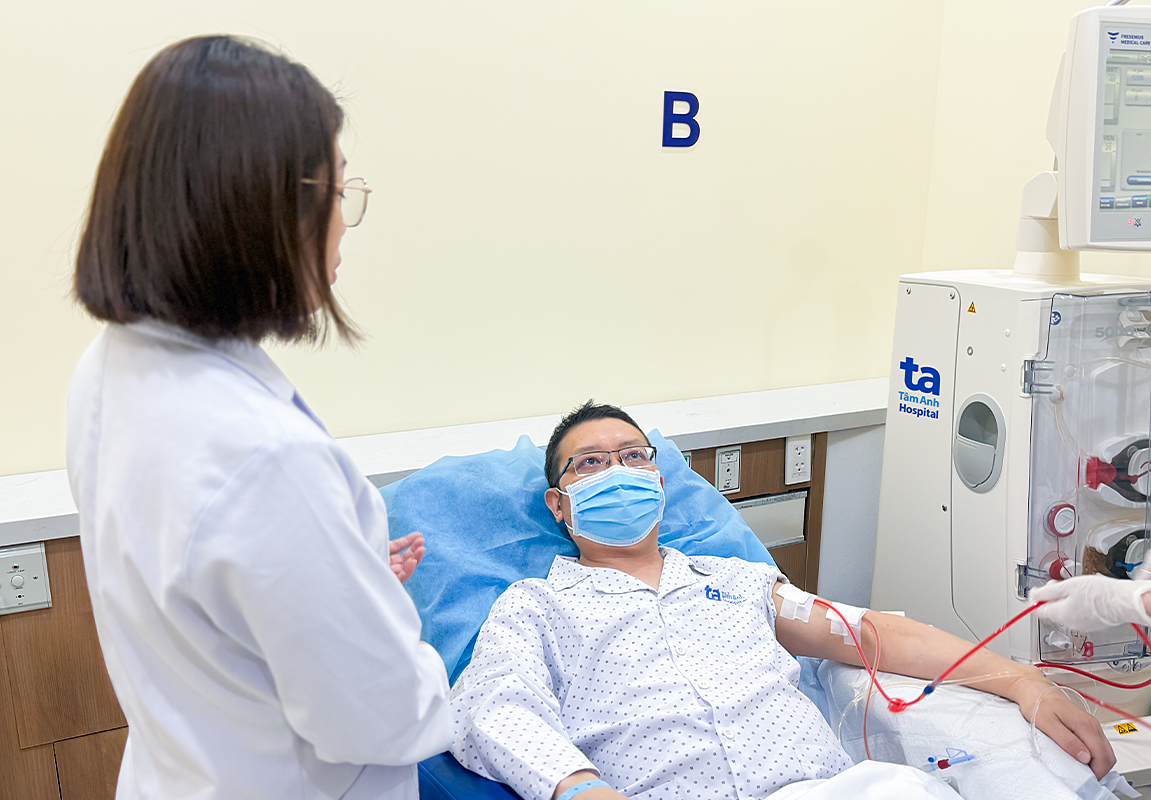 |
Doctor Hang examining Liu during his regular online hemodiafiltration session. Photo: Tam Anh General Clinic District 7 |
Due to Liu's significantly enlarged, cyst-filled kidneys, a high-fiber diet is essential to prevent constipation. Furthermore, he must diligently avoid strong impacts to his abdomen, hips, and back to mitigate the risk of intra-cyst hemorrhage or infection.
Following a year of treatment, Liu's potassium levels, hemoglobin, weight, and blood pressure have stabilized. He no longer experiences itching, fatigue, or shortness of breath, and his appetite and sleep have improved significantly. He is now able to work normally, and his dialysis schedule has been reduced to two times a week. Ongoing management requires a low-salt diet and careful control of fluid intake and blood potassium levels. Regular follow-up appointments include ultrasounds to monitor kidney size and brain MRI scans to check for brain aneurysms, a dangerous complication often associated with hereditary polycystic kidney disease.
Polycystic kidney disease is a chronic condition presenting with common symptoms such as high blood pressure, lower back pain, hematuria (blood in urine), kidney stones, recurrent urinary tract infections, and an enlarged abdomen. Doctor Hang recommends that individuals experiencing these signs seek specialized medical evaluation for appropriate treatment. Furthermore, if a family member is diagnosed with PKD, other family members should undergo early screening to establish a treatment plan aimed at slowing cyst development and preventing premature renal failure that necessitates dialysis.
The progression from initial disease detection to end-stage renal failure can span decades. Dialysis is typically prescribed when the condition advances to end-stage renal failure, marked by a glomerular filtration rate below 15 mL/min/1.73 m², indicating the kidneys' inability to filter waste and excess fluid from the blood. However, even with a GFR above this threshold, dialysis may be necessary if patients experience severe edema, vomiting, loss of appetite, persistent itching, fatigue, or electrolyte imbalances.
Dinh Lam


