A CT scan of Mrs. Luu's abdomen at Tam Anh General Hospital in Ho Chi Minh City revealed a greatly dilated small intestine, abnormally twisted in several loops, particularly in the high segment near the duodenum. The intestinal wall was thickened, containing a significant amount of fluid and little gas. Abnormally converging mesenteric blood vessels suggested torsion and compromised blood supply to the bowel. The stomach and duodenum were dilated with fluid, while some lower segments of the small intestine were completely collapsed.
Doctor Tran Hieu Nhan, from the Center for Endoscopy and Gastrointestinal Laparoscopic Surgery, stated that the patient suffered from small bowel obstruction due to an internal hernia. This condition occurs when an organ within the abdominal cavity, typically the small intestine, protrudes through abnormal defects or recesses. Internal hernias account for approximately 0,5-1% of small bowel obstruction causes and carry a high risk of strangulation and intestinal necrosis.
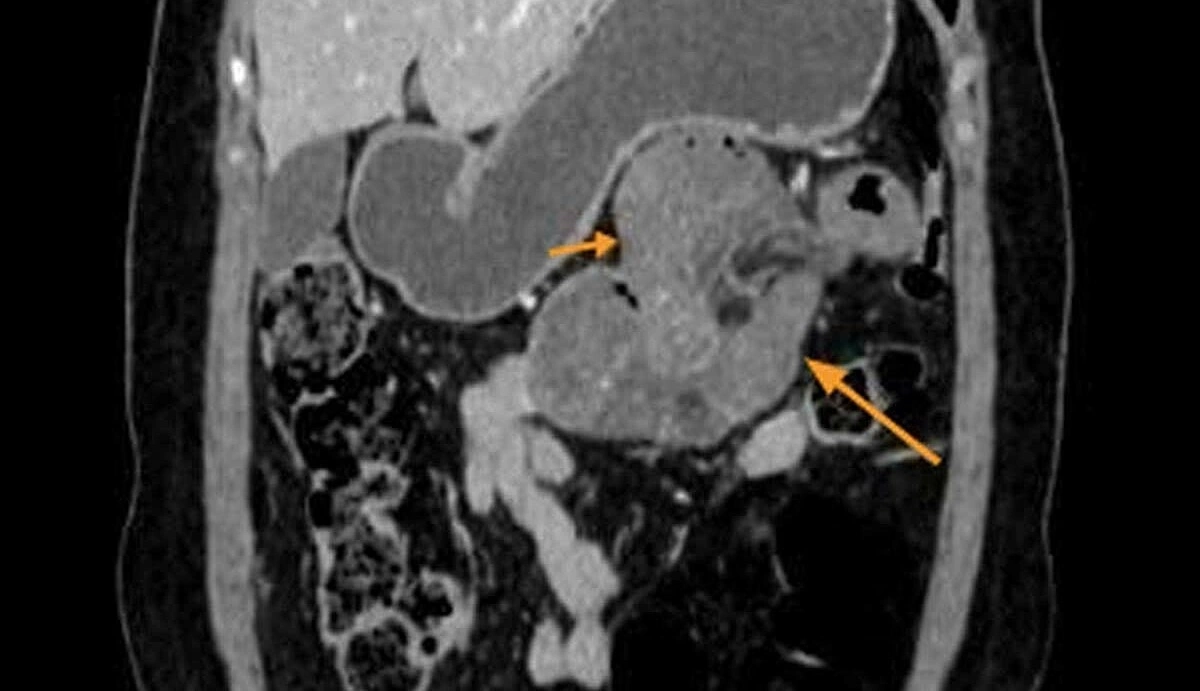 |
CT scan results showing a greatly dilated small intestine with abnormal twisting (yellow arrows). Photo: Tam Anh General Hospital |
Given that Mrs. Luu's small intestine was strangulated, leading to ischemia and a high risk of necrosis, early surgery was indicated. During the abdominal exploration, doctors observed a dark purple, greatly dilated segment of the small intestine. A loop of jejunum had entered a defect in the transverse mesocolon, causing complete obstruction and resulting in about 80 cm of necrotic bowel.
Doctors released the herniated mass, resected the necrotic segment of intestine, reconnected the two healthy ends of the bowel, and closed the mesenteric defect to prevent recurrence.
Following the operation, the patient recovered well, was able to walk gently, and was discharged after five days.
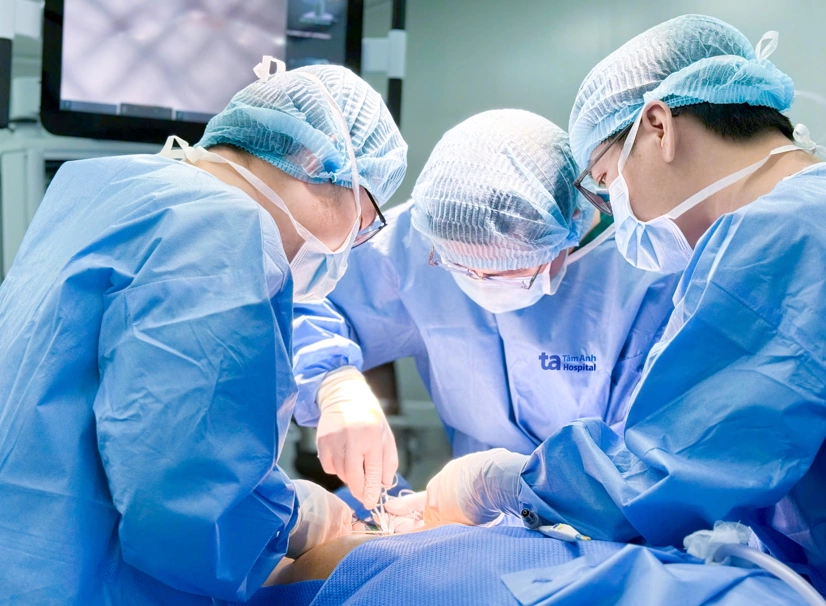 |
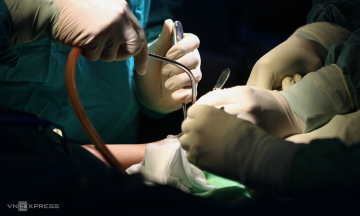
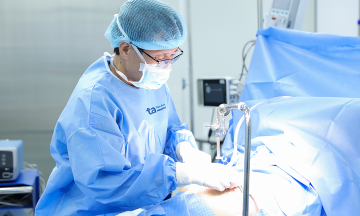
Doctors perform surgery to resect the necrotic small intestine for Mrs. Luu. Photo: Hospital provided |
According to doctor Hieu Nhan, while inguinal and umbilical hernias are often visible or palpable, internal hernias occur entirely within the abdominal cavity. This makes their clinical manifestations non-specific and easily confused with common digestive disorders, leading to diagnostic difficulties and potential delays.
The causes of internal hernias are categorized into two main groups: congenital and acquired. Acquired causes are more common and can be linked to previous surgical interventions, such as abdominal surgery (especially gastrointestinal surgery), organ transplantation, or abdominal trauma. Conditions that increase intra-abdominal pressure, like strenuous exercise, chronic coughing, heavy lifting, or pregnancy, can also push intestinal loops into vulnerable positions, increasing the risk of internal hernia.
 |
Doctor Hieu Nhan advises Mrs. Luu before her discharge. Photo: Tam Anh General Hospital |
When warning signs appear, such as severe abdominal pain, excessive vomiting, abdominal bloating, or inability to pass gas or stool, patients should seek medical attention promptly to determine the cause and receive timely treatment.
Quyen Phan
| Readers can ask questions about digestive diseases here for doctors to answer |