Eng English
China 中国人

Eng English
China 中国人
  • News
  • World
  • Business
  • Entertainment
  • Sports
  • Law
  • Education
  • Health
  • Lifestyle
  • Travel
  • Science
  • Digital
  • Automobiles
  • Trở lại Thể thao
  • Health
Wednesday, 7/10/2026 | 14:06 GMT+7

Two instances of foot necrosis due to diabetes complications

Mr. Tuyen, 80, who previously had his little toe amputated due to diabetic foot complications, is now battling another foot infection.

Mr. Tuyen has lived with type 2 diabetes for over 30 years. After his toe amputation, he continued to drink alcohol and smoke, and did not adhere to a strict diet, leading to fluctuating blood sugar levels. Recently, a crack appeared where his toe was amputated. This area became infected, swollen, and discharged pus, prompting him to seek care at Tam Anh General Hospital, TP HCM.

Doctor of first-degree specialization Pham Thi Thu Ha, Head of the Diabetic Foot Unit, Department of Endocrinology and Diabetes, stated that the wound was necrotic and deeply infected down to the foot bones, making it difficult to clean. Diabetics face a higher infection risk when blood sugar is uncontrolled. Prolonged high blood sugar damages sensory nerves in the feet, hardens, thickens, and narrows blood vessels supplying the feet, also negatively affecting the immune system's ability to fight bacteria.

Peripheral neuropathy, a common diabetes complication, impacts sensory nerve fibers, hindering the supply of nutrients and oxygen to the affected area. This damage also leads to reduced sweat secretion and changes in skin structure, resulting in dry, cracked skin that is vulnerable to external bacterial invasion and infection.

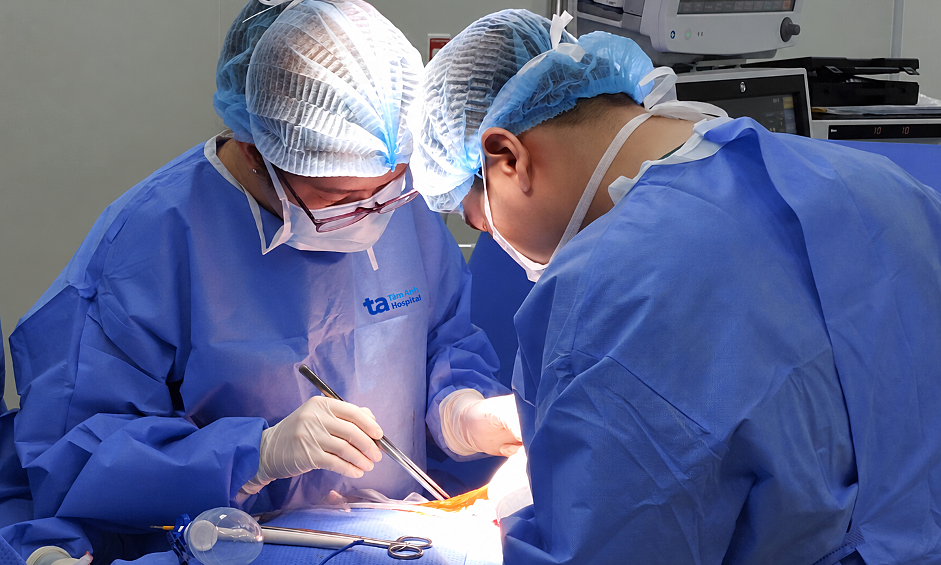
Mr. Tuyen received treatment to stabilize his blood sugar and antibiotics to prevent the infection from spreading throughout his foot. Doctors debrided the necrotic tissue and used a VAC negative pressure wound therapy device to drain fluid from the deep wound, stimulating new tissue growth.

Doctor Ha (right) treats Mr. Tuyen's wound. Photo: Tam Anh General Hospital

Doctor Ha (right) treats Mr. Tuyen's wound. Photo: Tam Anh General Hospital

After nearly two weeks of treatment, Mr. Tuyen's wound was dry, no longer discharging fluid or swelling. Concurrently, the patient was advised to take blood sugar stabilizing medication at the correct dosage, regularly as prescribed by the doctor, avoid alcohol and tobacco, and attend regular follow-up appointments.

Doctor Ha recommended that to limit the risk of recurrent foot infections, diabetics should not soak their feet in hot water, salt water, or herbal water. They should wear soft, well-fitting shoes and check their feet daily to detect wounds early. Early detection helps limit damage and the risk of amputation in diabetics.

Bach Duong

*Patient's name has been changed

Readers can ask questions about diabetes here for doctors to answer
By VnExpress: https://vnexpress.net/hai-lan-chan-hoai-tu-do-bien-chung-tieu-duong-5129259.html
Tags: diabetic foot complications blood sugar diabetes

News in the same category

How dangerous is pneumonic plague?

How dangerous is pneumonic plague?

Pneumonic plague is the most dangerous form of plague, attacking the lungs and spreading directly from person to person. It progresses rapidly, with a high mortality rate if not treated promptly.

Infertility after 5 years since first child's birth

Infertility after 5 years since first child's birth

Hanh, 39, who previously conceived naturally, has experienced 5 years of infertility due to polycystic ovary syndrome, endometriosis, and her husband's weak sperm.

critical after dinner with freshwater shrimp

critical after dinner with freshwater shrimp

After eating a dinner of freshwater shrimp, a 14-year-old boy experienced full-body itching and difficulty breathing; doctors diagnosed severe anaphylaxis.

Why building muscle and losing fat is key to weight management

Why building muscle and losing fat is key to weight management

Increasing muscle mass and reducing fat helps tone the body, improves mobility, supports blood sugar control, and lowers the risk of metabolic disorders caused by excess fat.

Why collagen is important for joint cartilage

Why collagen is important for joint cartilage

Collagen comes in many types; type I is primarily found in skin, bones, and tendons, while type II is the main component of joint cartilage, helping it maintain structure and withstand pressure.

Experts warn of 'danger zone' when thawing food

Experts warn of 'danger zone' when thawing food

Temperatures from 5 to 60 degrees Celsius constitute the "danger zone" for food, where bacteria multiply rapidly.

When is breast cancer treated with immunotherapy?

When is breast cancer treated with immunotherapy?

My mother has late-stage breast cancer; can she receive immunotherapy to avoid surgery? (Tran Thinh)

Liver cirrhosis causes ruptured esophageal varices

Liver cirrhosis causes ruptured esophageal varices

Quang, 36, diagnosed with liver cirrhosis, experienced gastrointestinal bleeding from ruptured esophageal varices two times in one month and is undergoing treatment to manage decompensated cirrhosis and prevent further complications.

How many times a day should you gargle with saline solution?

How many times a day should you gargle with saline solution?

I frequently experience sore throats and find relief by gargling with physiological saline. How many times a day is it advisable to gargle? (Lam Nguyen, 25, Lam Dong)

Does thyroid surgery affect the voice?

Does thyroid surgery affect the voice?

I work as a presenter but am about to undergo thyroid cancer surgery. Will my voice be affected after the surgery? (Thanh Huyen, TP HCM)

Eng English
China 中国人
  • News
  • World
  • Business
  • Entertainment
  • Sports
  • Law
  • Education
  • Health
  • Lifestyle
  • Travel
  • Science
  • Digital
  • Automobiles
FPT Tower, 10 Pham Van Bach Street, Dich Vong Ward,
Cau Giay District, Hanoi, Vietnam
Email: contacts@vnportal.net
Tel: 028 7300 9999 - Ext 8556
Advertise with us: 090 293 9644
Register
© Copyright 2026 vnnow.net. All rights reserved.
Terms of use Privacy policy Cookies