Microwaves offer convenience, saving cooking time and providing an alternative to hot gas stoves, especially in summer. The appliance works by using electromagnetic waves to make water molecules in food vibrate intensely, generating heat. However, Japanese nutritionist Wakan Yumi warns that over-reliance on microwaves can cause food poisoning due to uneven heat distribution.
Many assume food from a microwave is always safe. In reality, variations in food shape, thickness, and water content make even heat distribution challenging. While the exterior might be scorching hot, the interior often does not reach a sufficient temperature to kill bacteria. Most pathogenic bacteria are only eliminated when the food's core temperature reaches 75°C or higher for at least one minute.
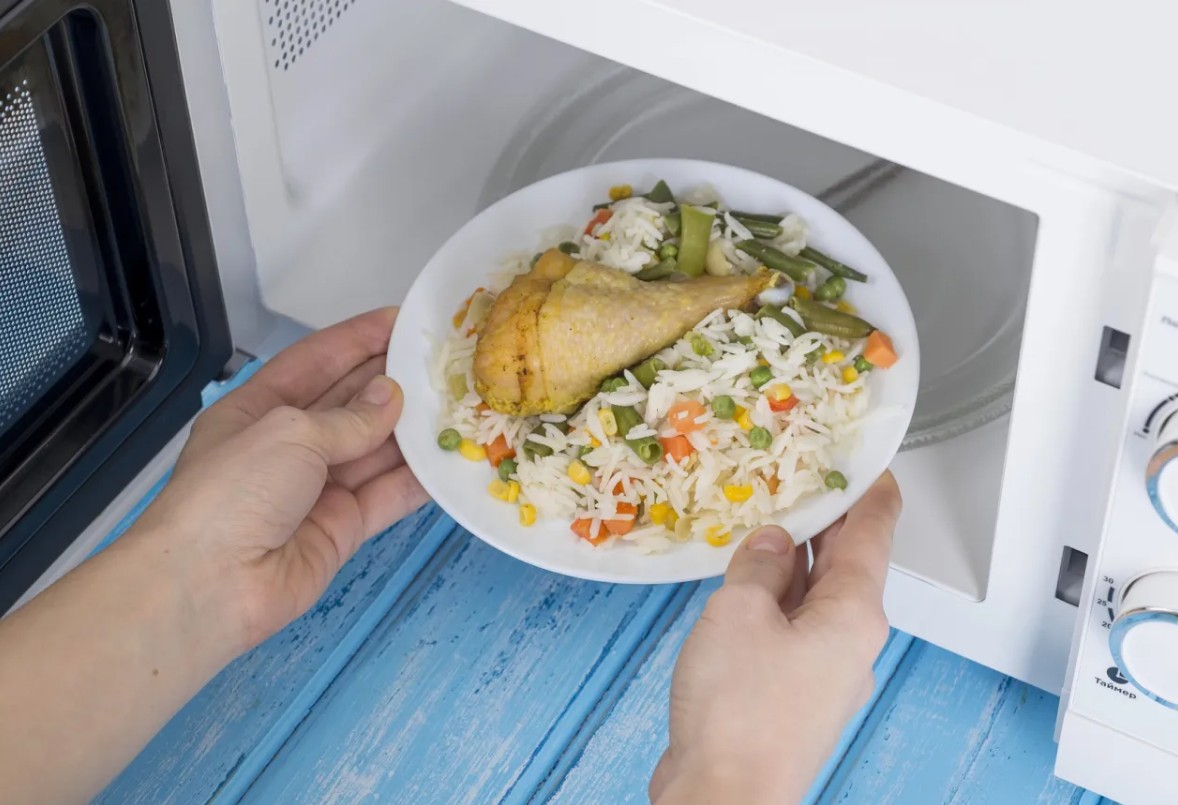 |
Illustration: Popular Science
Thick, dense foods like meatballs, minced meat, or fish fillets are particularly prone to being cooked on the outside but raw on the inside. Adding seasoning, such as salt, to the surface before microwaving can also cause the microwaves to concentrate on the outer layer, preventing heat from penetrating deeper into the food.
To address uneven heating, use round, flat, heat-resistant containers. The shape of the container significantly influences heat distribution. Microwaves tend to converge at sharp corners, leading to uneven cooking in square dishes, whereas round trays promote more uniform heat transfer.
Proper ingredient preparation ensures better heat absorption. Home cooks should slice meat and fish thinly and mince ingredients instead of leaving them in large blocks. For frozen fried rice, spread it out evenly on the plate instead of piling it high.
Grease or old food residue clinging to the oven cavity hinders the heating process. These stains absorb microwaves, preventing food from receiving adequate heat, even when set for the correct cooking time. Therefore, regularly cleaning the appliance after each use is essential.
Heat distribution mechanisms vary by oven model. In turntable microwaves, the rotating plate causes the center area to receive the fewest waves; users should place food towards the outer edge. Conversely, flatbed microwaves concentrate heat most intensely at the center, so food should be placed directly in the middle. Stirring or flipping food midway through cooking also helps distribute heat more evenly.
Microwave cooking is only safe when heat fully penetrates the core of the food. Flexibly adjusting the plate's position and incorporating stirring or mixing ingredients will help eliminate the risk of food poisoning, protecting family health, especially during hot weather.
By Binh Minh (According to United Daily News, Hint-Pot)